




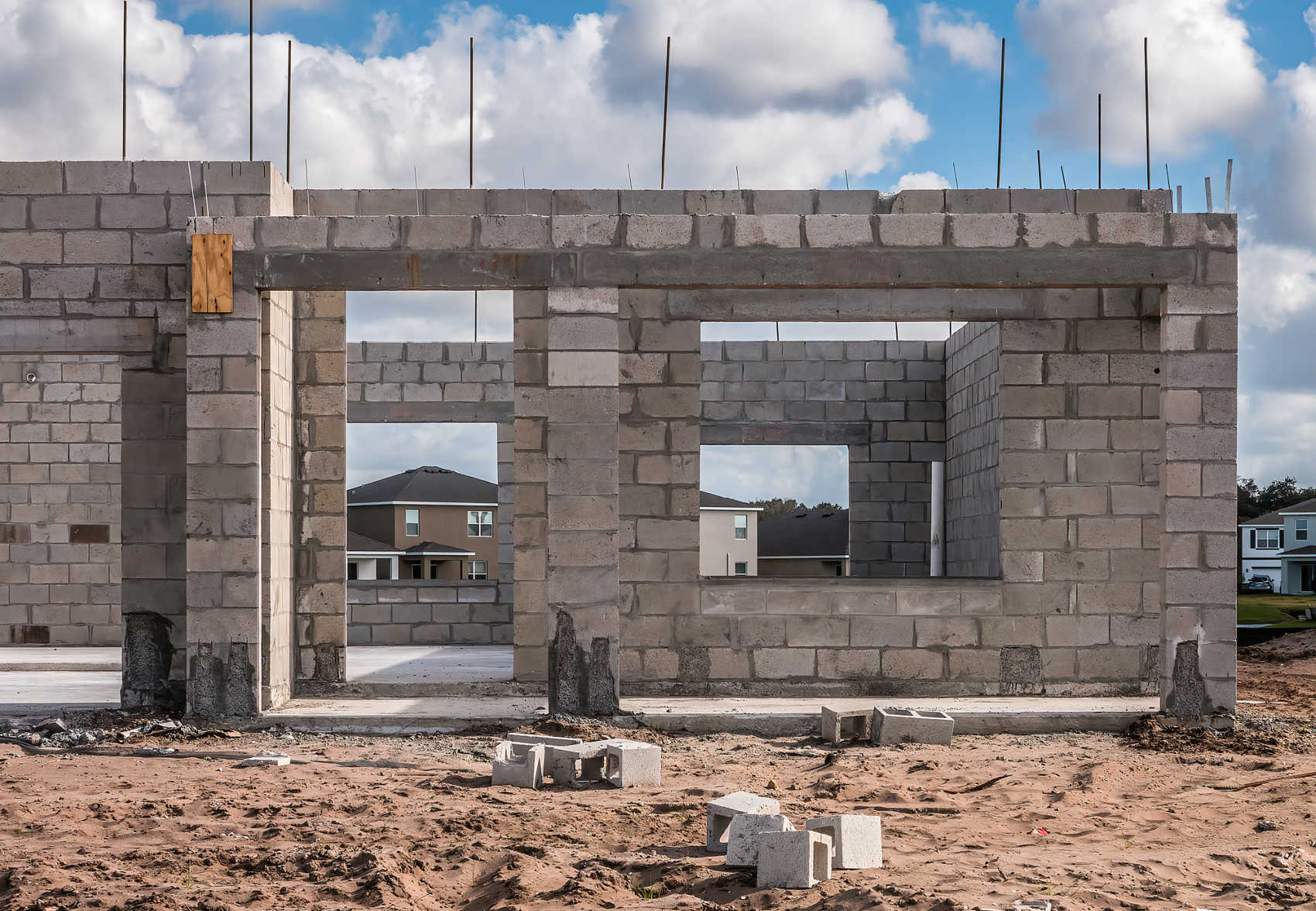
The 21st Century ROAD to Housing Act gives the U.S. Virgin Islands new federal tools to support affordable housing construction, homeownership, property repairs and future disaster recovery, but the territory’s ability to benefit may depend heavily on whether its relationship with the U.S. Department of Housing and Urban Development improves.

The law, enacted July 11, 2026, expands several federal housing programs that apply to the territory. It does not, however, provide the Virgin Islands with an automatic allocation, guarantee competitive grants or override HUD’s July 20 suspension of the Virgin Islands Housing Finance Authority.
That creates a significant opportunity accompanied by an immediate obstacle: Congress has broadened the programs the territory may pursue at the same time VIHFA, the agency responsible for administering several major federal housing programs locally, faces restrictions on future transactions with HUD and the wider federal executive branch.
Among the law’s most direct changes is new authority allowing recipients to use up to 20 percent of regular Community Development Block Grant funding for the construction of affordable housing.
VIHFA says the territory generally receives approximately $1.9 million annually through the insular-area CDBG program. At that level, as much as approximately $380,000 could be directed toward new housing construction.
That would not be enough to finance a major development on its own, but it could support land preparation, infrastructure, gap financing or part of a larger affordable-housing project. The regular CDBG allocation is separate from the territory’s much larger disaster-recovery portfolio.
The law also expands flexibility under the HOME Investment Partnerships Program. Certain homeownership assistance may now reach households earning as much as 100 percent of area median income.
That could benefit working Virgin Islands families who earn too much to qualify under traditional low-income standards but still struggle with home prices, down payments, closing costs, insurance and mortgage requirements.
The change would not make every household below the income threshold automatically eligible. HUD and the local administering agency would still establish program rules, assistance limits and underwriting requirements.
The legislation also creates competitive programs that could support major home repairs, housing planning, permitting improvements and the conversion of vacant hotels or commercial properties into housing.
A proposed whole-home repair program could cover health and safety work, accessibility improvements, habitability repairs, energy and water efficiency, weatherization and storm resilience for qualifying households.
That could be especially relevant in the Virgin Islands, where older homes often require substantial roof, electrical, plumbing, accessibility or hurricane-hardening work.
The territory could also compete for grants to improve permitting, develop a comprehensive housing plan, identify government-owned land and remove administrative barriers that slow construction.
Another program would support the conversion of vacant or abandoned hotels, commercial buildings and industrial properties into attainable housing. Funding could be used for acquisition, demolition, site preparation, rehabilitation and construction.
Those programs could address several local housing challenges, but none comes with guaranteed funding. Congress must still appropriate money, and the territory would have to compete against other jurisdictions.
The law may also have long-term importance for disaster recovery.
It establishes a more standardized framework for future CDBG Disaster Recovery funding, including public allocation formulas, action plans, annual audits, public spending dashboards and greater coordination among HUD, FEMA and the Small Business Administration.
The measure also allows HUD to use an alternative definition of extremely low income for the Virgin Islands, giving the department discretion to account for territorial economic conditions rather than relying entirely on mainland calculations.
Those changes apply to future disaster-recovery appropriations. They do not rewrite the territory’s existing hurricane grants, remove current federal restrictions or release money already subject to HUD controls.
The law also does not resolve VIHFA’s suspension.
HUD suspended the authority from future procurement and nonprocurement transactions pending an investigation, citing alleged weaknesses involving financial management, procurement, internal controls and the risk of fraud or misuse. The allegations have not been finally adjudicated.
While the suspension remains in place, VIHFA may be unable to act as the applicant, recipient, administrator or partner for some of the new or expanded programs.
Other territorial agencies, the Virgin Islands Housing Authority, nonprofit organizations or private developers may be eligible under particular programs, but that would depend on the rules governing each grant and whether VIHFA is involved.
The territory may therefore have to resolve the suspension, identify another qualified administrator or secure HUD approval before it can fully pursue the opportunities created by the law.
The ROAD to Housing Act gives the Virgin Islands a broader federal housing toolbox, particularly for affordable construction, working-family homeownership, home repairs and future disaster recovery.
It does not provide guaranteed funding, eliminate federal oversight or solve the territory’s administrative and construction challenges.

Its ultimate value to the Virgin Islands will depend on whether Congress funds the programs, whether HUD writes rules suited to territorial conditions and, most immediately, whether the USVI and HUD can establish a workable path forward following VIHFA’s suspension.