



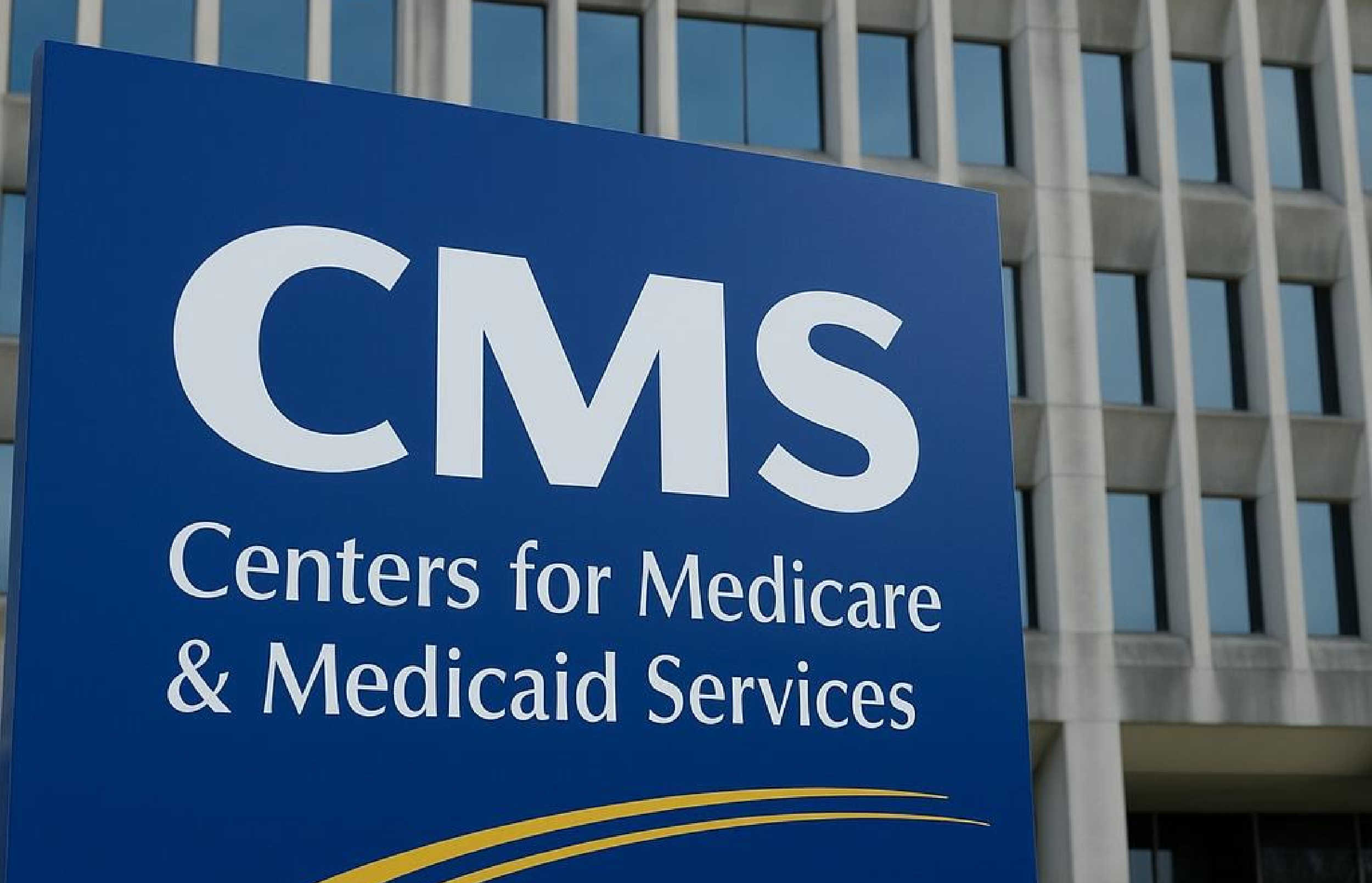
Virgin Islanders who rely on a USVI birth certificate to establish U.S. citizenship during certain Medicaid or Children’s Health Insurance Program eligibility checks may now have to provide additional information about a parent under new federal guidance issued Friday.

The Centers for Medicare & Medicaid Services said a birth certificate documenting birth in the U.S. Virgin Islands remains an acceptable citizenship document. But under the new verification framework, a birth certificate alone does not complete the process when CMS requires citizenship to be established through that alternative-documentation route. The applicant must also provide proof of identity and a qualifying document concerning at least one parent — or, in certain circumstances, a parental attestation.
The Sept. 4 guidance implements President Donald Trump’s Aug. 6 Executive Order 14418 following a June Supreme Court ruling on birthright citizenship. It applies prospectively and, CMS says, only when citizenship must be verified to establish eligibility for Medicaid or CHIP.
That distinction is important: the guidance does not say that every Virgin Islands Medicaid beneficiary must now re-prove citizenship, nor does it declare a USVI birth certificate invalid. Instead, it changes what must accompany a birth certificate when that document is being used in the federal citizenship-verification process.
Birth Certificate Now Requires Additional Documentation Under this Route
CMS divides acceptable citizenship evidence into several categories. A Category A document establishes both citizenship and identity. The list includes qualifying U.S. passports, Certificates of Naturalization, Certificates of U.S. Citizenship and certain other federally recognized documents. Someone whose citizenship can be confirmed through an acceptable Category A document does not have to use the birth-certificate pathway described in the guidance.
A USVI birth certificate falls into Category B, which CMS says establishes citizenship but not identity. Category B specifically includes birth certificates showing birth in one of the 50 states, the District of Columbia, Puerto Rico, Guam, the U.S. Virgin Islands or the Northern Mariana Islands.
An applicant using that route must also provide a Category C document establishing identity.
The new framework then adds another component: at least one Qualifying Parent Document, addressed through an eligibility attestation.
If the applicant’s mother or father was a U.S. citizen, documentation showing that parent’s citizenship may satisfy that portion of the process. CMS lists documents such as a U.S. passport, Certificate of Naturalization, Certificate of Citizenship and, for parents born before the executive order took effect, qualifying birth certificates.
If neither parent was a U.S. citizen, the guidance provides another route: the applicant’s mother or father may attest that none of the circumstances identified in Executive Order 14418 applied when the applicant was born.
What Parents Would Be Attesting To
Trump’s Aug. 6 order followed the Supreme Court’s June 30 decision in Trump v. Barbara. In that case, the court held that children born in the United States to parents who were unlawfully or temporarily present are citizens at birth under the Citizenship Clause of the Fourteenth Amendment.
The administration subsequently issued Executive Order 14418 identifying narrower categories that it says fall outside birthright citizenship.
Those categories include circumstances in which either parent is an “alien enemy,” including certain members of designated terrorist organizations; either parent is a qualifying foreign-government or international-organization employee; or a parent engaged in fraud or a commercial transaction designed to purchase or obtain birthright citizenship. The order specifically includes arrangements intended to ensure that a mother or surrogate is present in the United States or a U.S. territory to give birth.
The fourth category covers a person born in a U.S. territory or territorial waters where citizenship is not conferred by federal statute.
That provision should not be read to mean ordinary births in the U.S. Virgin Islands no longer confer U.S. citizenship. Federal law specifically addresses the Virgin Islands. Under 8 U.S.C. § 1406, people born in the U.S. Virgin Islands on or after Feb. 25, 1927, and subject to the jurisdiction of the United States are citizens of the United States at birth.
CMS itself reinforces that distinction by expressly including U.S. Virgin Islands birth certificates among its qualifying citizenship documents.
Existing USVI Application Materials Do Not Yet Reflect New Step
Medicaid and CHIP in the Virgin Islands are administered by the V.I. Department of Human Services, which performs eligibility determinations for the territory. DHS currently lists citizenship among the requirements for Medicaid coverage.
The department’s existing public checklist tells applicants to provide proof of age and citizenship and lists a U.S. passport, U.S. birth certificate, naturalization documents or permanent resident card among acceptable documentation. It also separately requires proof of identity.
That public-facing checklist does not currently mention the new CMS parent-document or parental-attestation procedure.
As of Sunday, DHS had not posted a public announcement explaining how the Sept. 4 federal guidance will be incorporated into Virgin Islands Medicaid applications, renewals or other eligibility procedures.
The practical effect may therefore depend on when DHS determines that a particular beneficiary’s citizenship needs federal verification and what document the person uses to establish it.
CMS is explicit that the new procedure applies “when the agency needs to verify U.S. citizenship, and only when the agency needs to verify U.S. citizenship,” rather than establishing a blanket requirement that every Medicaid or CHIP enrollee produce the new documents immediately.
USVI Birth Certificates Have Long Been Accepted
The inclusion of Virgin Islands birth certificates in the federal Medicaid system is not itself new.
Federal Medicaid regulations have recognized birth records from the Virgin Islands for roughly two decades. Earlier CMS rules specifically listed a U.S. public birth certificate showing birth in the Virgin Islands as acceptable documentary evidence of citizenship, along with birth records from the states and other qualifying territories.
Historically, when a birth certificate was used as secondary evidence of citizenship, applicants also had to establish identity. CMS described that framework in earlier citizenship-verification guidance.
What the Sept. 4 guidance adds under Executive Order 14418 is the parent component to the birth-certificate pathway: citizenship evidence concerning a mother or father, or an attestation addressing the circumstances established by the president’s order.
Separate Medicaid Funding Restrictions Begin Oct. 1
The same CMS document also highlights another federal change scheduled to take effect next month.
Beginning Oct. 1, 2026, federal Medicaid and CHIP funding will generally be restricted, subject to specified exceptions, to four groups: U.S. citizens and nationals; lawful permanent residents; Cuban and Haitian entrants; and migrants lawfully residing in the United States under the Compacts of Free Association.
CMS says the restrictions concern federal financial participation in Medicaid and CHIP and were enacted separately by Congress.
The limitations do not apply to several categories of expenditures, including emergency Medicaid, coverage provided to qualifying lawfully residing children and pregnant women, and certain state-designed health initiatives for low-income children. The U.S. Virgin Islands currently participates in the federal option covering lawfully residing children and pregnant women.
The Virgin Islands Medicaid program already requires applicants to meet citizenship or qualifying immigration-status requirements, and certain otherwise ineligible noncitizens may receive coverage for emergency medical conditions.
Part of a Broader Federal Rollout
CMS is not alone in implementing the Aug. 6 executive order.
The U.S. Department of Agriculture also posted citizenship-verification guidance on Sept. 4 for programs under its jurisdiction, including federal nutrition benefits, indicating that agencies across the federal government are now incorporating Executive Order 14418 into their benefit-verification procedures.
For Virgin Islanders, however, the Medicaid guidance has an unusually direct local connection because CMS specifically names the U.S. Virgin Islands throughout the document.
A territorial birth certificate continues to be federally recognized as evidence of citizenship. But when that certificate is the document used to establish citizenship for Medicaid or CHIP under the new alternative-verification pathway, the federal government is now requiring more: proof of identity and additional information concerning a parent.

How that new requirement will be administered locally, including exactly when Virgin Islands beneficiaries will encounter it during applications or renewals, now rests in part on implementation by the V.I. Department of Human Services.