


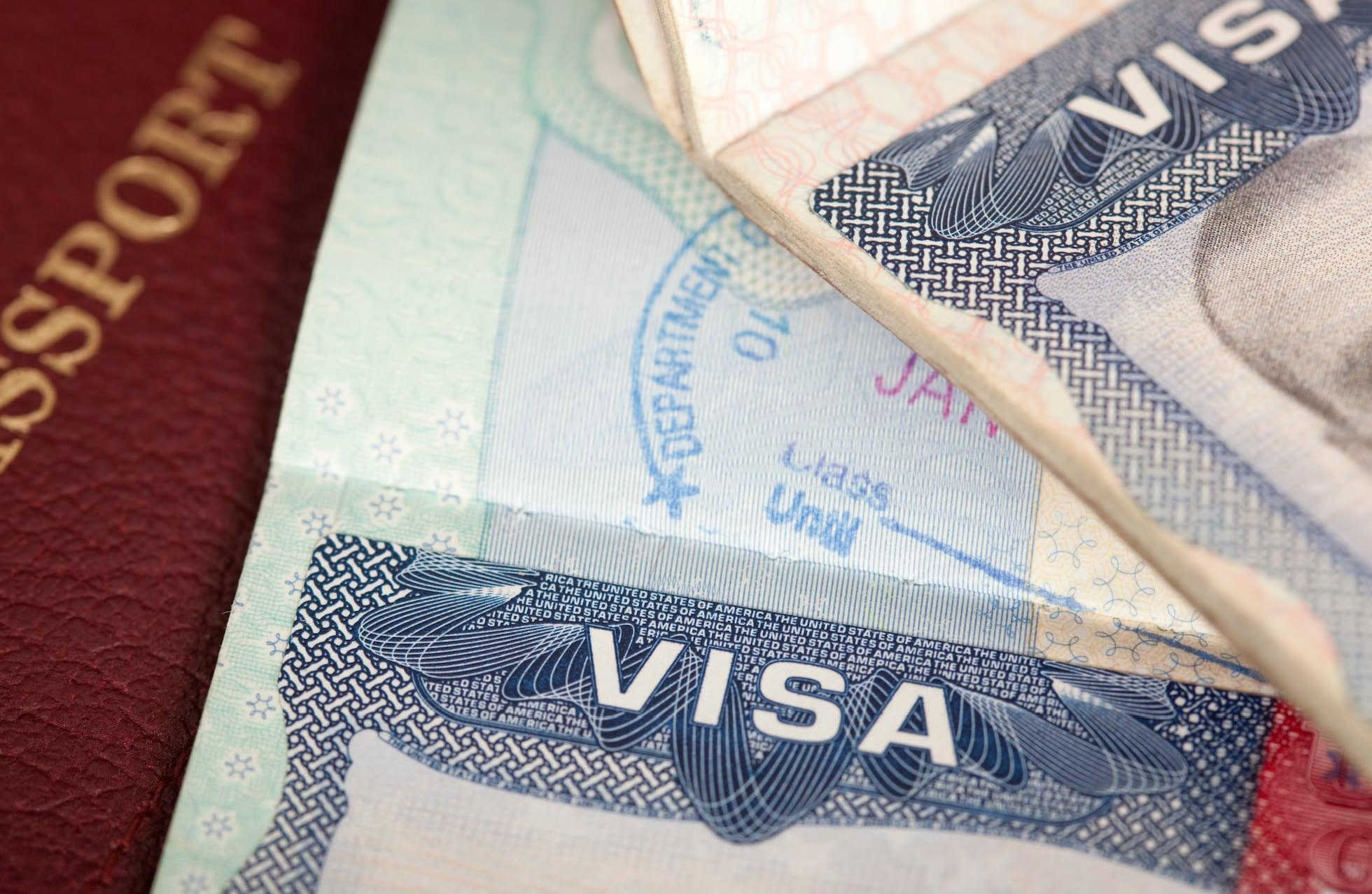
Caribbean residents selected for the United States Diversity Visa program are facing an increasingly narrow window to obtain their visas after the State Department again halted issuance, even though federal law ends all DV-2026 eligibility on September 30.

Current guidance from the Department of State says that Diversity Visa applicants may continue submitting applications and attending interviews and that appointments will generally remain scheduled. However, the department says no Diversity Visas will actually be issued while the suspension remains in place. There are no exceptions under the current guidance.
The timing is particularly consequential because Diversity Visa eligibility cannot simply be carried into the next fiscal year. The State Department's September Visa Bulletin states that every DV-2026 applicant's entitlement ends September 30. Visas cannot be issued to applicants after that date, and spouses and children seeking status through a principal applicant face the same deadline.
The new situation follows an unusual sequence of court decisions and administrative actions surrounding the program.
The State Department had originally suspended Diversity Visa issuance in December 2025 while it reviewed screening and vetting procedures. On August 25, U.S. District Judge Richard Leon ruled in consolidated litigation that the State Department's DV pause was unlawful under the Administrative Procedure Act, finding that the government had not adequately explained the sweeping and categorical nature of the policy. The court noted that the stakes were especially high because anyone who failed to obtain a visa by September 30 would lose the opportunity associated with their DV-2026 selection.
Three days later, on August 28, the U.S. District Court for the Northern District of California issued another order in Medani et al. v. Trump et al., temporarily vacating policies that had frozen Diversity Visa processing and directing the government to resume ordinary adjudication of affected cases while litigation continued. USCIS subsequently announced that it would comply with that order.
The State Department's own updated guidance acknowledges that the December 2025 pause ceased to be in effect on August 28 because of the Medani court order. But immediately after making that statement, the department's current guidance says, "Effective immediately, the Department of State has paused all visa issuances to diversity immigrant visa applicants."
The department says the suspension is intended to allow a review of screening and vetting protocols following national-security and public-safety concerns. State specifically cited the Brown University shooting and the killing of an MIT professor, saying the person suspected in those crimes had entered the United States through the Diversity Visa program. The review, according to the department, is intended to examine whether the government can adequately establish applicants' identities and eligibility and determine whether they pose security or public-safety threats.
For DV-2026 applicants, however, every day during which issuance remains suspended consumes part of a period that cannot be recovered after September 30.
That issue is especially relevant for eligible applicants from the Caribbean. The September Visa Bulletin places applicants in the South America and Caribbean region under a regional lottery rank cutoff of 4,750, meaning eligible applicants generally must have regional rank numbers below that figure. The Bahamas is treated separately as the North American region and is listed as "current" for September.
State Department figures show that Caribbean nationals and their family members are among the prospective applicants registered for DV-2026. Trinidad and Tobago accounts for 139 prospective applicants, while the Bahamas has 23 and Guyana 24. The figures also include 11 from St. Kitts and Nevis, nine from St. Lucia, eight each from Dominica and St. Vincent and the Grenadines, five from Grenada, three from Barbados and two from Antigua and Barbuda. The government's numbers include principal selectees as well as spouses and children who could potentially immigrate with them.
Several other major Caribbean countries were not eligible for the DV-2026 lottery because of their recent levels of immigration to the United States. The State Department identifies Cuba, the Dominican Republic, Haiti and Jamaica among the countries whose natives were ineligible to participate in this year's program.
The Diversity Visa program is intended to provide permanent-resident visas to people from countries with comparatively low levels of immigration to the United States. More than 20.8 million qualified entries were submitted for DV-2026, and the State Department registered approximately 129,516 prospective applicants worldwide, including selected entrants and their spouses and children. Selection does not guarantee a visa. Applicants must still meet eligibility requirements, complete the required processing and obtain a visa before the fiscal-year deadline.
Although federal law ordinarily provides for up to 55,000 Diversity Visas annually, statutory deductions reduce the approximate DV-2026 limit to 52,101, according to the September Visa Bulletin. No single country may receive more than seven percent of the visas available during the year.
There is also a distinction between applicants seeking visas through U.S. embassies and consulates abroad and people already legally present in the United States who are pursuing adjustment of status through USCIS. USCIS said on September 4 that, pursuant to the Medani ruling, it had been ordered to take reasonable steps during the remainder of the fiscal year to resume ordinary adjudication of covered pending DV adjustment-of-status cases without applying its earlier hold policy.
For applicants relying on State Department visa issuance abroad, however, the agency's current instructions remain unequivocal: applications and interviews can continue, but Diversity Visas are not being issued while the pause is in effect. With September 30 marking the absolute end of DV-2026 eligibility, any suspension that persists through the remainder of the month could leave otherwise eligible applicants without a visa despite having been selected for the program.