




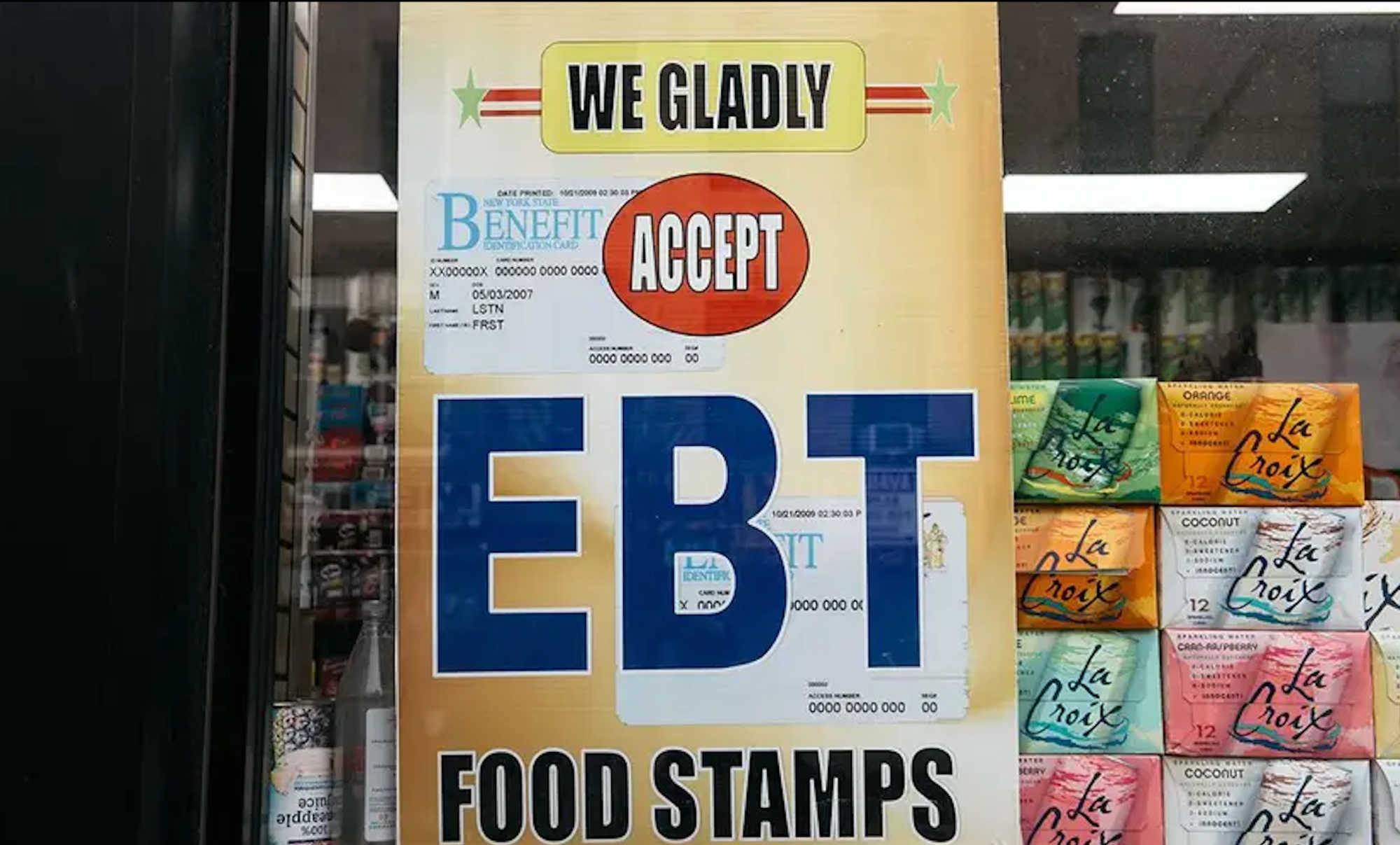
As vulnerable populations grapple with reinstated federal work requirements for SNAP benefits, members of the Continuum of Care Council on Homelessness are working to ensure Virgin Islanders do not lose access to the funds that are critical to their survival.

Under the new federal mandate, individuals who are deemed "able and ready to work" and do not have children under the age of six must meet specific work or educational criteria to remain eligible for nutritional assistance.
"If they don’t comply with seeking employment [or] educational programs, then certainly their benefits will be suspended," explained board member Sarah Burke during CoC’s meeting on Friday, noting that the changes are estimated to impact over people territory-wide.
Many SNAP beneficiaries, particularly those currently experiencing homelessness or other major life challenges, may not be able to comply with the requirement to find paying work or to undertake an educational program. Board members, however, highlighted an alternative: volunteerism.
To maintain their SNAP status, affected residents can fulfill the requirement by completing and documenting 40 hours of volunteer service per month. Burke clarified that these hours can be completed at various agencies across the islands, provided the work is verifiable.
"40 is 40, as long as you’re showing an effort,” Burke said. "We understand our community and for us, we’re looking at making sure that those forms are signed, that they are verifiable with points of contact.” She reiterated that the new requirements were federally imposed, with the responsibility of verification and documentation on local V.I. Department of Human Services officials.
She outlined the process beneficiaries should follow to ensure that their SNAP eligibility is not suspended due to failures to abide by the requirements. Recipients should first ensure they receive all the required forms directly from their DHS eligibility specialist. The forms must then be signed by the agency where the beneficiary is working or volunteering. The signatory must be someone who DHS can contact during a subsequent verification process. While the forms can be submitted electronically, Burke strongly recommended hand-delivery of the first batch. Work or volunteer logs should ideally be submitted monthly.
To minimize the risk of interruption or suspension of benefits, Burke highly encouraged beneficiaries to ensure redundancy in the process. “I encourage them to keep a copy, whether they take a picture of it on their phone because paperwork does get lost, and so you always have to have a backup to the backup," she advised.
Emanuella Perez-Cassius, the V.I. Housing Authority’s representative on the Council, announced that there is already an effort underway to connect organizations and businesses who may need the services of volunteers with those who need to log volunteer hours to maintain benefit status. The involvement of the private sector is also expected to lead to pair work opportunities as well. Initial interest expressed by Suzanne Magras, secretary of the CoC and director of UVI’s Center for Excellence in Leadership and Learning (UVI CELL), signaled that the burgeoning network could also lead to professional development opportunities. She pointed to courses available from UVI CELL that could be accessed free of charge via the V.I. Department of Labor.

Meeting attendee Nereida Rivera-O'Reilly, a former senator, expressed her belief that the effort needed to encompass more entities, including the DOL and the Chamber of Commerce, to facilitate the effective placement of volunteers and job-seekers. Burke agreed that DHS needs to more keenly pursue this goal. She identified territory-wide SNAP Administrator Emmanuella Archer as the primary DHS point of contact for this coordinating effort.


Advertisements