




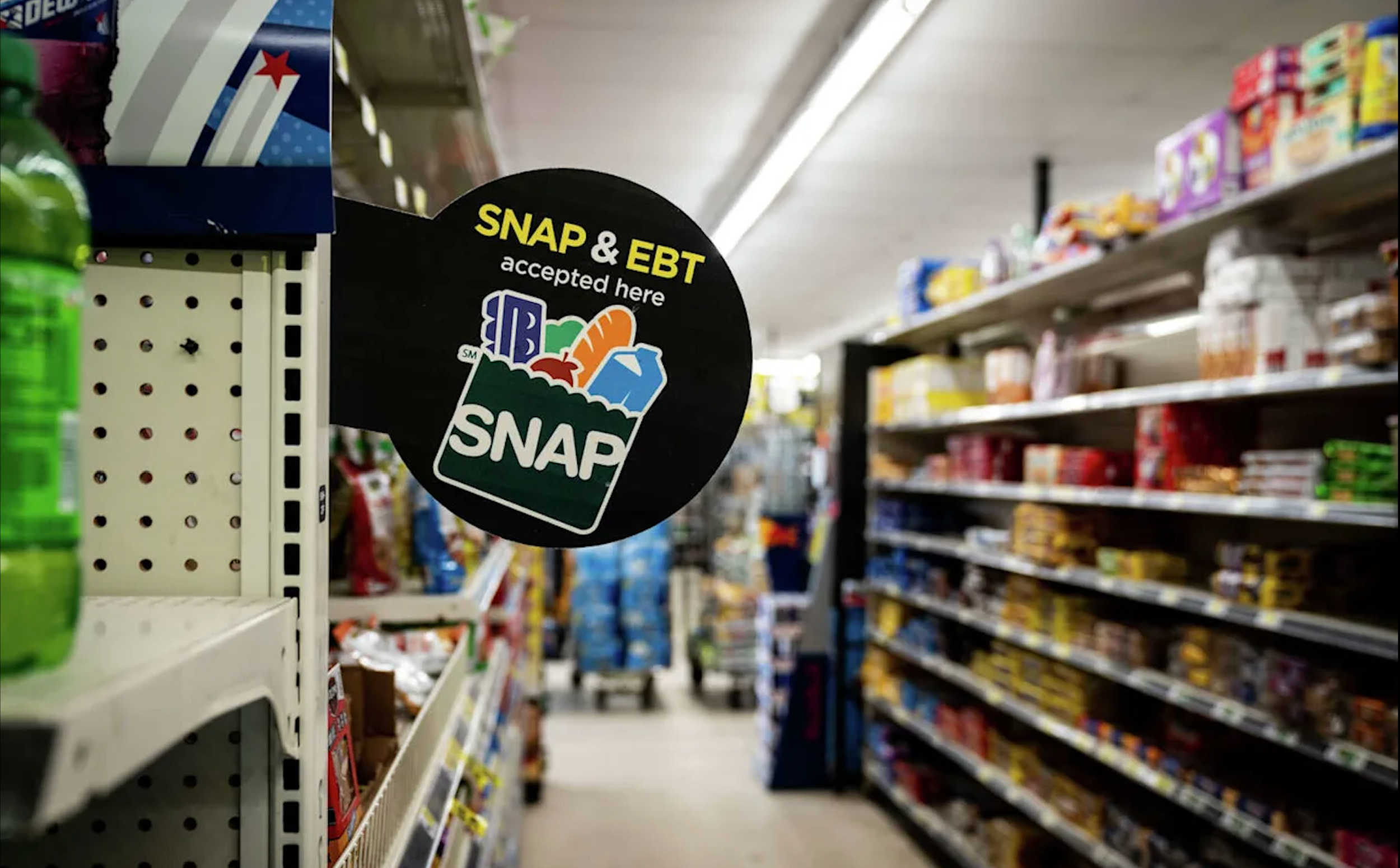
Two federal judges issued near-simultaneous rulings on Friday, directing the Trump administration to tap contingency funds to sustain Supplemental Nutrition Assistance Program (SNAP) benefits during the ongoing government shutdown, averting an immediate halt for 42 million recipients set to begin November 1.

In Boston, U.S. District Judge Indira Talwani deemed the U.S. Department of Agriculture's decision to suspend payments "unlawful," citing an "erroneous construction of the relevant statutory provisions." She ordered the administration to report by November 3 on whether it would authorize reduced or full benefits using $6 billion in reserves plus other available funds. Hours earlier in Providence, Rhode Island, U.S. District Judge Mary S. McElroy granted a temporary restraining order in a related suit, mandating the USDA to distribute contingency money "timely or as soon as possible" for November payments.
The decisions stem from lawsuits filed by 25 Democratic-led states and a coalition of municipalities, nonprofits, and businesses, which argued the USDA's stance violated the Administrative Procedure Act and congressional intent.
The rulings address a crisis precipitated by the shutdown's 31st day, the second-longest in U.S. history, triggered by partisan deadlock over a House-passed continuing resolution extending funding through November 21. Democrats have blocked the clean bill 13 times in the Senate, insisting on extensions for Affordable Care Act subsidies aiding 24 million enrollees, while Republicans accuse them of politicizing essentials.
The USDA, citing the Antideficiency Act's bar on unappropriated spending, maintained it lacked authority for full November payouts—estimated at $8.5-9 billion—reversing its September contingency plan that anticipated using multi-year reserves for such lapses. "Contingency funds are not legally available to cover regular benefits," the agency stated in an October 24 memo, reserving them for disasters like hurricanes. However, Talwani countered that Congress intended proportional reductions if funds fell short, not outright suspension, and McElroy called the policy reversal "arbitrary and capricious" absent explanation.
Plaintiffs in the Massachusetts case, led by attorneys general from California, Massachusetts, and New York, highlighted SNAP's status as a congressionally mandated entitlement under the Food and Nutrition Act, serving 1 in 7 Americans including 19 million children and 8 million seniors. They pointed to $6 billion in SNAP-specific reserves—$3 billion each from fiscal years 2024 and 2025, available through 2026—plus $23 billion in Section 32 commodity funds, already used for WIC's October extension via $300 million in tariff revenue.
The Rhode Island suit, brought by Democracy Forward on behalf of cities and nonprofits, echoed this, arguing the USDA's pre-shutdown acknowledgment of reserves for "participant benefits" during lapses created a legal obligation. "The federal government has the money...they’re choosing to harm millions," Massachusetts AG Andrea Joy Campbell said post-ruling. States reported spending millions on administration and food bank surges without reimbursement, with California deploying its National Guard to aid pantries.
The Trump administration defended its position in court, with Justice Department attorney Jason Altabet arguing during the October 30 Boston hearing that reserves were for shortfalls within appropriated periods, not total lapses, and partial payouts risked audits, delays, and inequitable reductions—potentially leaving families with half benefits. Agriculture Secretary Brooke Rollins, in a Fox News interview, reiterated: "100% unequivocally, USDA does not have the $9.2 billion...There’s not just pots of $9.2 billion sitting around," blaming Democrats' shutdown prolongation. OMB Director Russ Vought, also named as a defendant, has overseen reallocations for military pay ($8 billion from Pentagon accounts) but deemed SNAP ineligible. The rulings require the USDA to explore options, including prorated allotments, but the administration signaled appeals, warning of "operationally fraught" implementation that could take weeks.
The decisions provide temporary relief but leave uncertainty: Talwani noted even partial funding might delay deliveries, while McElroy ordered a Monday update on timelines. Food banks report 30% demand spikes, with states like Virginia declaring emergencies and Illinois estimating $110 million in lost tax revenue from reduced grocery spending.

Bipartisan voices, including Sen. Susan Collins (R-Maine), questioned the USDA's "novel interpretation," and Sen. Amy Klobuchar (D-Minn.) stated post-ruling: "Trump officials now have no excuse to withhold food assistance from Americans." The Center on Budget and Policy Priorities' Dottie Rosenbaum affirmed historical precedent, noting SNAP operated through prior shutdowns via obligated funds or reserves, without interruption.


Advertisements