




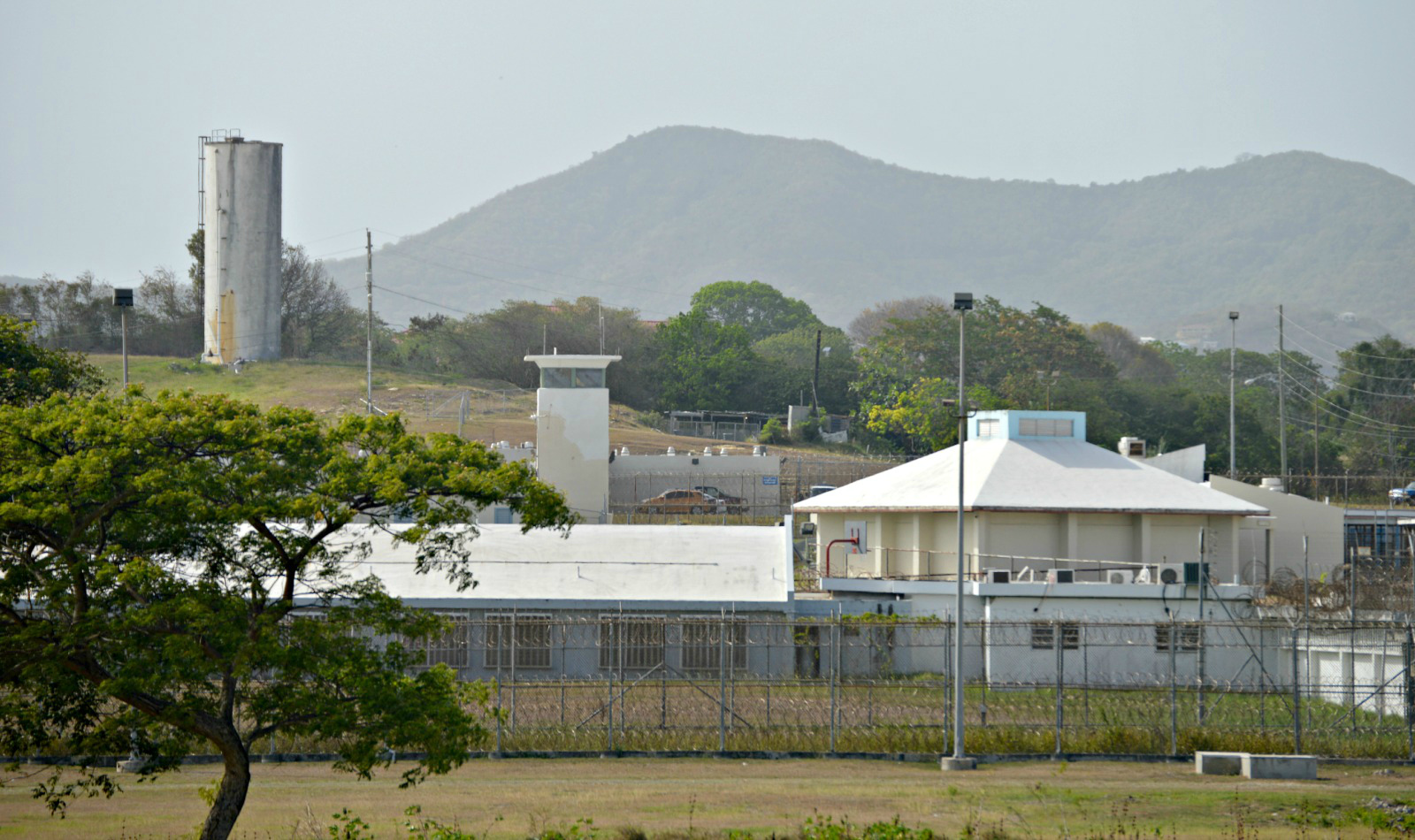
A federal judge has ended four longstanding oversight requirements governing the John A. Bell Adult Correctional Facility on St. Croix, returning responsibility for prisoner classification, restraints, grievances and staff training to the Virgin Islands government despite findings that two of those areas have not achieved full sustained compliance.

In a five-page order issued November 20, District Court Chief Judge Robert A. Molloy granted the government's unopposed motion to terminate four portions of a federal settlement agreement that has governed prison operations following decades of litigation over unconstitutional conditions at the facility.
The decision removes federal enforcement of Section IV, Subsections F, I and J, and Section VIII of the 2013 agreement, covering prisoner classification and housing, the use of physical restraints, grievance procedures and employee training.
The ruling follows findings from the court-appointed independent monitor's 32nd report, issued May 28, documenting significant improvements in all four areas.

However, the monitoring results reveal differences in the levels of compliance achieved.
Prisoner classification and housing had reached 67 percent toward full sustained compliance, with two requirements remaining in partial compliance. Grievance procedures were assessed at 93 percent toward full sustained compliance, with four provisions achieving sustained compliance and one remaining in substantial compliance.
Physical restraints and staff training had both achieved sustained compliance across all applicable provisions. For restraints, that meant maintaining substantial compliance for at least 12 consecutive months.
Despite the remaining deficiencies in classification and grievances, Judge Molloy concluded that the government had demonstrated sufficient progress to end federal enforcement of those requirements.
"The Court is satisfied that Defendants have met their burden here," the judge wrote.
He determined that the government had implemented durable remedies and that continued enforcement was no longer necessary under the standards governing modification of institutional reform agreements.
The federal government did not oppose terminating the provisions.
Nearly Four Decades of Federal Litigation
The decision represents another step toward resolving a federal civil rights case initiated in 1986, when the U.S. Department of Justice sued the Virgin Islands government over unconstitutional conditions at the facility, then known as Golden Grove.
The litigation led to a consent decree and subsequent court orders requiring improvements to prisoner safety, housing, medical care, security and other conditions of confinement.
In 2013, the parties entered into a settlement agreement establishing additional requirements intended to remedy constitutional violations identified at the prison.
The court has since relied on independent monitoring reports to determine whether the territory has implemented and maintained the required reforms.
In November 2025, Senior District Judge Wilma Lewis terminated provisions governing medical care after finding sustained compliance. That decision left mental healthcare requirements and other settlement provisions subject to continued federal enforcement.
As The Consortium previously reported, Bureau of Corrections Director Wynnie Testamark told lawmakers in December 2025 that the agency was making progress toward ending decades of federal supervision.
At the time, lawmakers also questioned the financial burden associated with court-appointed monitoring and the length of time required to achieve compliance.
Other Federal Requirements Remain
The November 20 decision does not terminate the entire settlement agreement or release the correctional facility from all federal supervision.
Judge Molloy specifically acknowledged that other provisions remain unresolved, explaining that ending enforcement in the four identified areas would allow the territory to concentrate its resources on meeting the agreement's remaining requirements.

The order also makes clear that the territorial government assumes responsibility for maintaining the reforms in the areas released from federal enforcement.