



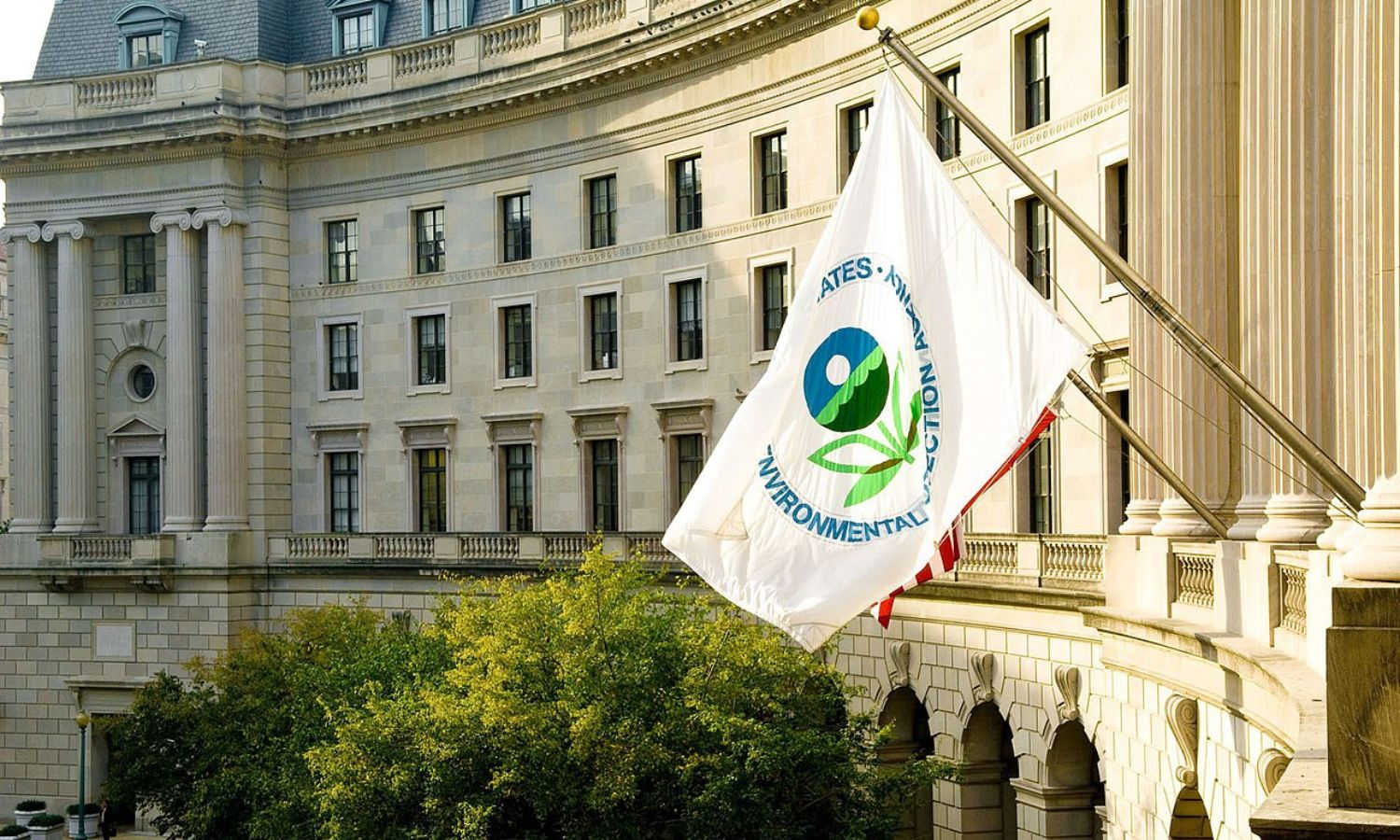
The William Jefferson Clinton Federal Building in Washington, D.C., which serves as the headquarters for the U.S. Environmental Protection Agency (EPA).
The U.S. Virgin Islands faces several challenges that “limit its capacity to manage and use its IIJA funds for clean water and drinking water construction grants,” says a new report from the Environmental Protection Agency’s Office of the Inspector General.

The EPA OIG says the report is necessary because it is important to understand “the capacity of states and territories to administer and manage” the significant increase in grant funding coming from the Infrastructure Investment and Jobs Act (IIJA) for clean water and drinking water infrastructure improvements. Annual allocations went from approximately $10 million each year in 2020 and 2021 to between $29 million and $55 million in subsequent years.
After investigating the territory's financial, human capital, organizational and stakeholder capacity to manage and use these funds, the EPA found that challenges exist in each capacity except financial.
Financial capacity – the ability to meet matching requirements, pay administrative expenses, etc. – is adequate, especially since EPA's Region 2 continues to waive matching funds requirements for clean water and drinking water construction grants, the report finds.
However, “in terms of human capital challenges, the USVI struggles to hire and retain staff, which leaves key positions like that federal grants manager vacant. “This lack of personnel causes existing staff to fall behind on their grant management tasks,” the EPA OIG report says. One result of the delinquency is $1.5 million in outstanding administrative reimbursement requests for payroll and travel expenses, the report provided as an example. The Department of Planning and Natural Resources, which administers the grants, is missing a financial manager, administrative specialist, and engineer, along with the federal grants manager vacancy, the EPA OIG report says.
Salaries are too low at DPNR compared to territorial averages for similar positions, the EPA OIG report concludes. While the agency is willing to look at raising staff salaries, union requirements mandate that raises be given to all staff holding the same position. Because staff positions are funded by different sources, across-the-board raises prove challenging if some grants are funded more fulsomely than others. The hiring of non-union staff, the EPA OIG says, is a potential workaround to this challenge. However, a limited labor pool also presents a major hurdle. “Without addressing its staffing challenges, it is likely that the DPNR will be unable to keep up with its grants management tasks,” the report concludes. “If this occurs, implementation of SRF IIJA-funded infrastructure projects may be delayed.”
According to the EPA OIG report, organizational capacity challenges also plague DPNR. The lack of a succession or contingency plan for replacing key personnel leaves the agency vulnerable to staff resignation or retirement. Relatively weak internal controls and the lack of adequate standard operating procedures are barriers to the effective management of grants, the report finds. Because of this, more than $1.5 million in obligated and allocated grant funding, some dating back to 2011, remain unused, as the required documentation and reports to close out at least nine grants have not yet been submitted. This has forced DPNR to substitute funds from other sources to pay administrative expenses for these grants, including borrowing from the general fund.
According to the report, the failure to submit required documents has left DPNR vulnerable to EPA enforcement actions, which can include the withholding of payments, the suspension of current and future federal awards, or suspension and debarment. The report notes that thus far, the EPA has not pursued any of these potential actions but instead has been trying to assist DPNR with meeting its obligations. However, “few staff and turnover in high-level positions have hindered the DPNR's ability to successfully address its organizational challenges,” the EPA OIG report stated, noting that the agency is hiring staff and implementing systemic changes to address its deficiencies.
Outside of DPNR itself, the organizations and agencies which actually receive these grant funds and implement the projects also have limited capacity to use the funding effectively, the EPA OIG report says. The largest sub-recipients of these grant awards are the Water and Power Authority and the Waste Management Authority. “Both agencies have capacity challenges,” the report found. The challenges are similar to that of the DPNR, particularly the “struggle to hire and retain knowledgeable staff, especially engineers,” the report says. Both agencies are also “financially distressed,” which exacerbates their staffing issues, the report continued.
The EPA OIG report also found that the mammoth federally-funded disaster recovery effort in the territory has also created a challenge, occupying a gargantuan amount of the time and energy of the already limited human resource pool at WAPA and WMA. Both agencies are undertaking the prudent replacement of their drinking water and wastewater systems respectively, projects with which they are expected to be occupied for the next several years.
“As a result of these challenges, it is difficult for the DPNR to implement clean water and drinking water construction projects and spend grant funds in a timely manner,” the EPA OIG report concludes. This has resulted in large fund balances, as sub-grantees are unable to draw down funds as quickly and efficiently as they should. As of last March, the EPA calculated that DNPR is holding approximately $135 million in grant funds that must be expended in the next five years, absent any approved extensions.

The EPA Region 2 office, as a result of the report, indicated that it will be working with DPNR and the wider Government of the Virgin Islands to address the deficiencies identified before the end of 2026. As such, the report has classified its several recommendations as “resolved with corrective actions pending.”


Advertisements