

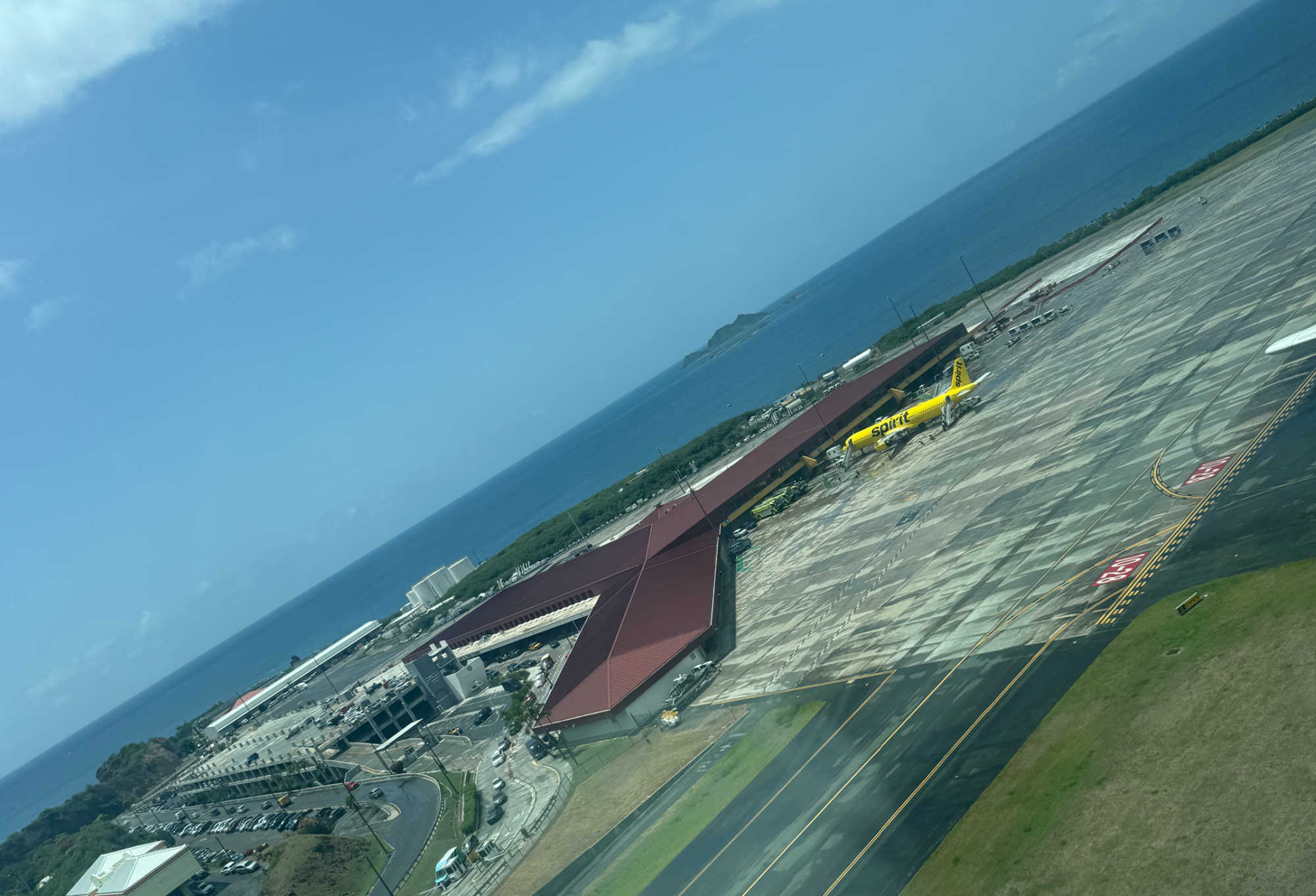
The U.S. Coast Guard is proposing to establish a permanent safety zone in waters west of Cyril E. King Airport on St. Thomas, a move intended to protect vessels, aircraft, personnel, and the marine environment from hazards associated with low-flying aircraft operating near the airport’s runway.

According to a notice of proposed rulemaking scheduled for publication in the Federal Register on January 7, 2026, the safety zone would apply to certain navigable waters directly west of the airport. The Coast Guard said the proposal follows a series of temporary measures implemented in 2025 and is designed to formalize protections in an area where aircraft routinely fly at low altitudes over nearby waters.
The Coast Guard first established a temporary safety zone for the runway area on August 25, 2025. That initial rule was set to expire on September 30, 2025, but was later extended through December 31, 2025 under a temporary interim rule. The current proposal would replace those temporary actions with a permanent safety zone after a public comment period.
Under the proposed rule, the safety zone would cover all navigable waters within 400 yards of the shoreline directly west of the airport’s runway, bounded by two private port authority–managed yellow buoys located at specific geographic coordinates. Within this zone, vessels and individuals would be prohibited from entering unless they receive authorization from the Captain of the Port for Sector San Juan or a designated representative.

Coast Guard officials said the safety zone is necessary to reduce risks to mariners and aircraft caused by vessels transiting close to the end of the runway, where low-flying aircraft approach and depart. The proposal is issued under federal authority that allows the Coast Guard to regulate navigation to protect life, property, and the environment in U.S. waters.
The Coast Guard stated that the proposed rule would be enforced at all times once finalized. Enforcement could involve assistance from federal, territorial, and local agencies, and mariners seeking permission to enter the zone would be required to comply with all lawful orders issued by the Captain of the Port or designated representatives.
In its regulatory analysis, the Coast Guard said the safety zone is not expected to have a significant economic impact on a substantial number of small entities. Officials noted that vessel traffic would still be able to safely transit around the restricted area and that the regulated waters represent a limited portion of the surrounding coastline. The Coast Guard also said it would issue broadcast notices to mariners via VHF marine radio to allow vessel operators to adjust their transit plans.
The agency further stated that the proposal would not require new information collection under federal law and does not raise federalism or tribal governance concerns. Environmental analysis conducted under Department of Homeland Security and National Environmental Policy Act guidelines concluded that the proposed safety zone falls within a category of actions that do not have a significant effect on the human environment.
Public participation is a central component of the rulemaking process, and the Coast Guard said it will consider all comments received during the comment period before making a final decision. Members of the public are invited to submit feedback, including concerns about economic impacts or navigation issues, as part of the review process.

If adopted, the safety zone would be codified in federal regulations governing regulated navigation areas and limited access zones. The Coast Guard said the proposal reflects the need to balance aviation safety, maritime navigation, and environmental protection in one of St. Thomas’ busiest and most sensitive coastal areas.