




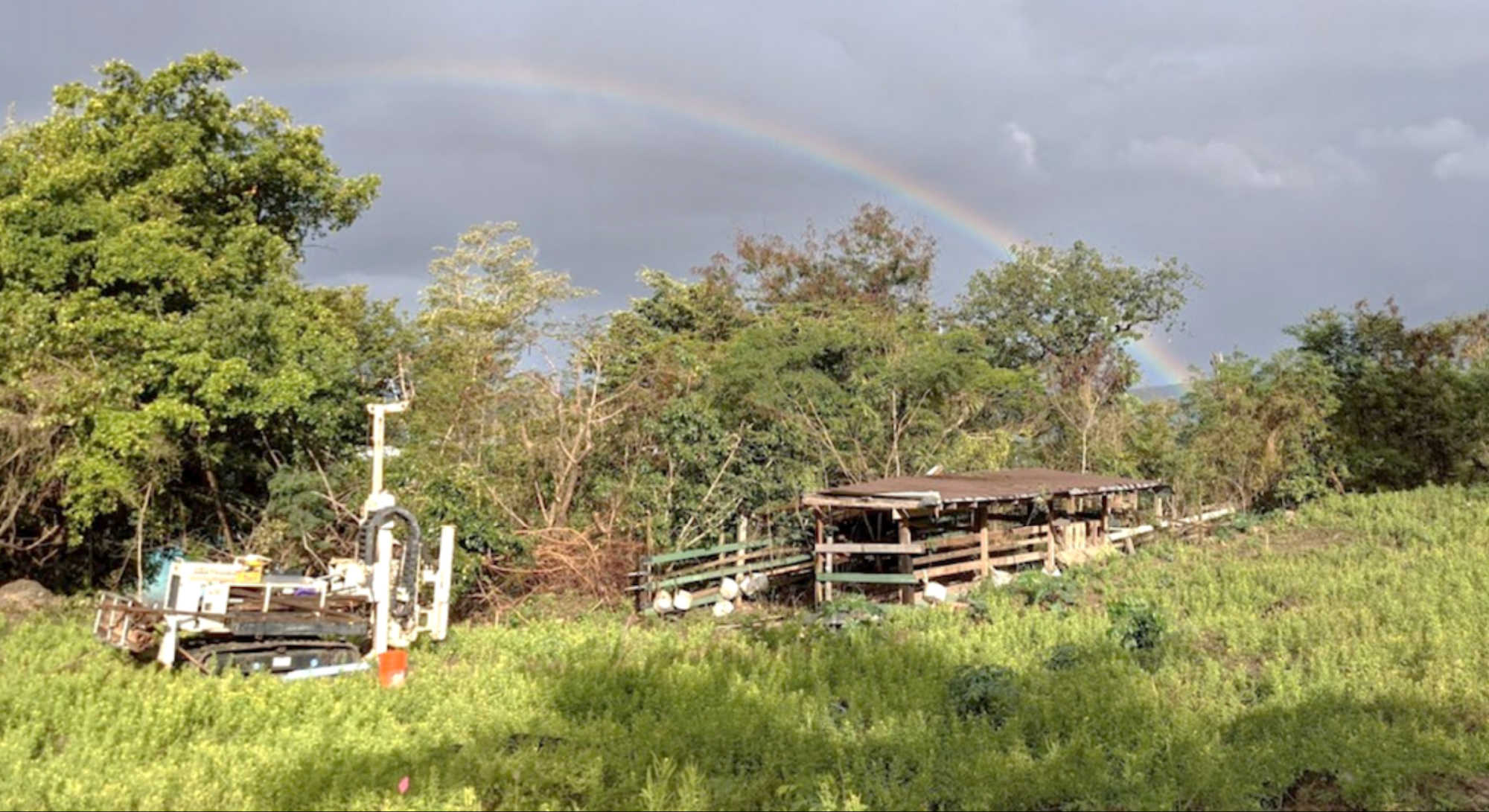
ST. JOHN — The final phase of environmental cleanup at Caneel Bay has been placed on hold while previously allocated federal funding is reassessed, leaving an unlined landfill near Honeymoon Beach where federal investigators found DDT, PCBs, metals and other hazardous substances awaiting removal.

The National Park Service's current Caneel Bay status page says the third and final phase of the cleanup will address hazardous-substance contamination in the unauthorized landfill but that the work is “on hold as the current funding allocated for the project is reassessed.” The agency does not identify how much money is being reconsidered, why it is being reassessed or when the cleanup may resume.
The pause is significant. A detailed NPS environmental investigation identified the roughly 1.5-acre area immediately east of Honeymoon Beach as a former landfill where waste was deposited over decades without the containment measures required of a modern permitted facility.
Federal investigators found a mixture of organic material, plastics and metals along with hazardous substances that included the pesticide DDT and polychlorinated biphenyls, or PCBs. NPS concluded that pesticides and metals in the landfill presented ecological risks above acceptable levels.
The physical condition of the landfill raised additional concerns.
NPS documented visible erosion, exposed landfill waste and instability along the steep slope facing Honeymoon Beach and the ocean. The agency determined that contaminated sediment could migrate toward Honeymoon Beach during heavy rainfall and that a slope failure could expose additional hazardous substances. Federal investigators warned that the risk could increase as severe storms become more frequent or intense.
Those findings led NPS to conclude that a cleanup response was required. In addressing public comments about whether more testing could be conducted instead of excavating the entire area, the agency said the landfill's uncontrolled and mixed composition made that approach insufficient.
NPS noted that arsenic, metals, pesticides and PCBs had been detected in the landfill and said the combination of hazardous substances, erosion and slope instability supported complete removal of the soil and landfill contents.
The selected cleanup plan calls for the landfill near Honeymoon Beach to be fully removed, the area restored to its original topography and the site replanted with native vegetation. Waste that cannot legally be accepted at local disposal facilities would be transported off-island.
NPS has previously made clear that the findings do not mean ordinary use of Honeymoon Beach presents an imminent health threat. In responding to public concerns during the environmental review, the agency said recreating at Honeymoon Beach did not present an imminent health risk to visitors. Instead, NPS said remediation was necessary to prevent future unacceptable risks associated with the contaminated areas, including potential erosion and releases from the landfill.
The funding pause affects only the third and final phase of a broader cleanup effort at Caneel Bay.
The first phase began in early 2024 and focused on asbestos-containing debris left after Hurricanes Irma and Maria. Approximately 58 tons of asbestos-containing material were removed from areas near Little Hawksnest, Scott Beach and Turtle Point and transported to a permitted landfill in Florida.
The Consortium reported in November 2024 that NPS had awarded a contract for the second cleanup phase, targeting contaminated soil and sediment in the resort's former maintenance, landscaping and engineering area and an associated drainage channel.
That work moved ahead in 2025. NPS now says approximately 570 tons of soil and sediment contaminated with barium, polycyclic aromatic hydrocarbons and pesticides were removed between July and September 2025. The Park Service says it is continuing efforts to finish the remaining soil removal associated with that second phase.
Funding for the second phase came partly from the Department of the Interior's Central Hazardous Materials Fund, with additional money from the Inflation Reduction Act.
Federal records show that NPS had also identified $1,009,271 in fiscal year 2024 Inflation Reduction Act restoration funding for a Caneel Bay project covering contaminated-soil removal from both the maintenance area and the legacy unlined landfill. The project profile specifically described the work as intended to reduce risks of landfill collapse and contamination reaching nearby protected waters.
The current NPS update does not say how much of that $1.009 million has already been spent, how much remains available, or whether that specific allocation represents all or part of the funding now being reassessed. It also does not explain whether Central Hazardous Materials Fund money, Inflation Reduction Act money or another funding source is responsible for the hold.
The timing comes as NPS is simultaneously advancing plans to bring overnight accommodations back to Caneel Bay.
The Park Service this year solicited proposals for a long-term lease covering approximately 150 acres at the property. The submission period closed August 10, and NPS says the best-qualified offeror is expected to be invited into negotiations for a final lease during fall or winter 2026.
NPS has not stated that the cleanup hold will delay those negotiations or the broader Caneel Bay redevelopment process. The environmental cleanup and lease procurement are separate federal processes, although both concern the same property and the ultimate redevelopment of the former resort.
Caneel Bay has been without overnight resort operations since Hurricanes Irma and Maria devastated the property in September 2017. Following years of litigation over ownership, the V.I. District Court ruled in April 2024 that the United States owned the Caneel Bay Resort lands and improvements. The Third Circuit affirmed the decision in May 2025.
Caneel Beach reopened for public access in August 2024 as part of a phased reopening of the property. Other sections remain closed because of safety risks, and the Caneel Bay pier remains closed after being deemed unsafe.

For the environmental cleanup itself, however, the sequence that NPS laid out years ago is now interrupted at its final stage. The asbestos-removal phase has been completed, hundreds of tons of contaminated material have been removed during the second phase, but the landfill near Honeymoon Beach — which federal investigators determined should be completely removed — remains in place while the federal government reassesses the money allocated to finish the job.