




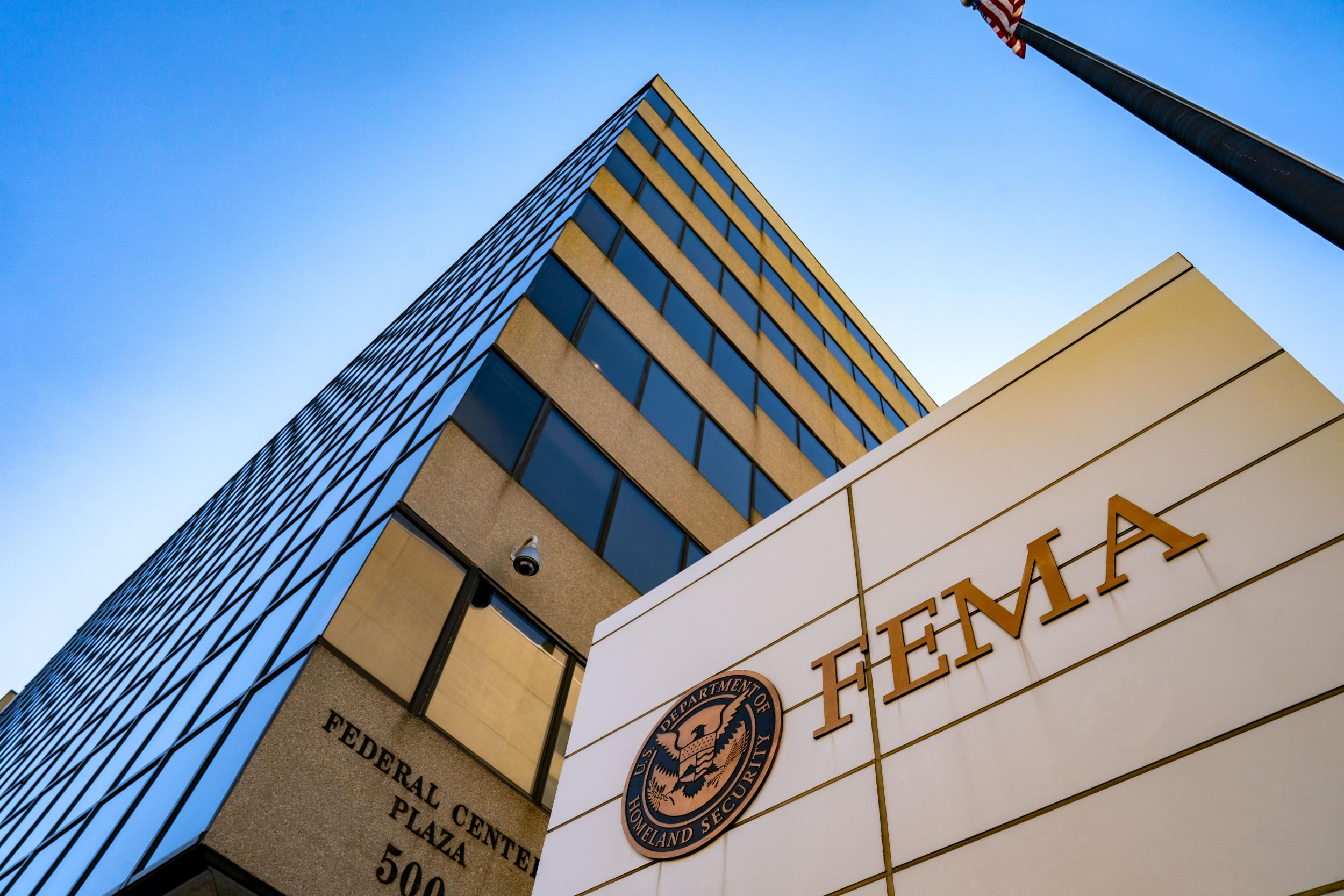
Twenty-five states and the District of Columbia sued the Trump administration Thursday, accusing the federal government of using hundreds of millions of dollars in emergency-preparedness funding to pressure jurisdictions into changing their election systems and cooperating with federal immigration enforcement.

The lawsuit widens a national legal fight over the executive branch’s authority to impose new conditions on congressionally funded grants. However, the U.S. Virgin Islands is not among the plaintiffs, and the case does not directly challenge HUD’s separate suspension of the V.I. Housing Finance Authority. No immediate relief for VIHFA results from the filing.
The complaint was filed in the U.S. District Court for the District of Rhode Island against the Department of Homeland Security and its Federal Emergency Management Agency. The plaintiffs are seeking orders blocking the challenged conditions, invalidating them as applied to the suing jurisdictions and requiring the agencies to issue the relevant funding documents.
States Say At Least $148 Million is Being Withheld
The immediate dispute involves FEMA’s Homeland Security Grant Program, which supports state and local preparation for terrorism, major disasters and other public-safety threats.
The suing states have collectively been allocated more than $740 million through the program for fiscal year 2026. According to the complaint, FEMA and DHS intend to hold back at least 20 percent — approximately $148 million — unless those jurisdictions comply with the administration’s election-related requirements. Continued noncompliance could place entire awards at risk, the plaintiffs allege.
The grant money supports emergency managers, first responders, bomb squads, cybersecurity programs, communications systems, disaster-response operations and security at locations including houses of worship.
Under the challenged conditions, jurisdictions would be required to verify the citizenship of people in their voter databases using a federal system.
They would also have to move toward voting equipment that processes hand-marked paper ballots instead of systems using barcodes or QR codes, conduct post-election audits under federal requirements and reconcile voter information with federal databases.
The states argue that those requirements are unrelated to the public-safety purposes for which Congress authorized the grants.
Their complaint contends that the Constitution gives states primary responsibility for administering elections, subject to laws enacted by Congress, and that the executive branch cannot independently rewrite state election policy by threatening unrelated funding.
The lawsuit alleges that the conditions violate the Constitution’s Spending Clause and the Administrative Procedure Act, which governs how federal agencies develop and implement major policies. The allegations have not yet been decided by the court.
Immigration and Broad Termination of Language Also Targeted
The lawsuit also challenges immigration conditions contained in DHS’s fiscal year 2026 grant terms.
According to the states, those conditions could require jurisdictions to commit local personnel and resources to federal civil-immigration enforcement beyond what their own laws permit or require.
A third part of the complaint targets new language allowing FEMA to terminate certain awards based on changing agency priorities or a determination that the funding no longer advances the national interest.
One challenged clause would permit termination “for convenience, including if the award no longer advances the national interest.”
The plaintiffs argue that the language makes multiyear federal grants unpredictable and allows the executive branch to redirect or terminate funds Congress approved for emergency management and public safety.
The complaint points to two earlier cases in which a federal court in Rhode Island rejected similar efforts by FEMA and DHS.
In one case, the court invalidated conditions tying federal emergency funding to cooperation with immigration enforcement, describing the pressure as unconstitutional “economic dragooning.”
The court later blocked funding reallocations that the suing states alleged targeted jurisdictions based on their immigration policies. Those earlier decisions are being cited as support for the latest challenge.
Rhode Island Attorney General Peter Neronha, who is helping lead the case, said, “Federal emergency funding cannot and will not be held hostage from states.”
FEMA rejected the states’ characterization of the conditions, describing the lawsuit as partisan opposition to measures the agency says are intended to strengthen election security and preserve the integrity of the democratic process.
The lawsuit was joined by attorneys general representing Rhode Island, Arizona, California, Colorado, Connecticut, Delaware, Hawaii, Illinois, Maine, Maryland, Massachusetts, Michigan, Minnesota, Nevada, New Jersey, New Mexico, New York, North Carolina, Oregon, Vermont, Virginia, Washington and Wisconsin, along with the District of Columbia.
The governors of Kentucky and Pennsylvania also joined the case, bringing the total to 25 states and Washington, D.C. USVI
Receives Funding Through Challenged Programs
Although the Virgin Islands is not a plaintiff, the territory receives funding through the FEMA preparedness programs involved in the dispute.
FEMA’s fiscal year 2026 allocation materials list $997,200 for the Virgin Islands through the Homeland Security Grant Program. The territory is also allocated $894,192 through the Emergency Management Performance Grant Program, which supports state and territorial emergency-management operations.
The complaint challenges the election conditions placed directly on Homeland Security Grant Program funding, potential immigration requirements affecting that and other programs, and broad termination provisions applied to substantially all fiscal year 2026 FEMA awards.
However, because the Virgin Islands did not join the lawsuit, the extent to which any eventual court order would protect the territory would depend on the scope of the relief issued by the judge.
No court ruling has yet been entered in the new case.
The multistate lawsuit does not involve HUD’s July 20 action against VIHFA and does not challenge the suspension of the authority from future federal procurement and nonprocurement transactions.
HUD’s action was based on different allegations, including financial mismanagement, inadequate fraud controls, false certifications, improper payments, conflicts of interest and the slow expenditure of disaster-recovery money. HUD also cited the criminal conviction of former VIHFA Chief Operating Officer Darin Richardson.
HUD said the authority had spent approximately $570 million of the roughly $1.9 billion awarded for recovery from Hurricanes Irma and Maria, leaving about $1.3 billion in assistance unused nearly nine years after the storms.
The VIHFA notice was issued under federal suspension and debarment regulations and remains effective while HUD’s Office of Inspector General conducts an investigation.
VIHFA has 30 days to request a hearing and must identify material facts it disputes. The authority has said it is reviewing HUD’s correspondence, will provide additional documentation and intends to cooperate with the federal review.
The states’ lawsuit concerns FEMA and DHS imposing policy conditions that the plaintiffs say are unrelated to the purposes of emergency-preparedness grants.
HUD’s case against VIHFA, by contrast, concerns the federal government’s assessment of whether a particular grantee is presently responsible and compliant enough to participate in federal transactions.
That distinction means the new lawsuit does not automatically suspend, overturn or weaken HUD’s action against VIHFA.
A ruling limiting FEMA’s ability to impose unrelated conditions or broadly terminate grants could influence future disputes over executive control of federal funding. Applying such a ruling to the VIHFA matter, however, would be uncertain because the agencies, programs, regulations and factual allegations are different.

For the Virgin Islands, the immediate significance is therefore broader than VIHFA: the territory receives FEMA preparedness funding that may be governed by the challenged conditions, even while it separately confronts HUD’s suspension of the agency administering much of its hurricane-recovery money.