




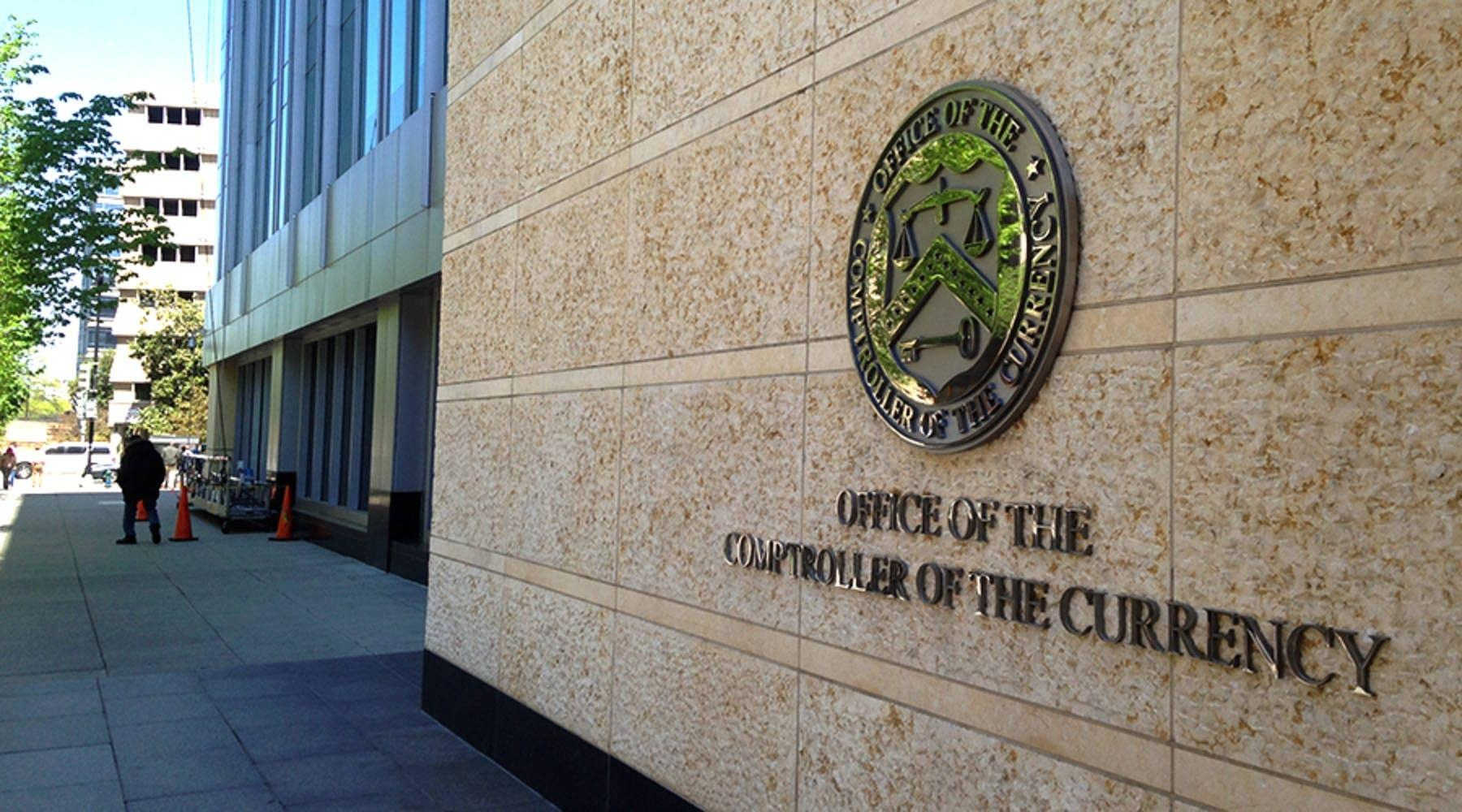
A federal banking rule that overrides a Virgin Islands homeowner protection requiring interest to be paid on certain mortgage escrow funds is now being challenged in court by 10 states, but the U.S. Virgin Islands did not join the lawsuit even though the federal regulation specifically identifies and preempts the territory's law for national banks and federal savings associations.

The Office of the Comptroller of the Currency, a bureau of the U.S. Treasury Department that regulates national banks and federal savings associations, issued the final rule in May. It determined that federal law supersedes state and territorial requirements that restrict those institutions' ability to decide whether, and to what extent, they will pay interest or other compensation on money held in real-estate escrow accounts. The rule took effect June 18.
For the Virgin Islands, the federal regulation is unusually explicit. It identifies V.I. Code Title 9, Section 67 by name as one of 14 state and territorial laws the federal agency determined are preempted. The territory was not included in the agency's original proposed list; commenters subsequently recommended adding Guam and the U.S. Virgin Islands, and the agency agreed, concluding that their laws were substantially equivalent to New York's escrow-interest statute.
The Virgin Islands statute requires a mortgagee, bank or lending institution that makes a borrower maintain an escrow account for purposes such as taxes, insurance or improvements to pay interest on the account's average quarterly balance. The interest rate is tied to the prevailing rate credited to the institution's passbook savings accounts. A lender that knowingly violates the provision can be fined up to $25 per account for each day that the required interest is not credited.
Mortgage escrow accounts generally hold money collected from homeowners as part of their monthly mortgage payments so the lender or servicer can later pay expenses such as property taxes and homeowners insurance. Because those bills may be paid only once or twice a year, borrowers' money can remain in escrow for months before it is disbursed.
The new federal rule does not repeal Section 67 or erase it from Virgin Islands law. Instead, the federal government says the territory cannot enforce that requirement against national banks and federal savings associations. The law may continue to apply to other lenders according to their charter, regulatory status and other applicable law. The rule also does not require federally regulated banks to stop paying interest; it gives covered institutions discretion over whether and how much compensation they provide on escrow balances.
The federal agency argues that national banks and federal savings associations have longstanding authority to establish mortgage escrow accounts and make business decisions about their terms. In issuing the regulations, it said varying state requirements can increase regulatory burdens and operational complexity and potentially affect mortgage pricing or availability. Opponents disputed those conclusions during the rulemaking, raising concerns about consumer protection, mortgage affordability and whether the agency had demonstrated that the state laws significantly interfere with federal banking powers.
That disagreement has now moved into federal court.
On August 11, the attorneys general of Oregon, New York, California, Connecticut, Maine, Maryland, Massachusetts, Minnesota, Rhode Island and Vermont filed suit against the Office of the Comptroller of the Currency and Comptroller Jonathan Gould in the U.S. District Court for the District of Oregon. They are asking the court to declare the two escrow rules unlawful and set them aside.
The Virgin Islands did not join them. No V.I. government entity is listed among the plaintiffs in the complaint or the current federal docket, despite the territory's statute being one of the laws expressly identified by the federal rule. The court record does not establish why the Virgin Islands did not participate in the challenge.
The territory is not the only affected jurisdiction that stayed out of the case. The federal rule covers laws in 12 states plus Guam and the Virgin Islands. Utah and Wisconsin are also covered but did not join the lawsuit, and Guam is not a plaintiff. The 10 states that did sue are all among the jurisdictions whose escrow-interest laws the federal government expressly preempted.
In their complaint, the states argue that the federal banking regulator exceeded its authority under the Dodd-Frank Wall Street Reform and Consumer Protection Act and failed to follow the legal standard governing when state consumer-finance laws can be displaced by federal banking law. They contend that the agency analyzed New York's statute and then improperly grouped the other laws together instead of conducting the individualized assessment required by federal law. Those are allegations in ongoing litigation and have not been adjudicated.
The federal agency takes the opposite position. It says state interest-on-escrow requirements prevent or significantly interfere with federally authorized banking powers by limiting institutions' discretion over mortgage escrow accounts. It also says the 13 laws added alongside New York's contain substantively equivalent terms and therefore fall under the same preemption analysis.
The legal dispute follows a series of conflicting court decisions over how far federal banking preemption extends. In 2024, the U.S. Supreme Court considered the issue in Cantero v. Bank of America and rejected a categorical approach that would broadly preempt state banking regulations, directing courts instead to make a practical assessment of the nature and degree of a state law's interference with national-bank powers. Since then, federal appeals courts have reached different conclusions on whether individual escrow-interest statutes survive that test, creating continuing uncertainty that the federal banking regulator cited in issuing its 2026 rules.
The issue also has a direct connection to the Virgin Islands banking market. Bank of St. Croix operates as a division of United Fidelity Bank, FSB, which federal records classify as a Federal Savings Bank whose primary federal regulator is the Office of the Comptroller of the Currency. Bank of St. Croix actively offers residential mortgages in the territory, including fixed-rate, adjustable-rate, jumbo and construction products, and its mortgage materials state that escrow may be established for certain loans.
That does not establish that Bank of St. Croix has stopped paying interest on any escrow account, and the federal rule itself does not require it to do so. But United Fidelity's federal charter illustrates why the rule has practical relevance locally: an institution operating in the Virgin Islands can fall within the category of lenders that the federal government says is no longer bound by Section 67's interest requirement.
The financial effect on an individual homeowner will therefore depend on which institution holds or services the mortgage, whether the loan includes an escrow account, the lender's regulatory status and its own escrow policies. The federal change nevertheless removes a territorial mandate for borrowers whose accounts are held by covered institutions, turning what Virgin Islands law states as a requirement into a matter those federally regulated banks may determine for themselves.

For now, that federal rule remains in effect while the Oregon lawsuit proceeds. The 10 plaintiff states are asking the court to restore their ability to enforce their escrow-interest laws against national banks and federal savings associations. The Virgin Islands, although its homeowner provision was expressly swept into the same federal action, is not participating in that challenge.