




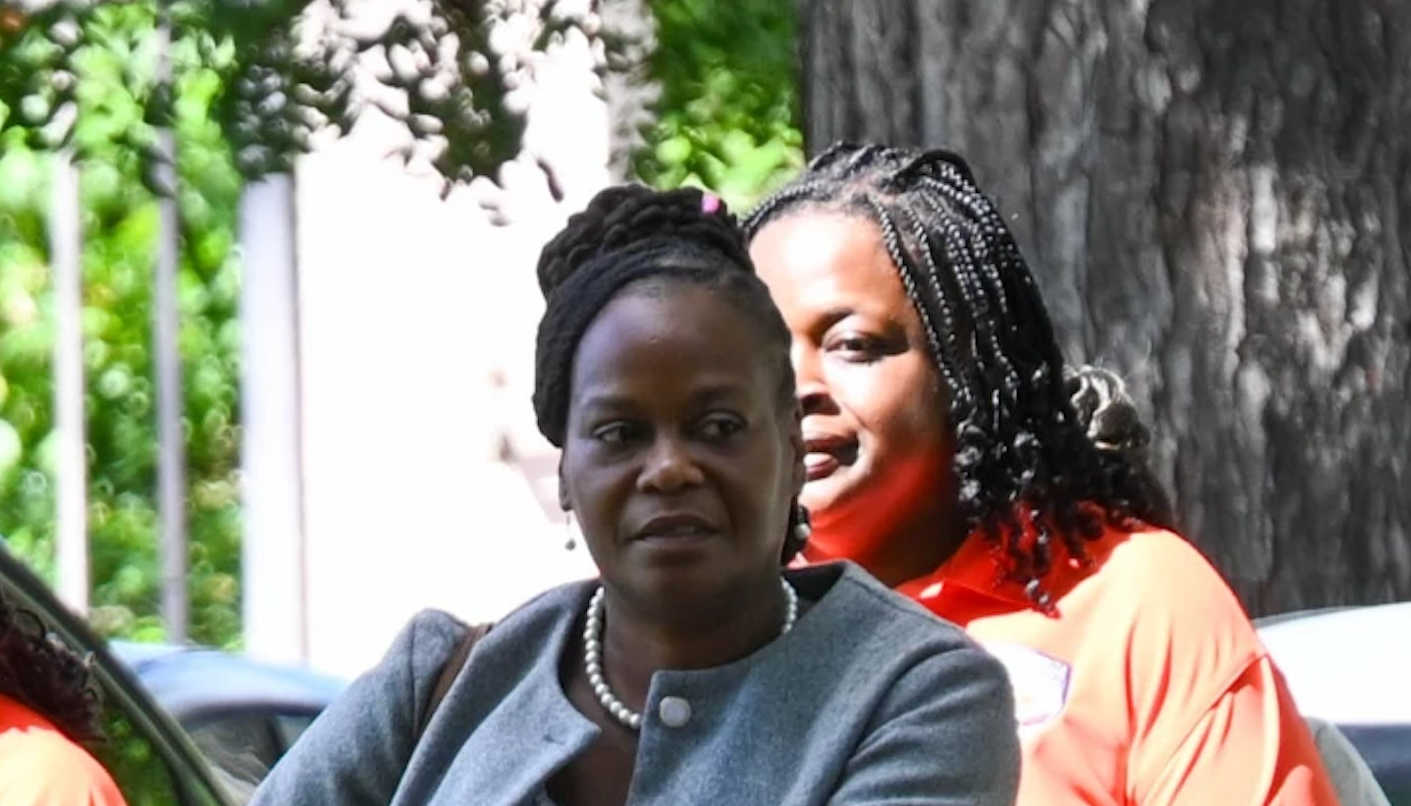
ST. CROIX — A wave of anonymous educator complaints against the St. Croix Federation of Teachers leadership has triggered demands for special elections, an internal audit, and immediate reforms, even as union president Tamieka Phillipus rejects allegations of misconduct and insists she is “doing everything by the book.”

The grievances, shared with the Consortium as a compilation of educators’ concerns, center on three fronts: return-to-work decisions at John H. Woodson Junior High amid mold complaints; the scope of the president’s appointment powers and removal procedures; and spending approvals, including catering and travel. Phillipus responded in a recorded interview, and a separate educator—also interviewed by the Consortium—rebutted several of her assertions.
John H. Woodson Jr. High School mold complaints, make-up time, and CBA safeguards
Educators allege the union president “withheld critical mold test results” and aligned with education officials in sending staff back into “unsafe” classrooms while endorsing after-hours make-up time. Phillipus denied withholding information and said the decision to delay a return in August, then resume, flowed from facility conditions and a time-sensitive scheduling choice she made after receiving three make-up options from the V.I. Department of Education. She said she selected the option that completed recovery time “by December 19 versus February or March [2026],” calling it a necessary executive decision made over a weekend. She acknowledged members “were not made aware” before she responded but said she met Woodson faculty on Monday, September 15 to explain the choice and the timing.

Phillipus said she was not invited on the official campus tour but conducted her own visit and later received mold results “while I was meeting with the John H. Woodson team.” She reported results showed “more of a mold presence on the outside than the inside,” with two classrooms testing positive and then “cleaned out and retested,” returning “fine”—though she also noted continuing member complaints of irritation and said she has been elevating those reports to administration for follow-up.
The Collective Bargaining Agreement (CBA) sets out specific safeguards when employees suspect mold or an irritant: staff file a complaint; management promptly determines whether to suspend activities; a “prompt and reasonable” investigation follows; findings are shared with the employee and the union; OSHA standards must be followed; and instruction is suspended where leaks, flooding or high heat bar safe access. The CBA also states “teachers shall carry out their duties under safe and healthy conditions,” and class relocation or suspension is required where conditions are prejudicial to health. These provisions directly frame the Woodson dispute and require disclosure of findings to the union and affected staff.
On work hours, the CBA caps the secondary school day at 6.5 hours and the elementary day at 6 hours (both excluding lunch), with additional duties and extended days governed by the agreement’s workload and meeting rules. Any arrangement that effectively extends a teacher’s day or compresses make-up hours needs to be squared with those limits.
Recording dispute at the St. Croix Educational Complex and claims of hostile conduct
A September meeting at the St. Croix Educational Complex devolved after a member insisted on recording. Phillipus said, “if I call a meeting, the only one that should be recording is the recording secretary,” adding that when a member “held the tablet in my face,” she said she did not grant permission and adjourned. The educator who recorded disputed Phillipus’s account, saying she asked members for permission, received a collective “yes,” and recorded from her seat—not “in [Phillipus’s] face.” She alleged executive board members responded with insults and gestures — including the middle finger — and that the encounter left her feeling threatened. The Consortium reviewed the video and confirms the member was not recording in Ms. Phillipus’s face. The meeting was held in the school auditorium; the member was seated in the second row while Ms. Phillipus stood closer to the stage.
Perhaps the most alarming allegation centers on a physical confrontation between Phillipus and Vice President Sandra Antoine. The altercation, which is now a court matter, was followed by what critics describe as an illegal vote engineered by Phillipus and her appointees to remove Antoine from office. Phillipus declined to comment on the specifics, citing an ongoing investigation, but insisted that “due process” would be afforded to all parties.
While the union’s constitution prescribes decorum (e.g., a Sergeant at Arms to maintain order) and Robert’s Rules for procedure, it does not expressly bar members from recording; meeting rules and enforcement would flow from Robert’s Rules and any duly adopted council policies.
Phillipus said the Representative Council totals over 20 members (including the executive board) and that she appointed three building representatives only where sites lacked representation, adding she herself may serve as acting rep until an election is held. She also said appointment and removal of certain roles—such as grievance and scholarship chairs—are within presidential discretion, describing recent removals as aligned with her “goal and vision.”
The constitution, however, is explicit that Building Representatives are elected at each site; appointments to fill vacancies must be followed by special elections; and the Representative Council is the government of the local “subject to the will of the membership.” It further requires Representative Council approval for appointed successors to certain committee chair vacancies and lays out special election procedures. These provisions are directly relevant to the appointment-versus-election dispute.
On the president’s claim that “even a petition cannot remove her” and that only the April 2026 regular election matters, the constitution provides a removal process prior to a regular election: formal charges may be presented to the Representative Council; if accepted, the officer relinquishes duties pending a decision; a council subcommittee processes the charges; an emergency general membership meeting must be called; charges and findings are presented; and the general membership votes “guilty or not guilty,” with a plurality binding. If guilty, the member “will be permanently relieved of that office.” This pathway—along with the constitution’s special election provisions—squarely contradicts the notion that removal is impossible before 2026 and shows that, while multi-step, impeachment/recall mechanisms do exist.
Spending approvals, catering, and travel
There are also allegations of unauthorized spending on travel and attire for a national convention; payments to executive board members, appointees, or their associates (including catering by a relative of an executive board member) without council approval; and direct payments to appointees’ businesses — all allegedly over $100 and without Representative Council approval.
Phillipus pushed back: “I do not have to go through the rep council for spending over $100,” she said, adding that national entities covered some of her travel; that the union used local funds for only one convention where “three members traveled”; and that she chooses caterers for union business. "First and foremost, whenever I cater anything for the rep council, I can choose whoever I want to cater for union business," she said.
The constitution is clear that the Representative Council approves all expenditures over $100. It also vests “government of this Federation” in the Representative Council and requires the council’s budget approval and reporting. Those provisions bear directly on whether any single officer can authorize spending beyond $100 without prior council approval.
Phillipus said a recent audit covering 2023–2024 “is fine.” She took office September 1, 2024, and said she requested that audit on entering office and expects another for 2025. Members, meanwhile, are calling for a separate internal audit to trace all expenditures above $100, including travel, catering, and legal fees.
An educator interviewed by the Consortium accused Phillipus of aligning with administrators at the expense of teachers, pointing to Woodson’s return, “work-until-4:00 p.m.” make-ups, and talk of lost vacation time. Phillipus disputed that narrative, stressing that administrators have responded when she elevated safety concerns (e.g., cleaning of the gym) and that her make-up-time choice was a practical, time-sensitive call.
Under the CBA, teachers’ workday limits, meeting caps, and health/safety triggers (including mold protocols and class suspension where conditions are unsafe) give the union clear leverage in these disputes, as do grievance procedures if a site-level resolution fails.
Additionally, educators who submitted the compiled grievances are demanding: removal of appointed representatives and special elections within 60 days; suspension of the president pending accountability measures; and a full audit of union finances. Phillipus, for her part, says she will bring member concerns to the department, is convening a general membership meeting today at 5:00 p.m., and is proceeding “by the book.”

The Representative Council now holds the constitutional levers to initiate charges, green-light special elections, and review spending—steps that, if taken, would move the dispute from allegations to formal process.