




ST. CROIX — The V.I. Waste Management Authority is seeking approval to relocate the troubled LBJ Pump Station to a 1.67-acre site at Estate Penitentiary, with plans for a new facility designed to prevent the equipment failures and sewage overflows that have plagued Christiansted for decades.

“The LBJ Pump Station has basically plagued the island of St. Croix for many years,” said VIWMA Chief Engineer Alex Bruney during Tuesday evening's public hearing before the St. Croix Committee of the Coastal Zone Management Commission.
The hearing was held as part of the federal consistency review for the proposed reconstruction, which would move the wastewater facility away from its vulnerable coastal location and introduce backup systems intended to maintain operations when equipment fails.
“What we have done is designed a facility that would basically prevent all the elements, all the down times that we have experienced with the old station,” Mr. Bruney explained. “We have moved it inland.”

The proposed location is on land formerly occupied by the Ralph de Chabert housing community, which was demolished in 2013. According to the project's environmental assessment, the replacement station would sit approximately 600 meters from the existing facility, moving it from less than 20 meters from the coastline to more than 100 meters inland.
The new site would also be entirely outside the Federal Emergency Management Agency's designated flood zones, addressing one of the major vulnerabilities of the current facility.
The proposed design incorporates two separate wet wells, each served by three 250-horsepower pumps. The arrangement would allow operators to isolate one well for maintenance or repairs while the other remains operational.
“We have designed a dual wet well system that allows us to isolate one wet well. If anything goes wrong with the system or pump, we will still operate,” Mr. Bruney explained.
Additional features include screens to prevent debris from entering the system, standby generators for emergency power, storage for spare parts, and dual force mains to provide additional operational flexibility.
Manas Chaturvedi of Kimley-Horn, one of the project's design consultants, said the facility would also include a cistern, water treatment equipment, a permanently installed bridge crane to facilitate pump removal and inspection, and an odor-control system.
The improvements are intended to provide “increased operational flexibility and just overall more resiliency” compared with the existing facility, Mr. Chaturvedi said.
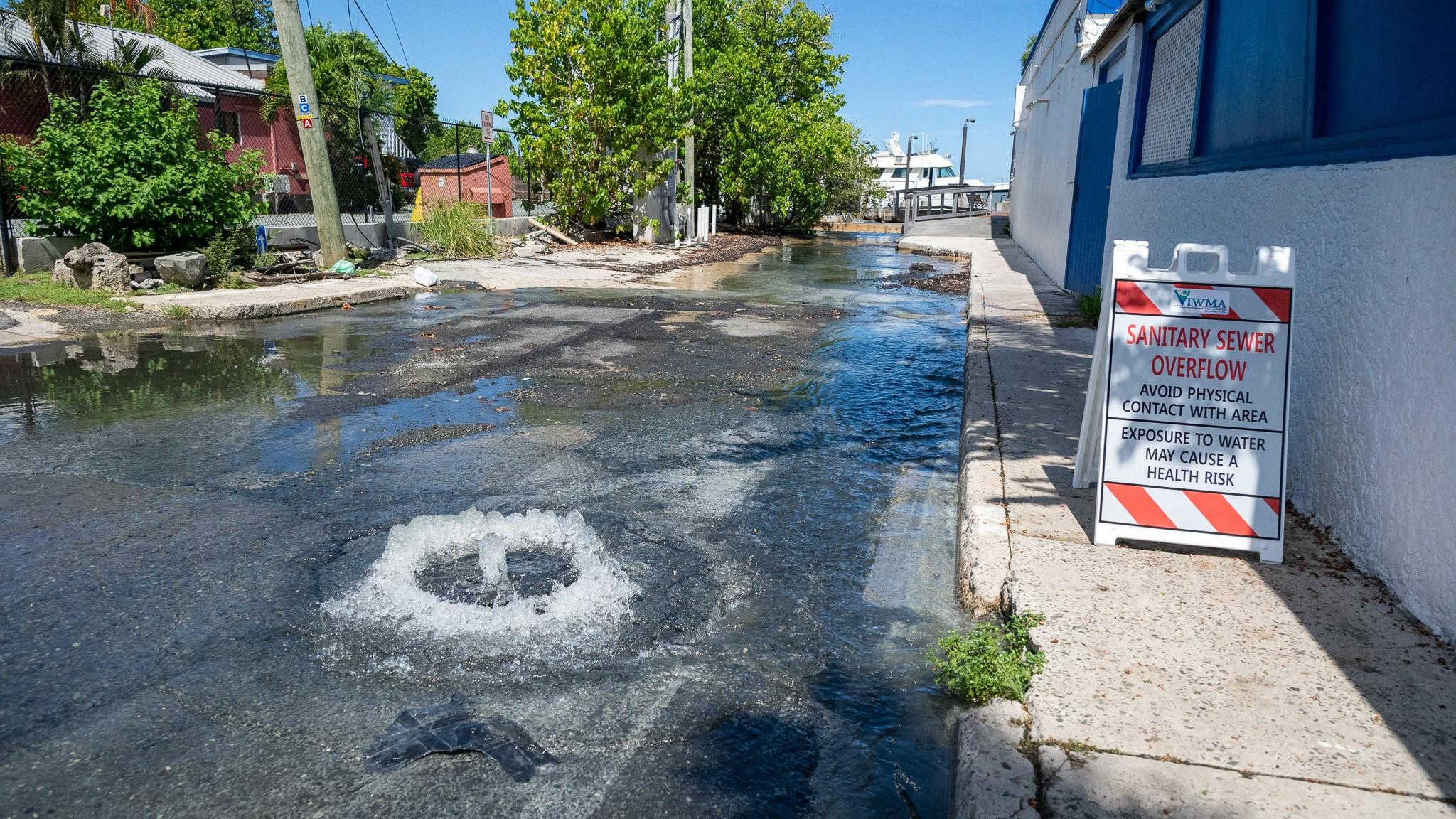
The proposed replacement follows years of wastewater emergencies associated with the LBJ system. In October 2024, a pump station malfunction caused raw sewage to overflow near Watergut and King Cross streets, prompting a public health advisory.
More recently, in August 2026, a collapsed force main serving the LBJ Pump Station caused major wastewater overflows affecting Christiansted and surrounding communities. The authority restored operations on August 30 following emergency repairs, although public health advisories remained in effect for affected areas.
During Tuesday's hearing, Amy Dempsey of BioImpact, an environmental consultant on the project, told commissioners that the proposed site presents limited environmental concerns because it was previously developed.
“This is in the footprint of where the [Ralph] deChabert housing was,” she explained.
“We have no archaeological impacts, and the soils have been disturbed so much that they're considered urban land,” Ms. Dempsey said.
The proposed location's position outside the flood zone was also emphasized by Ms. Dempsey and Mr. Chaturvedi.
Commissioners generally welcomed the project, although several raised concerns about the possibility that continued shoreline erosion could eventually threaten the replacement facility.
Commissioner May Adams Cornwall recalled that the LBJ Pump Station was already experiencing operational problems when she began her government career more than three decades ago. While welcoming the prospect of a lasting solution, she questioned aspects of the design and the implications of future coastal erosion.
Commissioner Masserae Webster similarly questioned whether the facility should be constructed even farther inland.
“What, if any, considerations could be made to moving the plant further inland?” Ms. Webster asked.
Mr. Bruney explained that moving farther inland would create significant engineering challenges because of the elevations required to connect the new facility to the existing wastewater system.
“If we move it further inland, then that doesn't go well with elevations coming into the system,” he responded. “We'd have to go real, real deep with the pipelines in order for us to be able to access the system.”
Ms. Webster questioned whether the additional engineering work might ultimately be justified, given the repeated costs of replacing failed equipment.
“I think we're just going to be going round and round in circles if we continue where we are in terms of spending money to replace the equipment,” she remarked.
Mr. Bruney suggested that the territory should separately consider shoreline restoration measures, including replenishing eroded beaches with sand, rather than allowing the prospect of future erosion to prevent needed infrastructure improvements.
“What we need to do as a territory is to explore what many places around the world do, which is to reclaim the shoreline by pumping sand along the shoreline,” he said.
Coastal Zone Management Director Marlon Hibbert also addressed the need to coordinate construction with other infrastructure projects being undertaken through the Office of Disaster Recovery.
He said the underground utility and pipeline work associated with the proposed station would be coordinated with other construction activities in the area to avoid repeated excavation.
“It will be a one-dig approach,” Mr. Bruney assured commissioners.
Mr. Bruney maintained that the replacement station would also address environmental problems associated with the existing facility, including the need to divert overflowing wastewater over Long Reef during emergencies.
“We designed it with the environment in mind,” he said.
“When we sat down with our consultants, we thought about all the things that's been plaguing St. Croix for many years regarding this station,” Mr. Bruney told the committee. “We tried our best to resolve all those issues with this design, and I think we did a pretty good job of it.”
VIWMA officials committed to submitting additional plans for the connecting infrastructure and demolition of the existing pump station ahead of the committee's upcoming decision meeting.
Committee Chair Kai Nielsen expressed support for advancing the review promptly, telling the applicants that the committee “will do our best to zipline it through.”
At the conclusion of the hearing, Mr. Nielsen reiterated the need to expedite consideration of the project.

“It's always great to see progress and to live long enough to see actual progress take place,” he said.