

A network of residential battery systems spread across St. Croix, St. Thomas and St. John collectively discharged approximately 1.5 megawatts of power during a 30-minute test, reducing the amount of electricity WAPA’s Richmond and Randolph Harley power plants had to provide and demonstrating how privately owned batteries could be called upon as a coordinated grid resource.

The Virgin Islands Energy Office conducted the inaugural test of its VIBES 2.0 Virtual Power Plant in coordination with Tesla Energy and the V.I. Water and Power Authority. VIEO said 120 sites participated, with their batteries simultaneously feeding electricity onto the St. Croix and St. Thomas-St. John grids.
The Energy Office’s press-release headline described the test as delivering 1 MW, while the body of the release states that approximately 1.5 MW was discharged from the participating sites.
During the half-hour test, VIEO said the virtual power plant produced a measurable decrease in demand on WAPA’s Richmond Power Plant on St. Croix and Randolph Harley Power Plant on St. Thomas. The concept allows individual battery systems installed at homes and businesses to be aggregated electronically so that, when needed, they can operate together as a much larger generation resource.
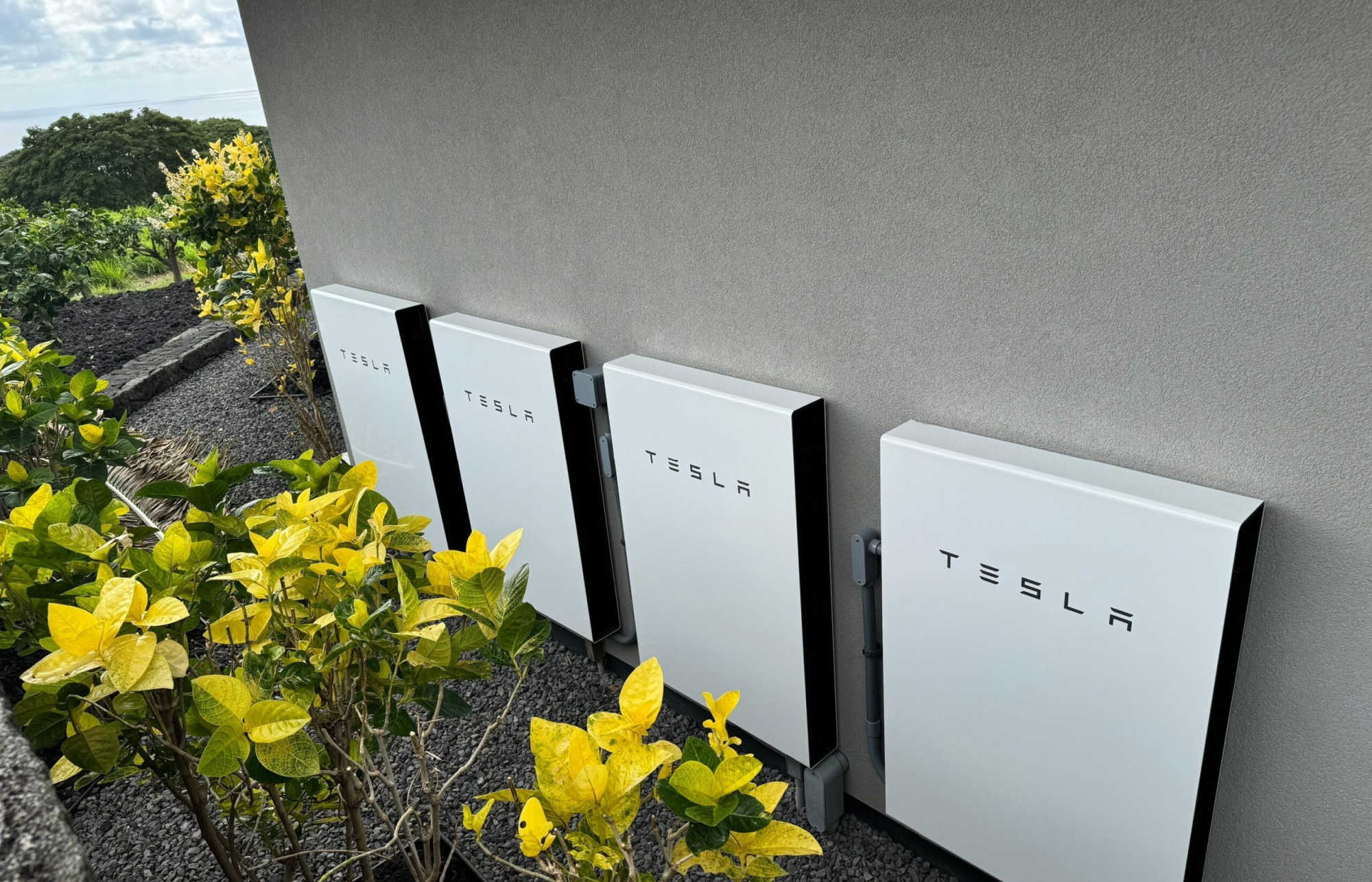
The submitted photograph included with the Energy Office release shows three wall-mounted Tesla Powerwall units, illustrating the type of behind-the-meter battery storage VIEO is seeking to incorporate into the network.
VIEO argues that the virtual power plant could give WAPA access to existing stored energy without the expense and construction time associated with adding an equivalent amount of conventional generation. Because the batteries can respond quickly when called upon, the Energy Office says a sufficiently large network could help address generation shortfalls, reduce the need for load shedding and potentially lower fuel expenditures.
VIEO Director Kyle Fleming said the system also creates a way for residents who invested in solar and battery systems for their own homes and businesses to support the wider electrical grid.
“On Monday, we proved that hundreds of batteries distributed across the Virgin Islands can respond as one coordinated power plant. At a specific moment, we can call on that network and say, ‘the grid needs power,’ and those batteries can respond together, delivering energy when our community needs it most,” Director Fleming said.
The Energy Office is now recruiting additional Tesla Powerwall owners to join the VIBES 2.0 Virtual Power Plant. During the 2026 launch year, participants can receive $1,000 for each eligible Powerwall enrolled, up to $4,000, in exchange for allowing a portion of the battery’s available capacity to be aggregated and dispatched when the grid needs additional power.
VIEO said it has already distributed more than $100,000 in participant incentives as it works to establish an immediately available source of distributed power rather than waiting for major generating plants or other large infrastructure projects to be completed. The agency envisions eventually drawing simultaneously from hundreds or thousands of participating batteries when conventional generation falls short.

Powerwall owners who attempted to enroll but do not see the VPP enrollment option in the Tesla app are being asked to email [email protected] with “VPP Nomination” in the subject line and include a screenshot of their Gateway serial number. Those who can see the option but cannot complete registration are advised to ensure their Tesla app address lists the state as VI and country as US.