



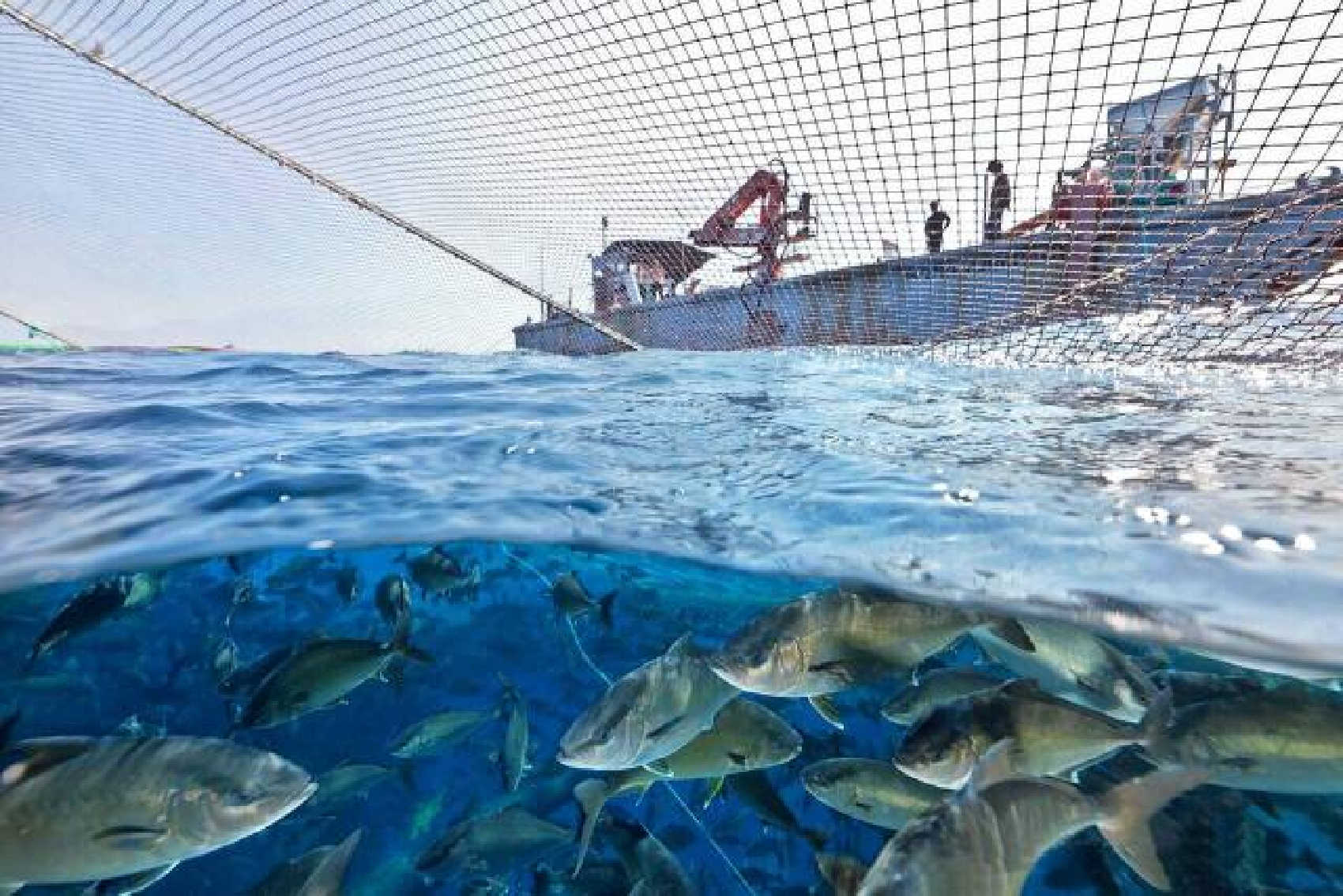
The U.S. Virgin Islands and Puerto Rico are among five regions NOAA is considering for the next phase of a federal effort to identify waters potentially suitable for commercial aquaculture, with the agency seeking public input on where development could occur and which areas should be avoided.

NOAA's July 30 Request for Information lists the “U.S. Caribbean (Puerto Rico and U.S. Virgin Islands)” alongside New England, the Mid-Atlantic, South Atlantic and Pacific Islands as possible future areas of focus for Aquaculture Opportunity Areas, or AOAs.
No location in the Virgin Islands has been selected. NOAA is first determining which regions warrant more detailed study, and an AOA designation would not itself authorize an aquaculture operation. Individual projects would still be subject to applicable federal and territorial permits and environmental reviews.
Aquaculture involves farming aquatic organisms such as finfish, shellfish and seaweed. An AOA is a geographic area evaluated through scientific analysis and the federal environmental-review process to determine whether it may be environmentally, economically and socially suitable for multiple commercial aquaculture operations.

For the USVI, NOAA is seeking information on water depth, currents, wave conditions, water quality, proximity to shore and supporting infrastructure such as ports, hatcheries, nurseries and processing facilities.
The agency is also examining potential conflicts with existing ocean uses and environmental resources, including commercial and recreational fishing, coral reefs, protected species, navigation, military activity, energy development and communications infrastructure. Respondents are being asked to identify culturally important and subsistence-use areas as well.
The federal consideration comes as aquaculture has already gained attention as a development opportunity in the territory. In 2024, Governor Albert Bryan Jr. met with Caribbean Sustainable Aquaculture as the company assessed St. Croix locations for a proposed fish-farming operation. More recently, Delegate Stacey Plaskett said she secured a provision in the House-passed 2026 Farm Bill directing USDA to study aquaculture small-business opportunities in the USVI and Guam.
NOAA has also previously conducted marine-planning work in the territory. In 2023, the agency gathered coastal and marine spatial data in Puerto Rico and the USVI, including information relevant to aquaculture and offshore renewable energy, and held two days of public meetings on St. Croix at The Buccaneer Resort.
Those discussions addressed tourism, coral habitats, fishing and other ocean uses, as well as the need for local participation and better data when evaluating future marine development.
The current effort is part of a broader federal push to increase domestic seafood production. Executive Order 13921, issued in 2020, directed the federal government to identify areas suitable for commercial aquaculture, while another executive order issued in April 2025 renewed efforts to expand domestic seafood production and reduce reliance on imports.
NOAA says the United States imported an estimated $12 billion in farmed seafood in 2024, roughly half of approximately $25 billion in total seafood imports that year.
The Aquaculture Opportunity Area program has already advanced elsewhere. In September 2025, NOAA identified 13 AOAs covering more than 21,000 acres of federal waters in the Gulf of America and off Southern California following scientific analysis, environmental review and public participation. The agency is also evaluating potential aquaculture areas in Alaska.
Written comments on which regions NOAA should study next are due September 13. The agency will also hold an online public listening session August 31 from 3 p.m. to 4 p.m. EDT, conducted in English and Spanish.