




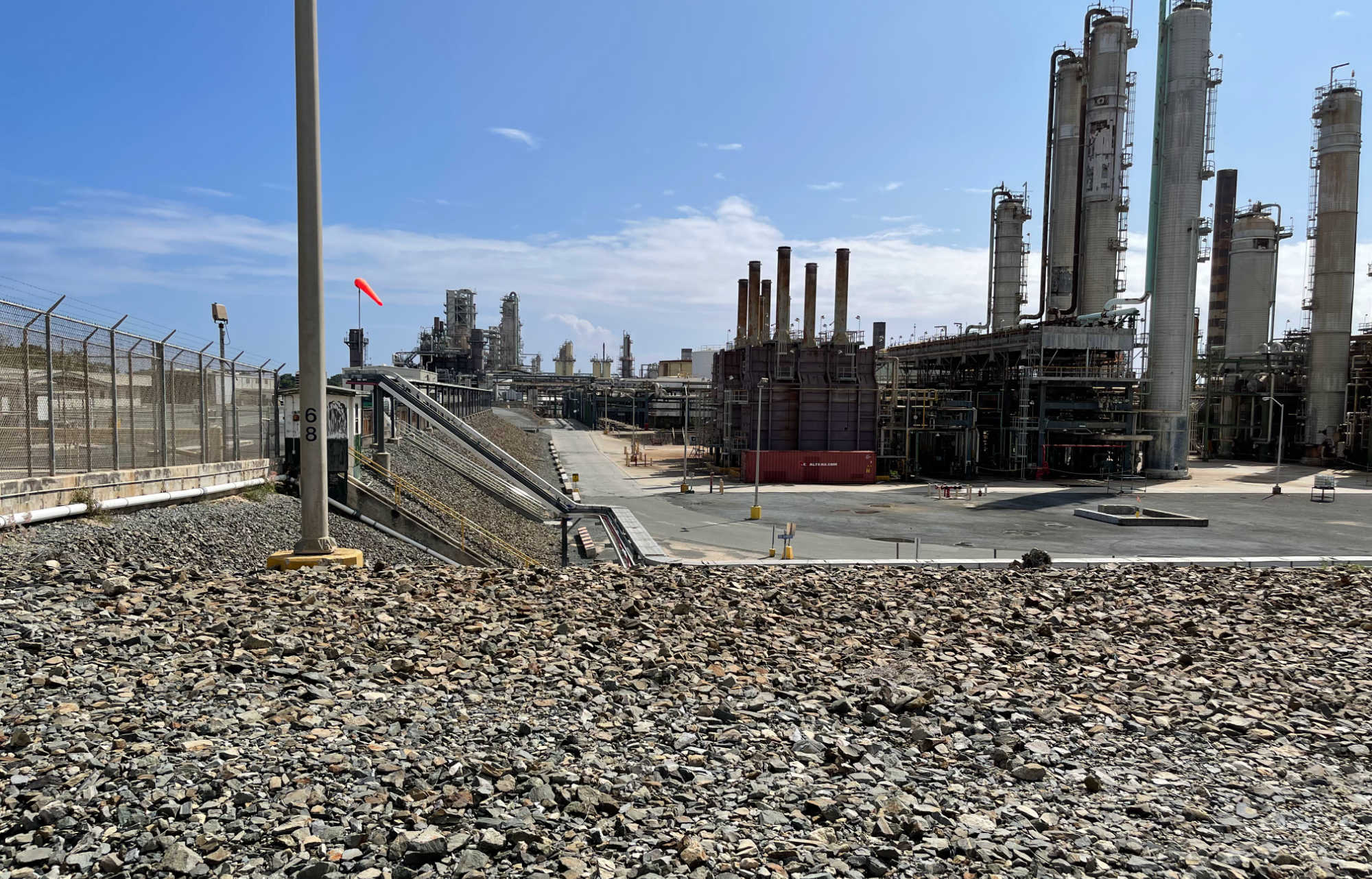
ST. CROIX — The company seeking to restart St. Croix's long-idled oil refinery and federal environmental authorities remain at odds over whether a major pollution-control system must be installed before refining resumes, leaving a potentially consequential question about the facility's reopening costs and timetable before the District Court of the Virgin Islands.

Attorneys for Port Hamilton Refining and Transportation, the federal government and other parties appeared before Chief District Judge Robert Molloy on Friday, November 20, to address environmental obligations inherited from previous refinery operators.
At issue is a flare gas recovery system, equipment designed to capture and recover refinery gases that might otherwise be burned through industrial flares. The system is among the pollution controls addressed in a 2011 federal consent decree against former refinery operator HOVENSA and its subsequent modification.
The U.S. Department of Justice, acting on behalf of the Environmental Protection Agency, maintains that the system must be installed and operational before Port Hamilton resumes refining. Port Hamilton disputes that interpretation, arguing that the relevant requirement was not triggered under the timing established by the modified agreement.

The company is seeking the opportunity to restart under conditional requirements similar to those previously afforded to Limetree Bay, which attempted to bring the facility back into operation in 2021.
No final determination on the disputed installation requirement was established during Friday's proceedings. A written ruling defining Port Hamilton's obligations is expected.
How the Dispute Developed
The disagreement originates in the 2011 federal settlement with HOVENSA, under which the former refinery operator agreed to pay a $5.375 million civil penalty and undertake pollution-control improvements estimated at more than $700 million to resolve Clean Air Act violations.
The agreement included requirements addressing sulfur dioxide, nitrogen oxides, benzene, equipment leaks and refinery flaring.
When Limetree Bay acquired the facility, federal officials subsequently proposed modifications reflecting the refinery's reduced operating capacity and changed configuration.
Under the modified consent-decree provisions, Limetree Bay was permitted to operate without immediately installing flare gas recovery equipment on specified flares, provided emissions and gas flows remained below established thresholds.
Exceeding those limits would trigger installation requirements, including deadlines of up to two years under certain conditions.
Port Hamilton argues that the modification had not become effective when Limetree Bay experienced the emissions incidents associated with its failed 2021 restart. Consequently, the company contends that those events could not have triggered an installation deadline that it subsequently inherited.
Federal authorities take the opposing position. They maintain that the refinery remains subject to the environmental requirements established through the original consent decree or its modification, and that the current owners cannot restart without satisfying the applicable pollution-control obligations.
The dispute follows the refinery's troubled 2021 restart, when a series of emissions incidents prompted the EPA to order Limetree Bay to suspend refining operations. Limetree Bay subsequently entered bankruptcy.
Decision Could Affect Proposed 2027 Restart
Port Hamilton has been pursuing a phased restart of the refinery in 2027.
As The Consortium previously reported, company director David Johnson has described plans involving an unidentified commercial partner prepared to supply crude oil and purchase refined products, with financing and engineering requirements still being addressed.
A ruling requiring installation of additional pollution-control equipment before operations begin could affect the amount of capital needed and the time required to prepare the facility. A decision permitting conditional operations would establish a different compliance timetable, although it would not eliminate the refinery's other environmental obligations.
The EPA has continued overseeing environmental work at the facility, including chemical-removal and safety measures. The agency announced completion of a major hazardous-material removal effort earlier this year, while additional regulatory obligations remain.
The November 20 proceedings have now placed the disputed flare gas recovery requirement squarely before the court.

For Port Hamilton, the eventual written ruling will help establish what environmental equipment and compliance measures must be in place before its proposed return to refining can proceed.