




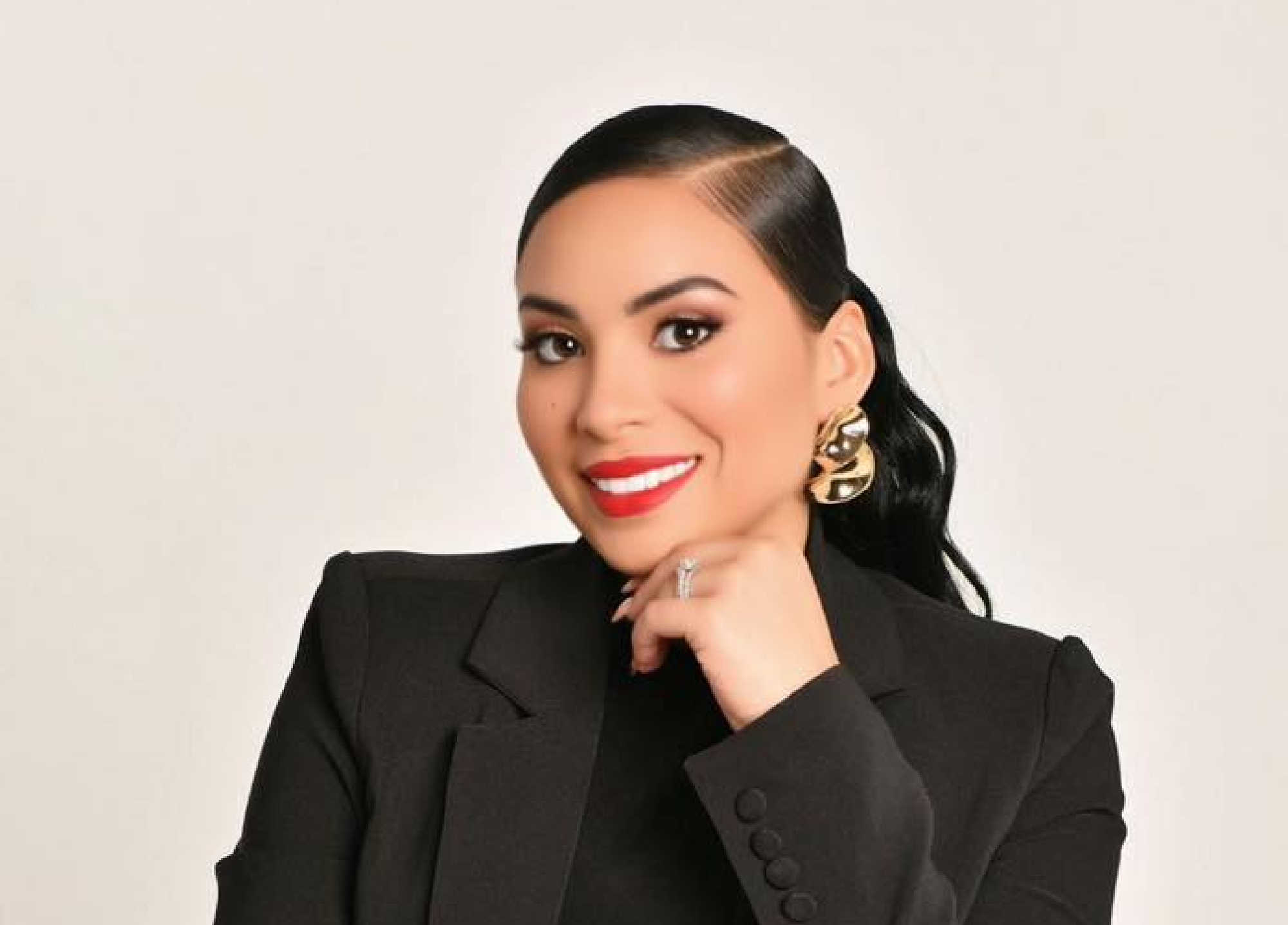
Independent Senate candidate Bianca Francis says her campaign for the Virgin Islands Legislature grew out of more than a decade of community service, frustration over limited resources for families and caregivers, and a belief that residents who complain about problems should also be willing to help solve them. But during a V.I. Consortium interview Wednesday night, she also acknowledged that policy and legislative procedure remain areas where she is still working to grow.

The interview was part of V.I. Consortium’s Election Cycle interview series, which is being held ahead of the Democratic primary election in August and the general election in November. The interviews are scheduled for Mondays, Wednesdays and Thursdays as the Consortium questions candidates on major issues facing the territory.
Appearing at the Consortium’s Five Corners studio, Ms. Francis introduced herself as Bianca Acevedo Francis, wife of Wilbur Francis, mother of three, an entrepreneur, and the founder and president of a nonprofit. She is running as an independent candidate in the 2026 election cycle.
The interview opened with questions about how Ms. Francis’s candidacy began. Mr. Gilbert noted that her husband had posted a campaign-style flyer months earlier, which Ms. Francis initially described as a joke. At the time, she responded that the only thing she would be running on was her treadmill.

Ms. Francis said the post grew out of a household conversation about community issues, including the challenges faced by a friend who was trying to find resources for her mother while serving as a caregiver. She said she had been venting to her husband about the need for the community and government systems to do better when he suggested that she run for Senate.
She said she initially brushed off the idea because she had not seen herself entering politics.
“I never saw myself as anyone that would be involved in politics, because for a very long time I held the mindset of seeing politics in a negative light versus understanding that politics is what governs all of us,” Ms. Francis said.
She said the decision became more serious after further conversations and reflection on the same issues she had been raising.
“In my household I stand on if you're going to complain about something, offer a solution,” Ms. Francis said. She added that she eventually concluded, “I need to be part of the table where these decisions are being made.”
Asked whether voters might view the campaign as a public reaction to the initial social media post rather than the result of deep preparation, Ms. Francis said she is not new to public service. She said she has been involved in the community for more than a decade and has worked closely with youth and elderly residents through different initiatives.
“My love, my passion for service and the Virgin Islands is always at the forefront of every conversation and every initiative,” she said.
Ms. Francis said that while her community initiatives have made a difference, she wants to serve at a level where she can influence broader systems and policy decisions.
“I want to impact my community on a much larger scale,” she said, adding that doing so requires her to shift into a leadership capacity.
The interview also focused on whether community service, entrepreneurship and personal experience are enough to prepare a candidate for the responsibilities of writing laws and overseeing a government with a budget of more than $1 billion.
Asked to identify her three strongest qualifications beyond personal traits, Ms. Francis pointed to organization, experience managing a small business for more than 11 years, and her educational background in psychology. She said managing a small business in the Virgin Islands has given her insight into business operations and the struggles faced by small business owners.
She also said her nonprofit and community work have required her to organize initiatives on both small and larger scales, while her psychology background has helped her work with people and different personalities.
When asked what makes her more prepared, more serious and more useful for St. Croix than other candidates in the race, Ms. Francis cited her diverse background, education, professional experience and purpose for running. She said she is willing to learn, ask questions, ask difficult questions and collaborate.
“I am not single-minded,” she said, adding that moving the Virgin Islands forward will require collaboration not only within the Senate, but also with government agencies and nonprofits.
Asked to identify one area where she believes she is already stronger than other candidates, Ms. Francis pointed to her experience working with people, particularly youth and elderly residents. She said that work has been a focal area for more than a decade.
She also acknowledged an area where she believes she must grow.
“I would say more on the policies, you know, policies and procedures,” Ms. Francis said.
She added that she has started listening to more legislative hearings, doing research and studying how the legislative process works.
The question of readiness became a recurring part of the interview, as Ms. Francis was pressed on whether she is prepared for one of the territory’s most powerful elected offices. Later in the discussion, she said she has been focused on learning more about legislative hearings, committees, the majority structure, how decisions are made and how much money senators receive for office budgeting.
“I believe in preparing myself for, for everything that I do,” she said. “If you fail to plan, you plan to fail.”
As an independent candidate, Ms. Francis was also asked how she would move her agenda in a Legislature where party politics, particularly Democratic control, often shapes the body’s direction. She said her approach would be rooted in collaboration and relationship-building with colleagues.
She said any measure she introduces or supports would be centered on the best interests of the Virgin Islands and its people.
Ms. Francis was also asked what voters should be able to point to in her first 100 days and say she came prepared. She identified workforce development, bridging the gap between vocational education and the University of the Virgin Islands, streamlining government processes and supporting caregivers as early areas of focus.
She said she has already been working on ideas related to workforce development and has looked into where funding could come from. She also said she has been having conversations about caregiver support, including the need for more bilingual caregivers for Spanish-speaking elderly residents.
Asked whether voters could expect measures related to those areas in her first 100 days if elected, Ms. Francis said yes.
At several points, however, she was cautious about sharing specific details of proposals still under development. On workforce development, she said she did not want to share too much, but described the idea as creating a smoother transition between vocational education and UVI, exposing students to workforce pathways earlier, and helping young people see a future for themselves in the Virgin Islands.
Ms. Francis said many students, if asked whether they want to remain in the territory, would say there is nothing for them at home. She said the goal should be to build a stronger foundation at an earlier age and give young people a reason to stay connected to the territory even if they leave to gain experience elsewhere.
She also discussed mental health as an area where she believes the law needs to be strengthened. Asked to identify a current law in the Virgin Islands Code that she believes is outdated, harmful or not being enforced, she pointed to mental health, particularly in relation to the school curriculum. She said she has reviewed a policy that needs amendments and has been examining questions such as who would provide teacher courses, where funding would come from and who would benefit.
Ms. Francis said she has been able to “check the boxes” on those areas, though she is continuing conversations to ensure that any measure presented is complete.
The interview closed with questions about the standard voters should expect from her. Ms. Francis said she considers herself a person of integrity with strong morals and values, and said she would remain accessible and willing to learn.
“I am always going to show up to work,” she said. “I am always willing to learn, to grow, to have a conversation.”
She said her work ethic has been demonstrated over years of community involvement and that she is doing the necessary preparation to serve in a greater capacity.
“I have shown up year after year for my community,” Ms. Francis said.

At the close of the interview, Ms. Francis asked voters to support her in the November 3 general election. She said her campaign would announce public events, including mix-and-mingles and meet-and-greets, where residents would be able to speak with her directly. “I am always accessible,” she said