

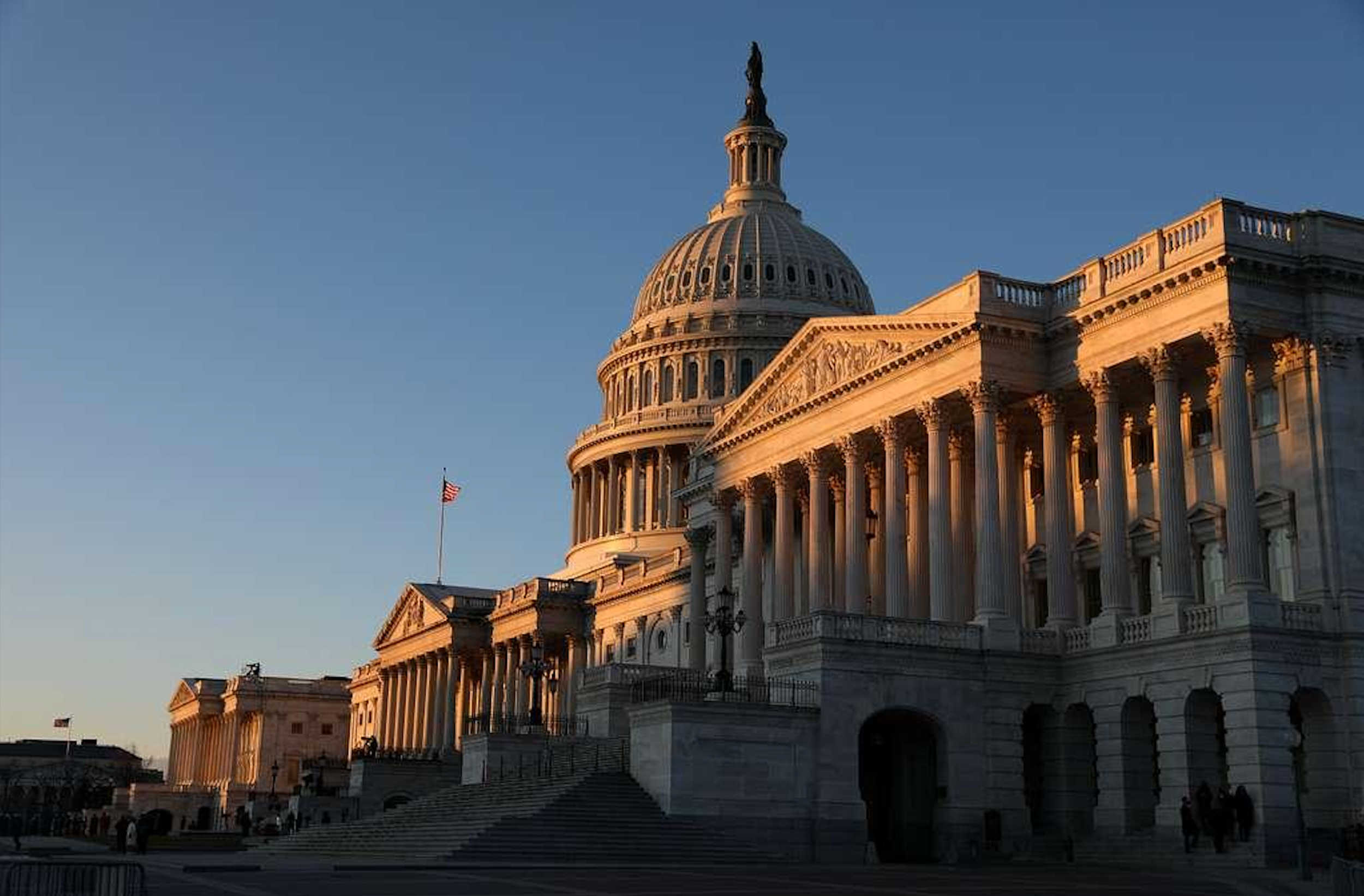
A massive Democratic wave swept across the United States on Tuesday, overturning Republican dominance in states long considered politically secure, handing Democrats control of both chambers of Congress and delivering a series of historic electoral victories that broke barriers of race, religion and gender.

From Texas, where Democrats captured the governorship and a U.S. Senate seat for the first time in decades, to Kansas and South Carolina, where Republican Senate strongholds collapsed, the results amounted to a sweeping rejection of President Donald Trump's second-term leadership.
Voters entered the November 3 midterms frustrated by persistently high prices, the unpopular U.S. war with Iran, immigration enforcement controversies and concerns about government accountability. Exit polling found deep dissatisfaction with the nation's direction and substantial support for greater congressional oversight of the president.
The election's consequences extended well beyond Washington. Democrats won or were projected to win governorships in several Republican-controlled states, while historically underrepresented candidates secured major offices.

Michigan elected the nation's first Muslim U.S. senator. New Mexico elected the first Native American woman to serve as governor of a state. Georgia elected its first Black female governor. Texas elected its first Latina governor, and Alabama voters chose the state's first openly transgender legislator.
The U.S. Virgin Islands also participated in the historic transformation, electing Stacey Plaskett as its first female governor, while voters in several states made history through Republican as well as Democratic victories.
By early Wednesday, the results pointed to one of the most consequential midterm elections in recent American history.
Democrats take control of both houses of Congress
The most immediate consequence of Tuesday's election was the collapse of Republican control of Congress.
The Associated Press and other major election decision desks projected Democratic control of both the House of Representatives and Senate, reversing the Republican majorities that had enabled Trump to advance much of his agenda during the first two years of his second term.
Republicans entered the election controlling the Senate 53–47, including two independents who caucused with Democrats, and holding a narrow majority in the House.
Democrats needed to gain four Senate seats to secure control. Their victories extended far beyond the competitive states initially considered essential to that objective.
Republican Senate seats fell in Texas, Kansas, South Carolina, Maine and Ohio, while Democrats retained important seats in states including Michigan.
The election produced major setbacks for prominent Republican figures, including Maine Senator Susan Collins, who lost her reelection bid to Democrat Troy Jackson, and Ohio Senator Jon Husted, who was defeated by former Democratic Senator Sherrod Brown.
In North Carolina, former Democratic Governor Roy Cooper also captured a Senate seat previously held by Republicans.
The victories give Democrats the ability to lead congressional committees, conduct oversight hearings, demand executive-branch records and investigate actions taken by the Trump administration when the new Congress convenes in January.
Democratic control of the Senate also creates a substantial obstacle for future presidential nominations requiring Senate confirmation.
However, Democrats will not have unrestricted authority to reverse Trump's policies. The president retains his veto power, and many legislative changes will require cooperation across party lines.
The final margins in both chambers remain subject to completion of outstanding races and certification of election results.
Texas delivers one of the biggest political upsets in generations
Perhaps nowhere was the Democratic wave more astonishing than Texas, a state that had become synonymous with Republican dominance.
After more than three decades without a Democrat winning statewide office, Texas voters delivered a sweeping reversal that included the defeat of Governor Greg Abbott, Lieutenant Governor Dan Patrick and Republican candidates for nearly every major statewide position.
Democratic gubernatorial nominee Gina Hinojosa defeated Abbott, ending his effort to secure a fourth term and becoming the first Latina elected governor of Texas.
Hinojosa, a former state legislator, campaigned on reducing household expenses, strengthening public education, tackling government corruption and addressing concerns about the expansion of large energy-intensive data centers.
Her victory returns the Texas governorship to Democratic control for the first time since Ann Richards left office in January 1995.
The political reversal extended to the U.S. Senate, where Democratic state Representative James Talarico defeated Republican Attorney General Ken Paxton.
Talarico became the first Democrat elected to the U.S. Senate from Texas since Lloyd Bentsen won reelection in 1988.
Paxton, a prominent Trump ally, entered the general election after years of legal and political controversies. Despite strong support from national Republicans, he could not overcome the broader Democratic shift.
Texas voters also elected Democrat Vikki Goodwin as lieutenant governor, defeating Patrick, who had wielded significant influence over the state Senate and its conservative legislative agenda.
Democrat Nathan Johnson defeated Republican Mayes Middleton for attorney general, potentially transforming an office that had frequently led conservative legal challenges involving immigration, abortion, environmental regulations and federal executive authority.
The Democratic gains continued across several other statewide contests.
Sarah Eckhardt won the comptroller's race, Clayton Tucker prevailed in the contest for agriculture commissioner, Benjamin Flores won the General Land Office contest and Jon Rosenthal captured the Railroad Commission race.
Those offices influence state spending, agriculture, land management and energy regulation, giving the party substantial new authority over major areas of Texas government.
The Texas Secretary of State's unofficial election returns showed Democratic candidates also leading in the contests for four seats on the Texas Supreme Court.
Maggie Ellis led the race for chief justice, while Chari Kelly, Kristen Hawkins and Gisela Triana held leads in the other Supreme Court contests. Democratic candidates also led contests for the Court of Criminal Appeals and the Fifteenth Court of Appeals.
The judicial races had not all received authoritative race calls at the time of this review, and the results remain unofficial. Even if Democrats secure all four Supreme Court positions, Republicans would retain a 5–4 majority on the nine-member court.
Control of the Texas House of Representatives also remained unresolved early Wednesday.
Democrats had flipped several Republican-held districts and were leading in additional contests, raising the possibility that they could take control of the 150-member chamber for the first time since 2003.
However, the party had not yet secured enough confirmed victories to establish control of the state House. Republicans were also expected to retain the Texas Senate.
The statewide Democratic sweep is nonetheless historic. Texas, which Trump carried comfortably in 2024, delivered some of the strongest evidence that the political environment had changed dramatically.
Kansas elects its first Democratic U.S. senator in 94 years
In Kansas, Democrat Adam Hamilton defeated Republican incumbent Roger Marshall, ending a 94-year drought for Democratic Senate candidates in the state.
Kansas had not elected a Democrat to the U.S. Senate since George McGill won reelection in 1932.
Hamilton, a pastor who leads one of the nation's largest United Methodist congregations, presented himself as a moderate, independent-minded Democrat focused on affordability and political cooperation.
His campaign criticized the impact of tariffs, higher fuel costs and the war with Iran on working families and agricultural communities.
Marshall, a Trump-backed conservative, had been considered an established incumbent in a state the president carried by more than 16 percentage points in 2024.
Hamilton's victory was therefore among the clearest examples of Democrats making gains in territory that had been reliably Republican for generations.
South Carolina, Maine and Ohio add to Republican Senate losses
South Carolina delivered another unexpected Democratic victory.
Pediatrician Annie Andrews defeated Republican Senator Darline Graham, who had been appointed to the seat previously held by her late brother, Lindsey Graham.
The result marked the first Democratic U.S. Senate victory in South Carolina since 1998.
The state had voted overwhelmingly for Trump in 2024, making the outcome particularly damaging to Republican hopes of retaining Senate control.
Andrews campaigned on healthcare access, affordability and government accountability, while criticizing policies that she argued would make healthcare more expensive for families.
In Maine, Troy Jackson defeated longtime Republican Senator Susan Collins, ending a Senate career that began in 1997.
Jackson, a former Maine Senate president with a background in logging and labor advocacy, emphasized economic pressures facing working-class families.
Collins had cultivated a reputation as a more independent Republican, but her occasional disagreements with Trump were insufficient to preserve her seat in an election dominated by dissatisfaction with the president and his party.
Ohio provided another Democratic pickup as Sherrod Brown defeated Republican Senator Jon Husted, returning the former senator to Washington after his 2024 defeat.
Together, the results demonstrated that the Democratic wave extended across different political and geographic regions, affecting conservative Southern states, the Midwest and New England.
Michigan elects America's first Muslim U.S. senator
One of the election's most significant historical milestones came in Michigan, where Democrat Abdul El-Sayed defeated Republican Mike Rogers to become the first Muslim elected to the United States Senate.
El-Sayed, a former public health official and the son of Egyptian immigrants, ran a progressive campaign centered on healthcare affordability, economic inequality and reducing corporate influence in government.
His victory preserved the seat being vacated by retiring Democratic Senator Gary Peters.
The race attracted national attention because of El-Sayed's religious identity, his opposition to U.S. military assistance to Israel and his criticism of the war in Gaza.
Rogers and Republican allies attempted to portray him as too radical for Michigan, including through allegations involving supposed extremist affiliations that were denied by El-Sayed and were not supported by established evidence.
Despite those attacks, El-Sayed secured a historic victory in a state that had supported Trump in two presidential elections.
His election represents a breakthrough for Muslim American political representation in a chamber where no Muslim had previously served.
It also comes amid national debates over immigration, religious discrimination, foreign policy and the representation of minority communities in government.
Women and minority candidates make history nationwide
Beyond the changing partisan balance, Tuesday's election produced an extraordinary series of milestones involving Americans historically underrepresented in government.
In Georgia, former Atlanta Mayor Keisha Lance Bottoms defeated Republican Rick Jackson to become the state's first female governor and the first Black woman elected governor of a U.S. state.
Her victory returned Georgia's governorship to Democratic control after more than two decades under Republicans.
Democrats also swept Georgia's other major statewide offices, including lieutenant governor, attorney general and secretary of state, while Democratic Senator Jon Ossoff secured reelection.
In New Mexico, former U.S. Interior Secretary Deb Haaland became the first Native American woman elected governor of any U.S. state.
Haaland, a member of the Laguna Pueblo, previously broke barriers when she became one of the first Native American women elected to Congress in 2018 and later the first Native American to serve as a Cabinet secretary.
Her election alongside lieutenant governor candidate Stephanie Garcia Richard also established a historic all-women-of-color gubernatorial ticket.
In Minnesota, Lieutenant Governor Peggy Flanagan became the first Native American woman elected to the United States Senate.
Flanagan, a member of the White Earth Nation, defeated Republican Michele Tafoya for the seat being vacated by Democratic Senator Tina Smith.
New Hampshire elected Democratic Representative Chris Pappas to the Senate, making him the first openly gay man elected to that chamber.
His victory followed earlier milestones involving LGBTQ representation, including the election of openly LGBTQ women to the Senate.
Illinois voters elected Lieutenant Governor Juliana Stratton to the U.S. Senate, creating additional milestones for Black women in national politics.
Stratton will join Senators Angela Alsobrooks of Maryland and Lisa Blunt Rochester of Delaware, meaning three Black women will serve simultaneously in the Senate for the first time.
Illinois will also become the first state represented by two women of color at the same time, with Stratton joining Senator Tammy Duckworth.
Ohio voters elected Democrat Amy Acton as the state's first woman elected governor, while California chose former federal health secretary Xavier Becerra, becoming the first Latino elected directly to lead that state.
Wisconsin elected Milwaukee County Executive David Crowley, who will become the state's first Black governor.
The breadth of these victories reflects a changing leadership landscape, with voters elevating candidates whose personal backgrounds and identities had historically been rare in state executive offices and Congress.
The milestones were not exclusively Democratic.
Florida elected Republican Byron Donalds as its first Black governor, while Tennessee elected Republican Senator Marsha Blackburn as its first female governor.
Those victories demonstrate that the wider expansion of political representation crossed party lines, even as Democrats secured the overwhelming share of the night's major partisan gains.
Alabama elects its first openly transgender legislator
Another significant breakthrough occurred in Alabama, one of the country's most conservative states.
Democrat Allison Montgomery defeated Republican incumbent Phillip Rigsby in House District 25, a Huntsville-area constituency, becoming Alabama's first openly transgender state legislator.
Unofficial results published from the Alabama Secretary of State's election data showed Montgomery receiving approximately 53 percent of the vote.
Her victory came in a state where Republican lawmakers have enacted restrictions affecting transgender healthcare and participation in sports.
Montgomery, a software engineer, becomes a new voice in those legislative debates.
The election demonstrates the possibility of individual Democratic gains even in states where Republican candidates retained dominant positions in statewide races.
Alabama nevertheless remained Republican at the gubernatorial level, electing Tommy Tuberville as governor.
Georgia also elected Bentley Hudgins, a Democrat who identifies as transgender and nonbinary, to the state House.
Hudgins defeated Republican Samantha Boston in House District 90, becoming Georgia's first openly transgender and nonbinary state legislator.
Both victories add to the growing number of openly LGBTQ Americans serving in state legislative bodies.
The Virgin Islands breaks its own historic barrier
The national wave of historic firsts extended to the U.S. Virgin Islands, where voters elected Delegate to Congress Stacey Plaskett as the territory's first female governor.
Plaskett and running mate Milton Potter received 11,865 votes, or approximately 62.8 percent, according to the combined unofficial results released Tuesday night by the Elections System of the Virgin Islands.
The Democratic ticket defeated four independent gubernatorial tickets, securing a majority sufficient to avoid a runoff.
Plaskett, who has served nearly 12 years in Congress, will become the first woman elected governor since Virgin Islanders gained the right to choose their own chief executive more than half a century ago.
Her election also represents a historic victory for Black women in American gubernatorial politics.
While Georgia's Bottoms is being recognized as the first Black woman elected governor of a U.S. state, Plaskett's victory establishes the corresponding first for the Virgin Islands. Both elections occurred on November 3, making the date historically significant for Black female executive leadership across American jurisdictions.
The Virgin Islands will also have a new congressional delegate following the election of Janelle Sarauw, who defeated independent Shelley Moorhead.
For the territory, the change in Washington could carry additional consequences as the Democratic Party prepares to assume control of Congress.
A Democratic congressional majority could alter the leadership and priorities of committees responsible for federal appropriations, Medicaid, disaster recovery, energy policy and territorial affairs.
Although the Virgin Islands delegate does not possess a final vote on legislation before the full House, the office retains important opportunities for committee participation, advocacy and congressional oversight.
Sarauw's ability to establish relationships with the new congressional leadership could therefore become particularly important to the territory's federal priorities.
Cost of living and Iran war shape voters' decisions
The Democratic victories followed months of declining public approval of Trump's handling of the economy, foreign policy and government operations.
The results were consistent with extensive pre-election and Election Day polling showing that Americans were dissatisfied with the direction of the country.
According to October polling by the Associated Press-NORC Center for Public Affairs Research, 65 percent of American adults blamed Trump's policies for higher-than-usual prices.
The same research found substantial disapproval of his handling of the war with Iran.
A separate Reuters/Ipsos survey conducted before the election found that 47 percent of registered voters identified the cost of living as the single most important factor in determining their midterm vote.
Election Day exit polling reinforced those concerns.
Original survey findings published by CBS News showed that roughly three-quarters of voters were dissatisfied or angry about the direction of the country.
Approximately six in ten respondents said Trump was a factor in their House vote, with Democratic voters particularly likely to be motivated by opposition to the president.
The economy emerged as the leading issue nationwide, followed by concerns about democracy and government accountability.
Voters expressed anxiety over the prices of groceries, gasoline, electricity, housing and other essential expenses.
The war with Iran also emerged as a significant source of dissatisfaction.
Most respondents in the CBS exit polling believed the United States had made the wrong decision to undertake military action against Iran, with opposition particularly strong among voters concerned about fuel prices.
Higher energy costs associated with the conflict became part of a broader affordability debate that also included tariffs, trade disruptions and existing economic pressures.
The surveys do not establish that the war alone caused the increases in living costs. They do show that many voters associated Trump's economic and foreign-policy decisions with their worsening financial circumstances.
Immigration also remained politically significant, although perceptions differed sharply along partisan lines.
Republican voters were more likely to identify immigration enforcement as an important election issue, while Democratic voters placed greater emphasis on the state of democracy, government accountability and opposition to Trump's policies.
That distinction suggests the election reflected several overlapping concerns rather than a uniform endorsement of every position advanced by the Democratic Party.
Election delivers a referendum on Trump's second presidency
Midterm elections frequently become referendums on the sitting president, particularly when voters are dissatisfied with economic conditions.
Tuesday's results followed that historical pattern, but the scale of Republican losses was unusually broad.
Trump had urged supporters to approach the election as though his own name appeared on the ballot, making the results a direct political test of his leadership.
Democratic candidates successfully linked their Republican opponents to the president's record, particularly on prices, tariffs, the Iran conflict and federal government conduct.
In states such as Texas and Kansas, those arguments resonated with enough voters to overcome longstanding Republican advantages.
The election also exposed weaknesses in the coalition that supported Trump's return to the White House in 2024.
Democrats improved their performance in several areas where Republicans had recently made gains, including portions of South Texas and communities facing economic pressure from higher energy and household expenses.
However, the results should not be interpreted as evidence that the entire electorate has moved uniformly toward progressive policy positions.
Some winning Democrats campaigned as moderates, emphasizing fiscal responsibility, corruption, local economic development and political cooperation rather than ideological change.
Republicans also won important races, including the Florida, Alabama and Tennessee governorships.
The Democratic Party will therefore have to demonstrate whether its electoral gains can be translated into effective governance while maintaining support from voters with differing political priorities.
A new political landscape emerges ahead of 2028
The November 3 results establish a substantially different national political environment for the final two years of Trump's presidency.
Democratic control of Congress will end the period of unified Republican government and establish stronger institutional checks on the White House.
The party's expanded presence in governorships, statewide executive offices and state legislatures may also affect future decisions involving elections, immigration enforcement, federal funding and constitutional disputes.
The election's historical firsts further underscore a changing political landscape.
Black women, Native American women, Muslim Americans, LGBTQ candidates and other historically underrepresented groups secured positions once considered beyond their reach.
Their victories represent changes not only in which political party controls public institutions, but also in who occupies those institutions and participates in making decisions for the country.
Yet the ultimate significance of the Democratic wave will depend on what elected officials accomplish once the celebrations conclude.
Americans have delivered a decisive rejection of the status quo in much of the country. Whether that becomes a lasting political realignment will depend on how effectively the new leadership responds to the economic anxieties, governance concerns and demands for accountability that shaped Tuesday's vote.

For now, the verdict from the midterms is unmistakable: voters have substantially altered the balance of power in Washington and across the states, setting the stage for a dramatically different second half of Donald Trump's presidency.