




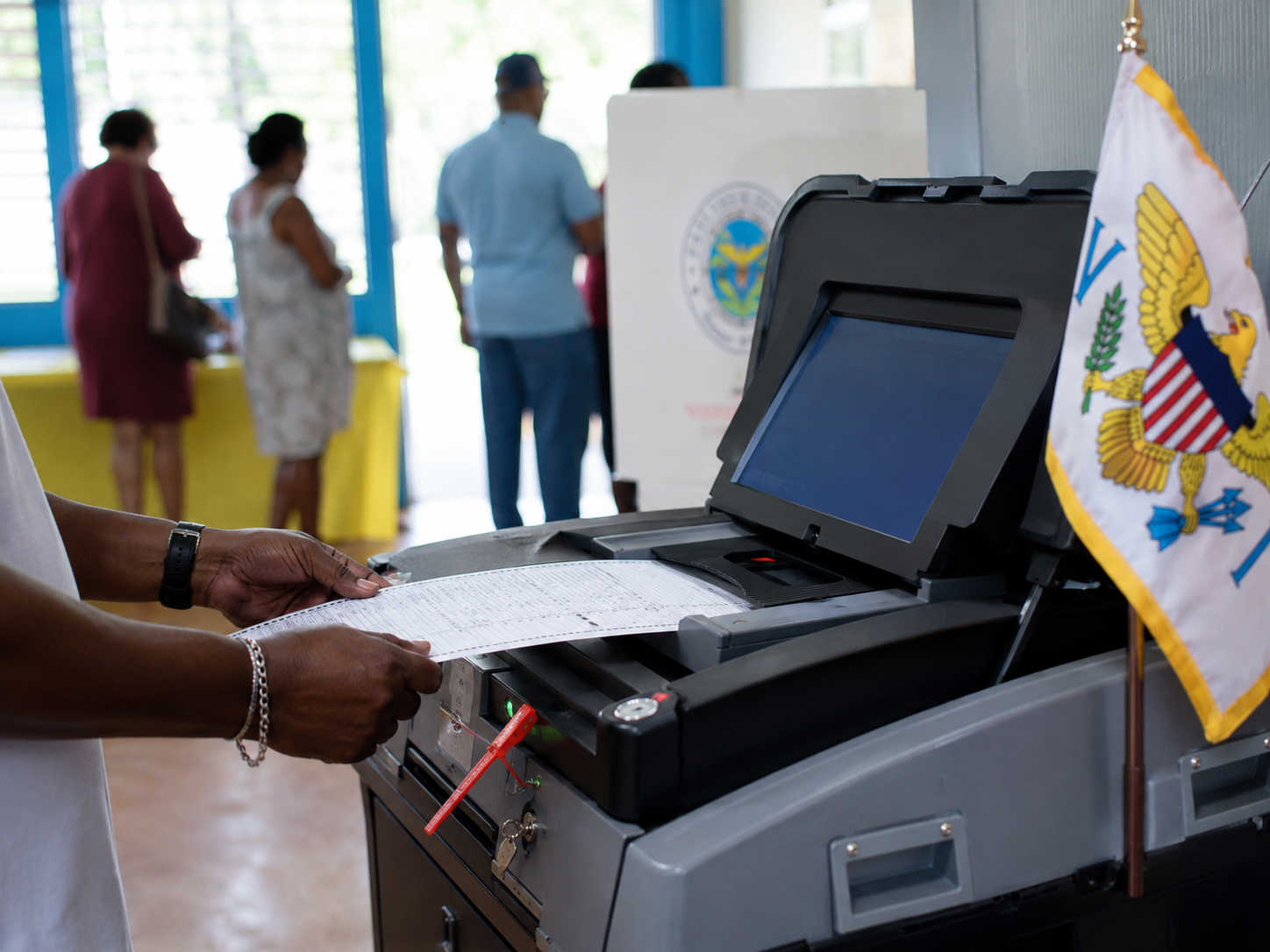
A post-primary audit of voting results in both Virgin Islands districts found that hand-counted tallies either matched the original election results exactly or differed by no more than one or two points, with officials tracing the small discrepancies to human error. The Board of Elections also approved draft ballots for the upcoming general election Wednesday despite pending court cases that could ultimately require a new print run.

“We believe the audit was successful,” board member Kareem Francis said as he outlined the process used to independently check the primary results.
Audit participants first selected the machines to be reviewed and verified that their security seals remained intact before removing the ballots. “We separated the ballots by type, whether they were activated cards vs the handwritten ballots, and we counted each and verified those totals against the original tape records,” Mr. Francis said.
Teams of volunteer tallyers and Elections System employees then canvassed each contest on the ballot before the ballots were run through fresh voting machines that had been certified but were not used during the primary.
“Audit findings in both districts determined that the hand counted tallies either exactly matched results from early voting and primary, or they were off by no more than one or two points,” Mr. Francis said.
Officials investigated the discrepancies and attributed them to human error, “whether it was writing or blank sections.”
Hand-Marked Ballots Highlight Need for Voter Education
The audit also revealed recurring problems with ballots completed by hand, prompting election officials to identify voter education as one of the major lessons from the process.
Mr. Francis said people who choose to complete ballots manually “must continuously be educated and reminded on how to correctly bubble in their selections.”
Some voters circled the oval corresponding with their preferred candidate rather than filling it in. Others placed an “x” across the oval, while some wrote in a candidate’s name without filling in the corresponding write-in oval.
“Other stuff we saw were examples of a voter selecting a candidate from the list, but then still writing in that same candidate’s name,” Mr. Francis said. “There’s a lot of opportunities to just continue and improve education, especially around the hand ballots.”
Williams Criticizes Low Board Participation
While election officials characterized the audit itself as successful, Board Chairman Raymond Williams raised another concern: participation by elected board members in the post-election process.
Mr. Francis credited completion of the audit to the “dedication, diligence and flexibility of a few board members.”
Mr. Williams was more pointed, noting that only a “very few” of the board’s 14 elected members participated in certifying the primary election.
“I am not admonishing. I’m just saying, we take this oath and I think we should take it more seriously, because the process requires that the members are present to participate.”
Mr. Williams noted that the board itself had adopted a motion making certification of the election results its responsibility.
“We had a majority…so if we have nine members present to pass a motion…and only six sign…think about it. We’re failing ourselves. We’re failing our electorate because we’re not taking our responsibility seriously.”
“I think that we have a responsibility to show up for the post-election processes,” he added, expressing hope that “moving forward for the general election…members are going to participate more fully…in ensuring that we’re doing the business that we’re elected for.”
Mr. Williams said the territory’s audit process has also attracted interest outside the Virgin Islands. Representatives from three states approached him during a national elections conference seeking information about how the USVI conducts its audits “because they thought that it would be an added tool in their toolkit that they may want to adopt.”
He cited the interest as evidence of confidence in the territory’s procedures for verifying election results.
Pending Lawsuits Could Still Change Ballots
Following the audit discussion, Elections Supervisor Caroline Fawkes presented draft general-election ballots for both districts to board members for approval.
The presentation came as several legal disputes involving prospective candidates remain unresolved. Ms. Fawkes explained that if a court overturns one or more candidate disqualifications, the Elections System would have to order another print run incorporating the affected candidate or candidates.
Such late ballot changes are not unprecedented. Ms. Fawkes said the Elections System was required to order new ballots under similar circumstances in 2014 and 2020.

Board members subsequently entered executive session to discuss the pending legal matters. When they returned to the public meeting, they approved the general-election ballots in their current form.