

The Virgin Islands Board of Education on Monday heard from Dr. Phelton Moss of the National School Boards Association regarding recent federal education policy shifts and their potential implications for the territory.
“The administration is unloving to public education, writ large,” said Dr. Phelton Moss, managing director of Government Relations at the National School Boards Association, as he addressed board members about recent changes in federal education policy. He said the administration is “looking for every opportunity to privatize public education.”
Moss was invited to speak to members of the local education community about how current federal education policy could affect Virgin Islands administrators, educators and students. While he noted that many proposed cuts from the last appropriation cycle “did not make it through,” he cautioned that the underlying sentiment remains active on Capitol Hill.
“Budgets should remain on your brain…I can’t promise you we won’t have cuts,” he told those in attendance.
In anticipation of potential reductions in education funding, Moss said the NSBA is “trying to figure out how to bring fiscal discipline to our systems.” He framed the moment as one requiring heightened vigilance from education leaders. “When the federal government is working twice as hard to dismantle this system…you’ve got to work twice as hard to keep it intact,” he said, describing what he characterized as a “full court press...to privatize public education.”
The discussion turned to how the territory should respond to what Moss described as a federal push toward privatization. Board of Education Vice Chair Emmanuella Perez-Cassius questioned whether the Virgin Islands should consider creating pathways for school vouchers, noting that the territory does not currently offer charter schools or voucher school programs.
Dr. Moss rejected that approach.
“The National School Board Association is diametrically opposed to any form of vouchers,” he said. “I would never recommend you to do that, given our positionality.”
Instead, he explained that the NSBA is advocating for the federal government to recognize local school districts as scholarship-granting organizations, allowing parents to use new scholarship tax credits within their local public school systems.
“I do think you should be creating systems of support where you can leverage these dollars,” Dr. Moss said, while cautioning against establishing a voucher system that would transfer federal funds into a privatized school network.
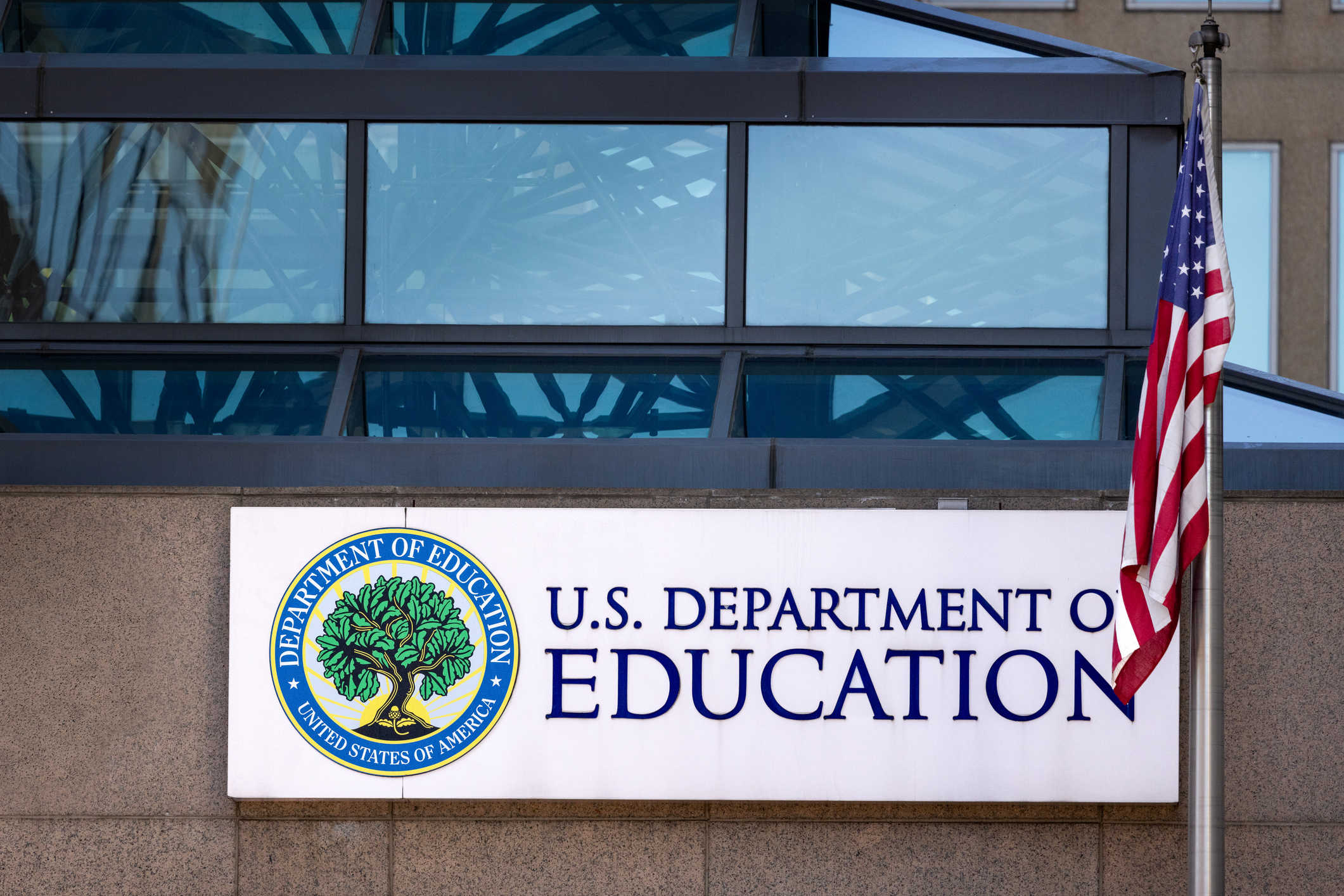
In contrast to concerns about federal cuts and privatization, the Trump administration has repeatedly framed its education policy as a return of authority to states and local communities. The U.S. Department of Education states its commitment to “returning education authority where it belongs: the states,” arguing that decentralizing federal control will empower state and local leaders who are closer to students and schools. The administration has pursued interagency agreements to transfer certain federal programs and grant responsibilities to other agencies as part of that effort, with Education Secretary Linda McMahon describing such moves as steps “toward greater efficiency, stronger coordination, and meaningful improvement” while aiming to break up what the White House terms the “federal education bureaucracy.” The administration has also supported the Federal Education Freedom Tax Credit under the One Big Beautiful Bill as a mechanism to give families more flexibility in how education funds are used.
Beyond the funding debate, Moss offered strategic advice to territorial education leaders at both the board and department levels. He urged alignment around a shared policy framework.
“Get aligned on a policy agenda and drive that together and speak the same language,” he said.
He also disclosed that federal education officials intend to focus their efforts on improving student academic outcomes and suggested that local leaders structure their work accordingly.
“I think whatever work you do as organizations, shoulder to shoulder, it needs to be focused on student academic outcomes…if you’re going to be talking to the USDOE, you need to be able to show how everything you’re doing is getting back to student academic outcomes,” he advised.