




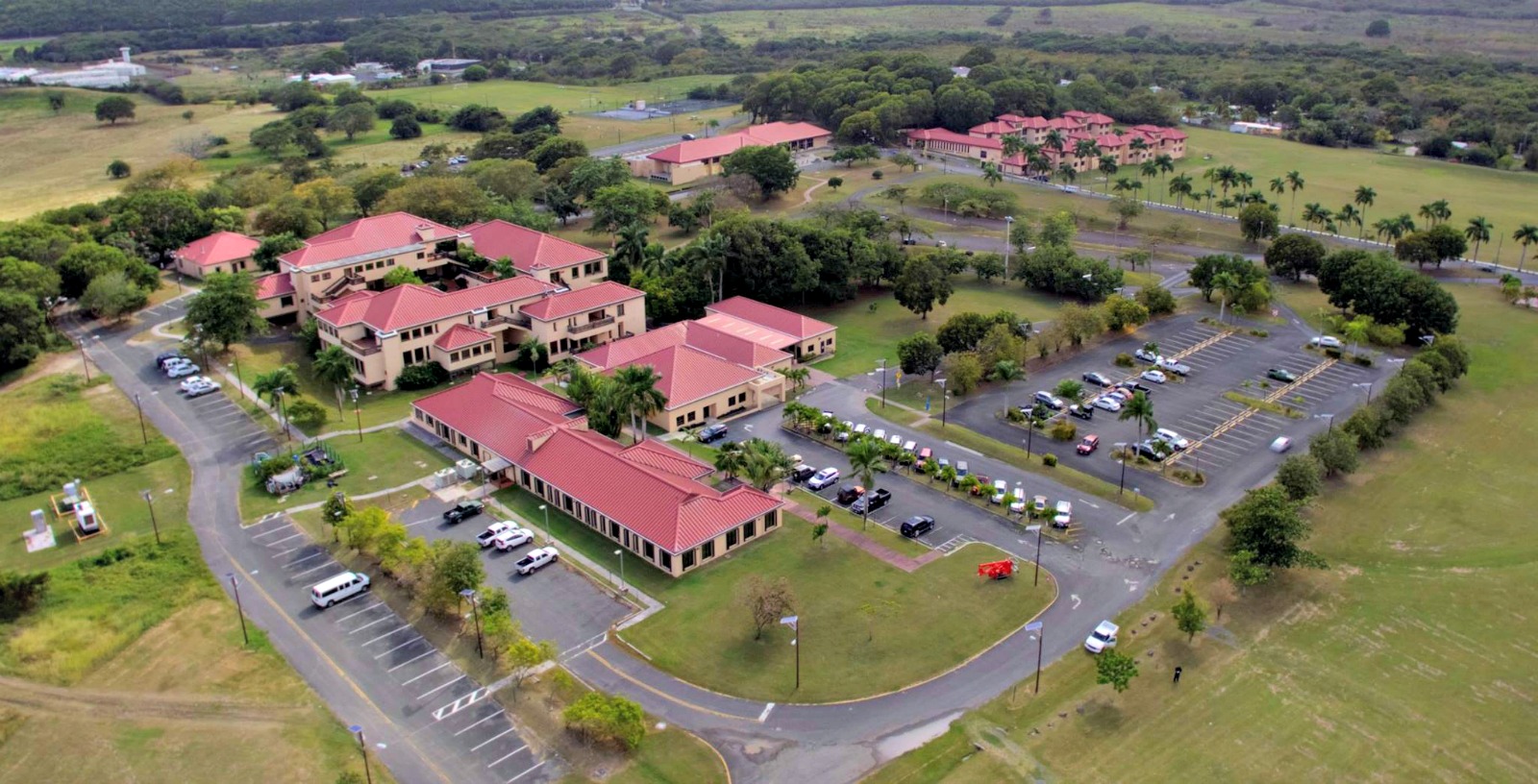
The cancellation of several federal grants has placed the University of the Virgin Islands in a particularly precarious position, threatening the continuity of programs and forcing the institution to lay off staff.

The grim details of the clawback of federal funds were provided by UVI president Safiya George when she presented the University’s FY2026 budget request before the Committee on Budget, Appropriations, and Finance on Thursday.
“Higher education is at a crossroads and, quite frankly, under attack,” testified Ms. George. Funding cuts in the U.S. Department of Education, the National Science Foundation and other federal entities, alongside reductions in Medicaid and SNAP benefits present an “alarming trajectory that undermined the educational and socioeconomic mobility of countless students.”
Thus far, UVI has lost $3.5 million from the cancellation of six federal grants. These cancellations have impacted the university’s “priority areas” including biomedical research, stem leadership, faculty development, international student exchange and climate resilience. Among the losses is a $75,000 USAID and US Forest Service exchange program, intended to fund ten international graduate students from Ghana.

Additionally, “the loss of a $15,000 grant resulted in the elimination of a faculty fellowship and associated research support,” George told lawmakers. Further, the early termination of a $139,000 USDA grant affected UVI’s climate-resilient research and agriculture innovation efforts. One employee had to be laid off but was able to transition elsewhere within the university.
Others were not so lucky. “We've had to let go of some employees who were fully grant-funded,” Dr. George told Senator Novelle Francis, the committee’s chair.
UVI is also bracing for further potential cuts. At-risk funding includes a $1 million three-year grant from the National Institutes of Health to establish the Caribbean Climate Change Cancer and Health Disparities Research Center. The loss of this grant would place four full-time employees at risk of termination. UVI is also worried about the status of a $20 million National Science Foundation-funded ridge-to-reef project. “Such a loss would threaten UVI's standing as a national research institution, stripping away critical infrastructure and key research faculty support,” the president explained.
Another annual contribution of $1.2 million from the National Oceanographic and Atmospheric Administration is also on the fence. The funding, intended to continue for a decade, supports environmental research. Compounding funding cuts is the “ongoing national policy shifts related to immigration and student visa requirements,” the university president said. The 65 international students at UVI have thankfully not been impacted.
The university is breathing a sigh of relief that proposed cuts to Pell Grant funding were not implemented. Over 60% of UVI students depend on these grants, Dr. George said. “I think we dodged a bullet,” commented Senator Marvin Blyden. Attempts to appeal the cancellation of other grants have been unsuccessful thus far.
To create a buffer for economic challenges, the university implemented a 7% increase in tuition and a 13% increase in meal plans over the past two fiscal years. However, a “thoughtful analysis of inflation and rising costs reflected that additional increases were necessary,” said Ms. George. It’s why UVI’s board “recently approved additional increases in the meal plan and tuition for part-time summer overload and UVI online students only.”
Having listened to UVI’s testimony, Senator Carla Joseph was interested in a strategy to “overcome whatever budgetary shortfalls that may arise.” Per George, UVI is “diversifying our strategy in securing funding” and is currently applying for both federal and non-federal grants. “We still want access for students. We still want to address vulnerable populations, but we just have to be more creative in how we're writing those grants,” she said.
Now, UVI’s appropriation request of $49,851 535 includes $9 million for “programs and initiatives which continue to be critical and crucial to the institution's mission.” Dr. George also urged the Legislature to approve “an increase of $100,000 for a total of $200,000 to support valedictorians and salutatorian scholarships, and an increase of $200,000 for the senior citizens tuition assistance program.”
The UVI president asked legislators to reinstate funding for the Free Tuition Program, utilized by 548 students, which has suffered a “critical depletion” because “the university has not received annually the $3 million appropriation needed to sustain the program.” Senator Francis attempted to explain, saying that allotments to the program were not always expended. “It was useless for us to continue to provide annual funding that could have gone to something else much more important at the time,” he shared.
UVI’s financial situation is worsened by outstanding allotments from central government for its FY2025 approved budget. They’ve received allotments to May and have been offered “cash flow problems” as the reason for the delay.
This year, UVI’s budget request is over $14 million more than the $34,980,932 budget ceiling approved by the governor. Ms. George told Senator Kurt Vialet that the balance covers “legally mandated programs.” The St. Croix senator was not convinced that the approved $34.9 million budget won’t cover these programs, which include agriculture and nursing. “There would need to be a justification as to what is going to be captured by so much additional cost now,” he argued.
UVI’s team, George said, opted to generate the budget request “from scratch” this year. “We had to look at our actual operating costs to run each department and unit…and we came up with a budget that was significantly higher than it had traditionally been.” According to George, the amount is necessary to “operate the university and serve our students to the best capacity.” Utility costs, for example, have soared over time by $1.25 million compared to previous annual costs. The newly proposed minimum wage, GERS increases, and deferred maintenance needs worth $2 million have also been included in their request.

Senator Vialet has promised to “scrub the numbers” as most lawmakers likely will when they retire to closed chambers to discuss the $14 million increase in UVI’s budget request.