




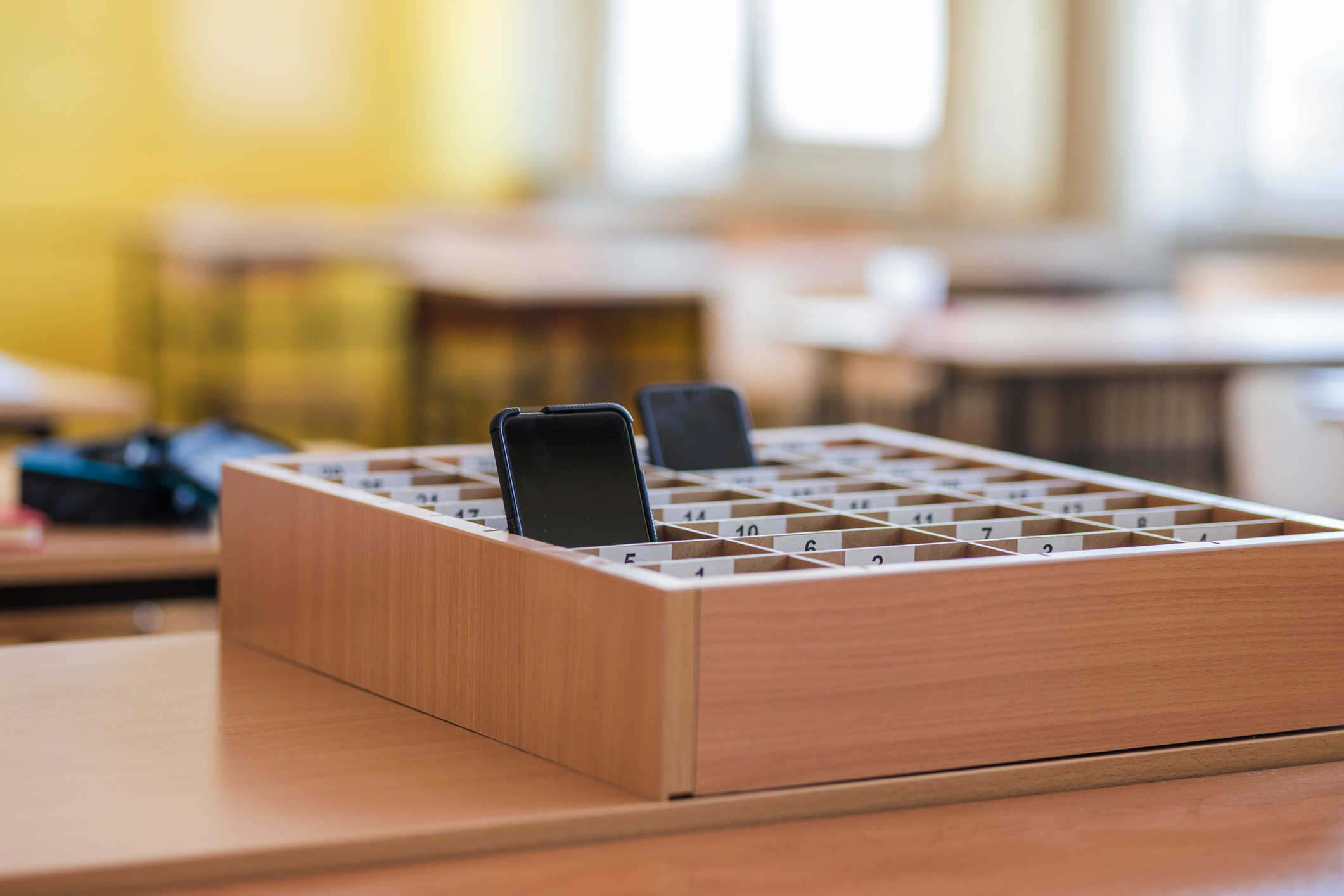
Lawmakers voiced mounting frustration this week over what they describe as inconsistent and insufficient enforcement of the V.I. Department of Education’s new personal electronic device policy, urging school leaders to take the rules seriously to curb classroom disruptions and safeguard learning time.

Appearing before the Committee on Education and Workforce Development on Wednesday, representatives from the Department of Education and the Board of Education delivered an update on the policy’s rollout. They were joined by St. Croix Educational Complex High School student Ace Poyah, who testified about how the guidelines are being applied on campus.
The policy restricts the use of personal electronic devices during instructional time unless a teacher specifically authorizes their use as a learning tool. While Poyah acknowledged he had only received a copy of the regulations the day before the hearing, he said the policy has already helped reduce incidents of digital misconduct and cyberbullying. He told senators that he has “personally felt the effects this policy shift has had on my learning experience.”
However, Poyah also testified that many of the policy’s requirements “exist more on paper than in practice,” even as he maintained that this was not a problem. As an example, he noted that the policy requires “express written authority by a teacher to utilize pre-approved learning applications and platforms,” yet in practice verbal permission is routinely given. “Verbal communication is quicker, simpler and makes the most of our already limited class time,” he explained.

Poyah said the policy “strikes a perfect balance between productivity and playful use when permissible,” and emphasized that “its implementation often varies by teacher to teacher, and this variation, in many ways, is a strength.”
Several senators disagreed.
Senator Avery Lewis said inconsistent enforcement is becoming a major concern. “One set enforces it, another set don't enforce it,” he said. “I believe in enforcement, and I ain't saying to 100% ban it, but I said, enforce it.”
VIDE Assistant Commissioner Victor Somme III acknowledged the issue. Enforcement and “consistency across the board” are two of the most significant obstacles to the policy’s success, he observed.
Committee Chair Senator Kurt Vialet also pressed the department to take the rules seriously. “We seem to ignore the use of cellphones in schools, and there is an impact,” he said, adding that many campuses show little sign of change. Issued at the start of the school year, the policy is currently being “monitored,” according to St. Croix Superintendent Carla Bastian-Knight, who said she had not heard of “any oppositions or pushbacks from the schools, parents or the administrators.”
Senator Vialet suggested the lack of pushback stems from the fact that “everything is the same,” noting that “all the students are walking around with their phones.” He described the situation as “a free-for-all,” and warned that “unless something is done, we're not going to be able to impact education.” Ultimately, he said, “administrators are just going to have to do the job,” adding that “we're going to have to take this very seriously.”
Senator Kenneth Gittens, who first urged VIDE to “get serious” about implementation, went further. “Just ban the thing. No cellphone to school,” he declared. Senator Dwayne DeGraff echoed him: “Ban cellphones. Period. Case closed. Argument done.”
A full ban appears unlikely, however. Testimony from a parent supported the current structure of the policy, aligning with the position presented by Poyah on behalf of other students.
Still, Senator Gittens cautioned that “this thing about half-stepping is what will get us in problems.” He encouraged the department to resolve internet issues at school sites “so that we can stop providing the excuses of needing to allow students to come to school with a cellphone.”
Senator Novelle Francis warned that the ultimate failure point would be “inconsistency of enforcement.” He also urged the department to improve outreach and understanding of the rules. “Implementation should have been better handled in some of these instances,” he said.

Assistant Commissioner Somme said the department will “revisit the promulgation of publication of the policy.” Senator Vialet closed by stressing that full cooperation across campuses is essential. “The implementation is a tough implementation, but it is possible, but we need consistency, and we need everybody on the campus to enforce the policy,” he said.