




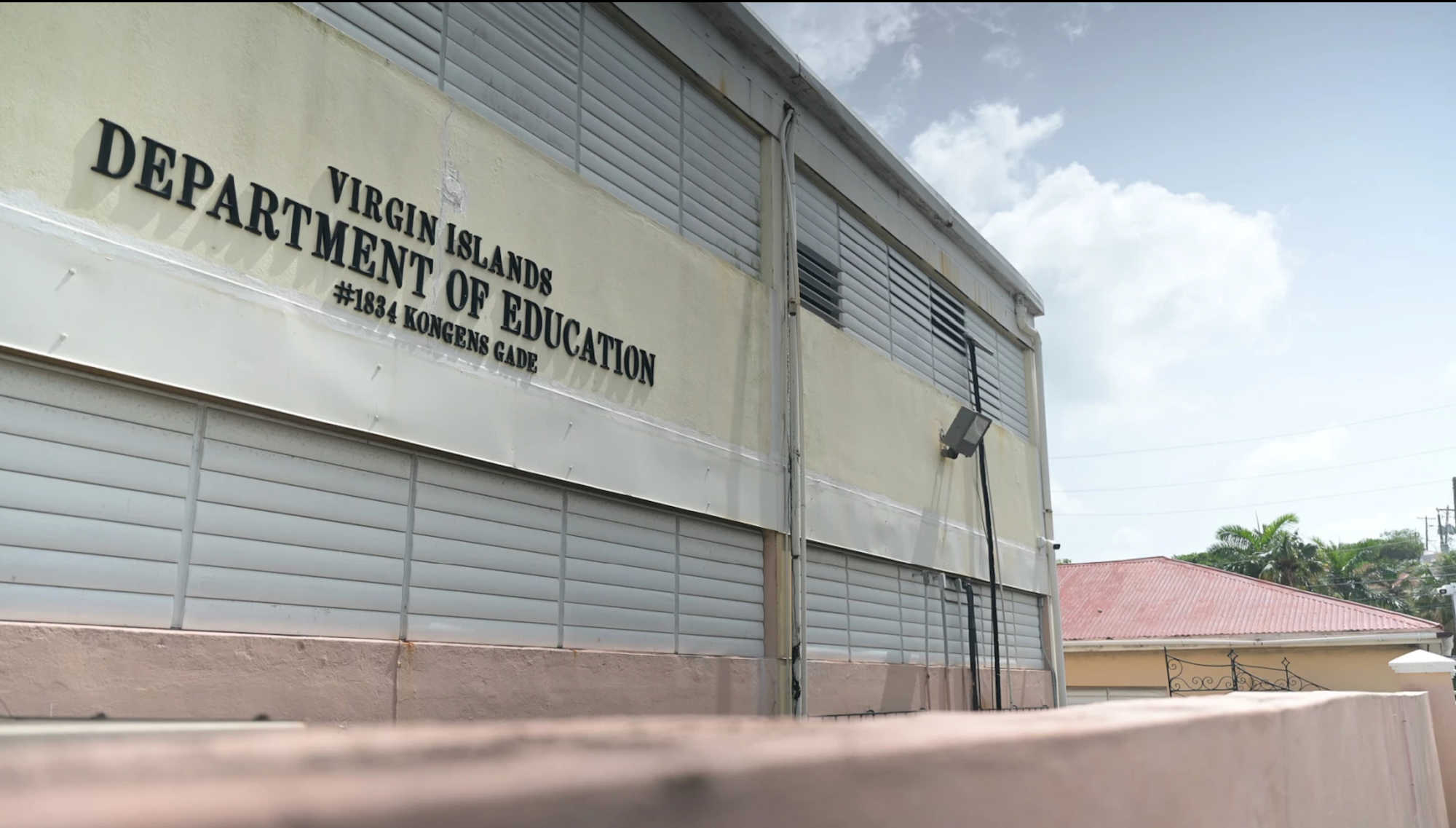
The V.I. Department of Education and the Board of Education told lawmakers on Wednesday that fully implementing the new Virgin Islands history curriculum in public high schools remains deeply challenging, describing it as the “elephant in the room” as they outlined concerns about credits, staffing, scheduling, and limited resources. Their testimony before the Committee on Education and Workforce Development highlighted widespread support for the curriculum but underscored how practical obstacles continue to slow its rollout.

Victor Somme III, VIDE’s assistant commissioner, said the two agencies have been working collaboratively to introduce the curriculum smoothly across the system. Even so, he acknowledged several major concerns, including the “potential impact on career pathway credits,” high school history requirements, graduation credit distribution, and “retroactive obligations for upperclassmen.” He also pointed to “the need for additional teachers amid an existing teacher shortage.”
While both school districts have set clear expectations for implementation in Grades K-8, Mr. Somme said “several ongoing challenges persist at the 9th through 12th grade level.” VIDE is coordinating efforts to “ensure that the high schools have the operational capacity, instructional resources, and staffing necessary to provide the required courses with fidelity and consistency.”
Committee chair Senator Kurt Vialet was uneasy with the scale of the transition. “A lot of times we didn't think about the impact on the overall education system,” he said. He noted the pressure that comes with adding a full four-credit VI History requirement: “That's a tremendous impact on the high school level. You're talking about four additional credits in addition to everything else that they have.” The course must appear as a standalone class on report cards.

Deputy Commissioner for Curriculum and Instruction Dr. Renee Charleswell told Sen. Vialet that the department has been “struggling to provide guidance in that area,” and acknowledged that the mandated implementation remains a “concern for the high school principals, superintendents as well.” Scheduling also remained an issue. “The board has to be creative in order to do it,” said Dr. Kyza Callwood, chair of the Virgin Islands Board of Education. “We have to follow what the court says in terms of ensuring the credits.”
Beyond scheduling and credit compliance, resource constraints continued to dominate the discussion. St. Croix district superintendent Carla Bastian-Knight said teachers support the curriculum but warned that implementation may be hindered by “continued teacher shortages.” She also cautioned that redundancy could arise because social studies remains part of the existing curriculum. Social studies coordinator Lauren Larson added that VIDE is planning a “project” to address ongoing deficiencies, including the lack of “high-quality instructional materials in order to teach Virgin Islands history at each grade level.”
The resource gaps frustrated Senator Avery Lewis. “We want to implement these things, but we don't provide all the resources, but we want great results. That's unfair to the teachers,” he said, though it was unclear whom he was addressing. Superintendent Bastian-Knight provided a stark example of the shortage: at the St. Croix Education Complex, more than 900 students are served by seven social studies teachers, only two of whom teach VI History. “We have a problem when it comes to teacher shortage, to be able to meet even the creative design that we have,” she said.

With challenges ranging from staffing to materials to scheduling, lawmakers urged tighter coordination going forward. Senator Marvin Blyden encouraged all parties to “really get together [and] really figure out a way to make it happen, because it’s very important.”