



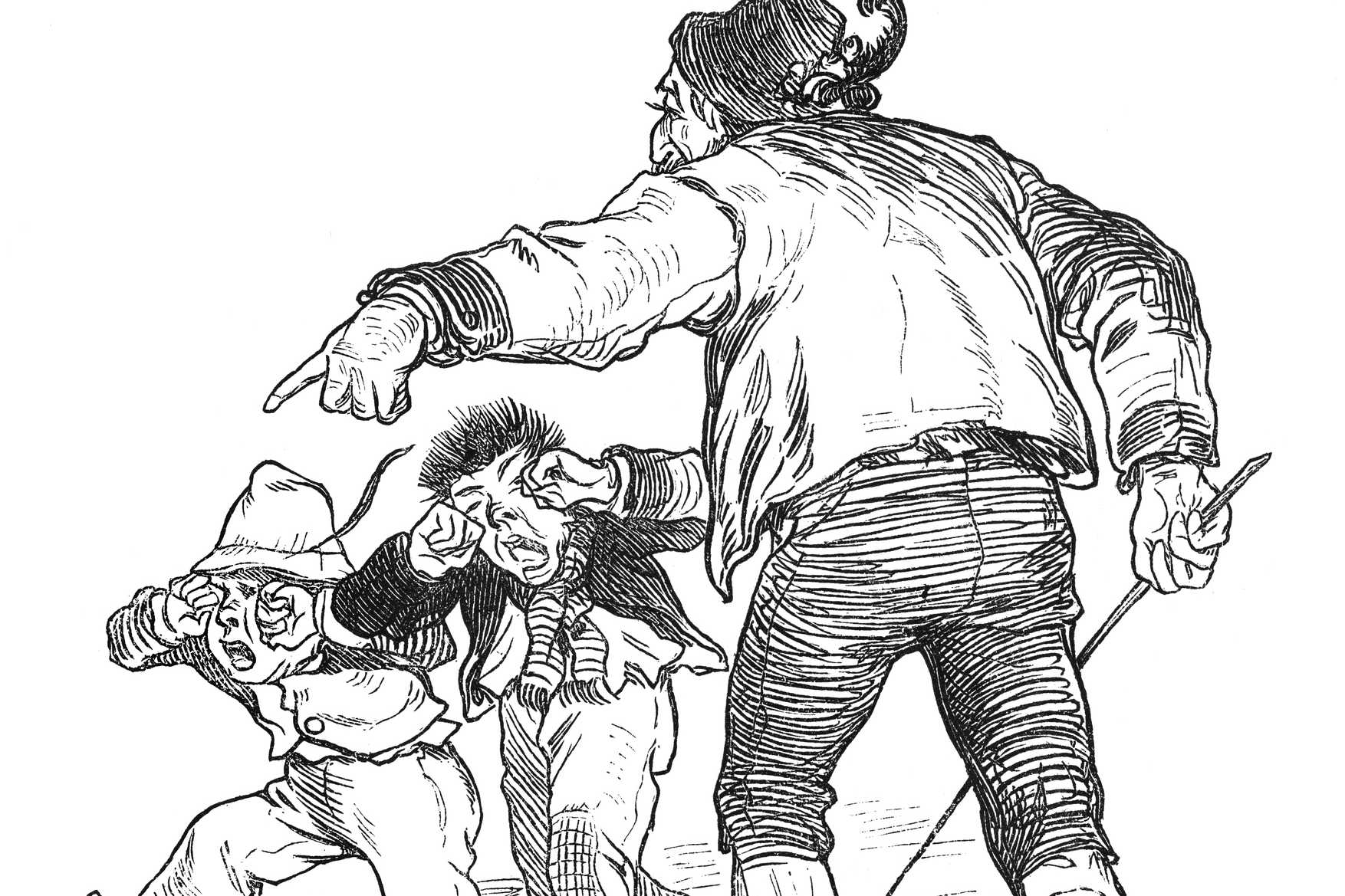
Senators who make up the Committee on Education and Workforce Development supported a bill that would ban corporal punishment in schools in the Virgin Islands. The practice has been barred in 31 U.S. states.

The measure, Bill No 34-0097, "grants immunity from civil and criminal liability to a school employee, who in the reasonable course of employment uses reasonable physical force against a pupil under the conditions set forth in the statute.”
"When two adults hit each other it is called assault, so we can’t send the wrong message that when an adult hits a child it is ok because that transcends into adulthood that it is ok to solve problem physically,” said Senator Janelle Sarauw, the bill's sponsor. "We have to look at creative ways to discipline, give them second chances outside of constantly beating them."
The bill defines corporal punishment as “the intentional infliction of physical pain upon the body of a pupil as a disciplinary measure.”

The V.I. Dept. of Education "does not condone corporal punishment or any acts of violence against children. We must place emphasis on changing students’ behavior by means other than imposing physical corporal punishment," said Education Commissioner Racquel Berry-Benjamin. She said D.O.E. supports the legislation and that the department "is grateful for careful word choices and language chosen in this bill to codify and clearly define what discipline in our schools look like, and that it should be in a way that nurtures a more positive learning environment."
The commissioner said the measure represents “a step toward ending and raising awareness of corporal punishment against our most precious jewels.”
Nisha de Jean Charles, certified independent clinical social worker, licensed psychotherapist and owner of Buoyant Living Psychotherapy, spoke about the negative impacts of corporal punishment. She said the practice "teaches aggression and use of force as an acceptable method of problem-solving, and further an expression of love. 'I love you, therefore, I hurt you,” she said.
Senator Javan James sought to learn whether D.O.E. had any data on the prevalence of the practice at the territory's schools. “We do not because it is not even reported that someone engaged in corporal punishment with a child. That’s not something that anyone says and it’s a cultural issue for many years, keeping this silent," she responded.
Similarly, Senator Kurt Vialet asked whether there were incident reports, and Ms. Berry-Benjamin responded, "No senator, and if they occurred they were not brought to our attention or reported." Mr. Vialet supported the measure, stating that he understood its importance. However, "I have not heard of any number of reports being made to the Department of Education in reference to the abuse of corporal punishment," he said.
Mr. Vialet asked St. Croix Superintendent of Schools, Carlos McGregor, whether he has heard of any complaints. “No complaints regarding corporal punishment," Mr. McGregor responded.
Ms. Sarauw later stated that corporal punishment has occurred in schools. "As we know, reporting is not as it should be and things don’t always make it up to the district or the state level.”
Senate Milton Potter intended to ask the Board of Education about the current policy on corporal punishment, but since the board was not present for the hearing, he asked Ms. Berry-Benjamin. The commissioner said corporal punishment has been allowed since 1993 under USVI law. However, the Dept. of Education has had several policy updates and currently does not support the practice.

Sens. Sarauw, Whitaker, Milton Potter, Kurt Vialet, Donna Frett-Gregory, and Carla Joseph voted to move the measure forward. Committee member, senator Kenneth Gittens was absent.