




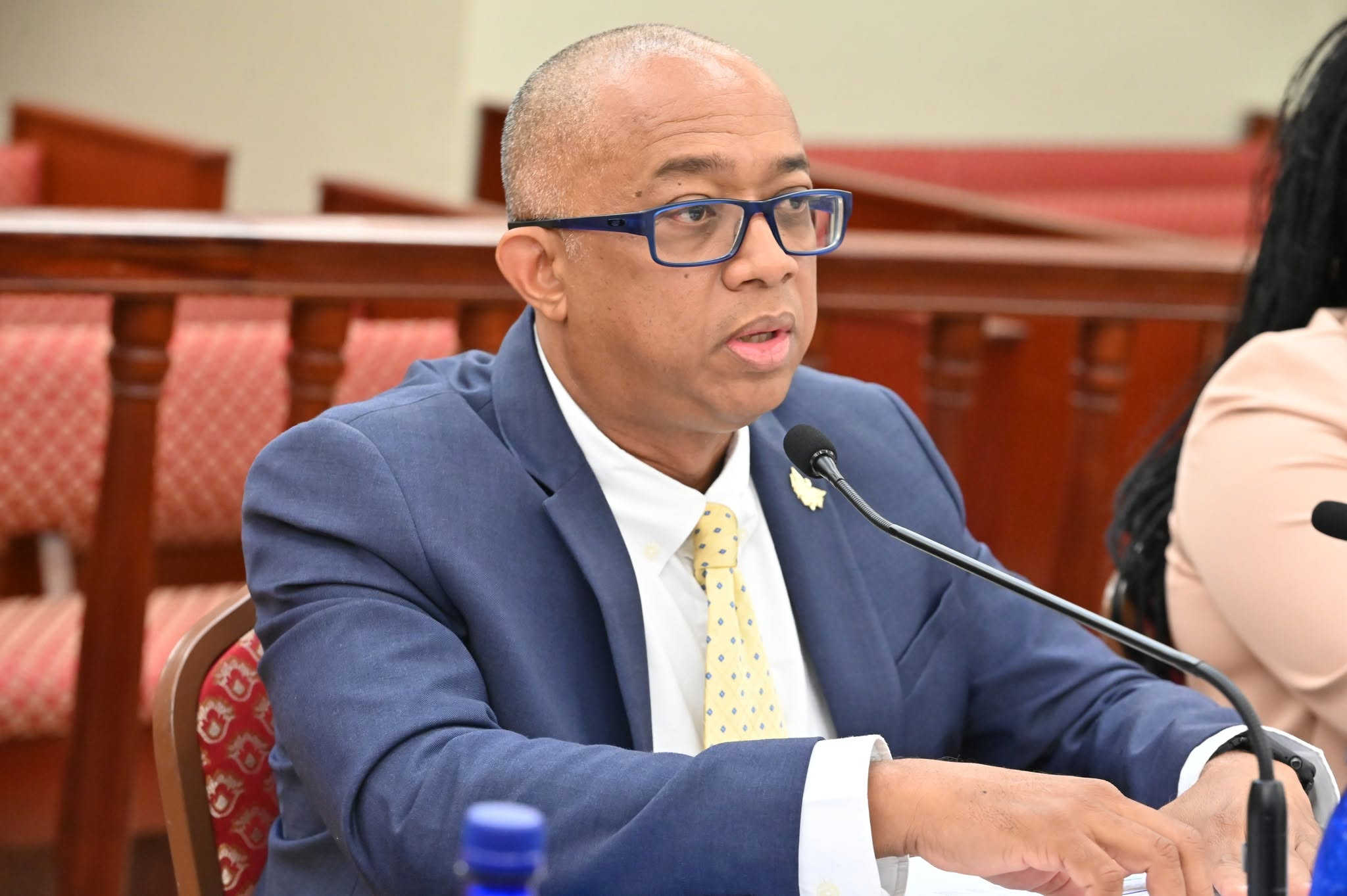
The departure of two high-net-worth taxpayers from the Virgin Islands may have cost the government as much as $35 million to $40 million in income tax revenue, Bureau of Internal Revenue Director Joel Lee told lawmakers during this week’s FY2027 budget hearings.

The disclosure came as Senator Novelle Francis Jr. questioned Mr. Lee about a downturn in income tax collections, adding a sharper explanation to concerns already raised during the budget cycle about the territory’s heavy reliance on tax revenues to support the proposed $1.638 billion spending plan for fiscal year 2027.
“Director Lee, have you recognized over the last several months that we have seen a downturn in income tax collection?” Senator Francis asked.
“Yes,” Mr. Lee replied.

Asked what he attributed the downturn to, Mr. Lee pointed to the loss of high-income taxpayers who had been part of the territory’s personal income tax base.
“As I mentioned in the budget overview, we have lost some very high net worth individuals, they have moved back to the states for whatever reason, and they were a significant part of our tax base,” Mr. Lee said.
Senator Francis then asked whether those two individuals accounted for the decline that officials had seen.
“Yes, those two, absolutely,” Mr. Lee responded.
The exchange placed the potential loss “to the tune of maybe up to 35 to 40 million,” an estimate Mr. Lee confirmed.
The timing of the departures could further deepen the revenue impact, according to Mr. Lee, because the government would miss not only expected extension payments but also any final payments due when the taxpayers file.
“Because of the timing, that would have been an extension payment. So, who knows what we'd have gotten in October when they actually file, you know, whatever additional. So we miss not only a deposit that they normally pay, we also are going to miss out on their final simply because they are taxed on their worldwide income, because they are resident here,” Mr. Lee said.
The issue is significant because personal income taxes are one of the government’s major revenue categories. During the FY2027 budget overview, officials said general fund collections are expected to reach $958 million, with tax collections carrying much of that projection. Personal income taxes are expected to grow by 2%, from $421.79 million to $427.95 million. Mitigation and disaster recovery projects are also expected to generate additional personal income tax collections, moving from “$21.9 million” to “$71.7 million,” which officials said could increase total personal income tax collections to $499.66 million if achieved.
Through May 2026, BIR had collected $610 million in FY2026. Mr. Lee previously told lawmakers those collections were “$14 million over last year,” but said the Bureau had not anticipated some “high net worth taxpayers leaving the territory.”
The latest exchange gave lawmakers a clearer picture of the scale of that problem.
Senator Francis asked whether there was any opportunity for the Bureau to tighten collections in other areas, noting that the revenue tied to the taxpayers who left was already gone.
Mr. Lee said the Bureau’s overall collections remain ahead of last year’s performance, but the loss of the two taxpayers changed the picture. "Right now we're currently above what we did last year. Had those individuals stay in the territory, we would have been very well,” he said.
He defended BIR’s staff, while also warning that additional departures could worsen the government’s revenue position.
“My team is doing what they do, you know, more than last year, for sure, but because of these high net worth, my fear is more may leave and then that's going to be a domino effect,” Mr. Lee said.
The disclosure adds another pressure point to the early FY2027 budget hearings. In separate testimony, Office of Management and Budget Director Julio Rhymer said the proposed budget was developed under cautious assumptions, with personal and corporate income tax projections deemed “prudent” because of global conflicts and the broader economic climate.
Other revenue areas are also under scrutiny. Officials have projected increases in gross receipt taxes tied to capital projects and disaster recovery activity, while the Office of Disaster Recovery has projected more than $733.9 million in recovery spending in FY2027. That activity is expected to generate $36.7 million in revenue through gross receipts and other residual revenue.
Senators have also pressed the administration to be more aggressive in collecting taxes tied to construction and other economic activity. The loss of two high-net-worth taxpayers now adds a different concern: the vulnerability of the income tax base when a small number of residents account for tens of millions of dollars in annual revenue.

Mr. Lee did not identify the individuals who left the territory. He said the Bureau could not have predicted their departures.