




U.S. gasoline prices have fallen below $4 a gallon for the first time in months, offering relief to mainland drivers as global oil markets respond to a preliminary U.S.-Iran agreement aimed at ending the war, reopening the Strait of Hormuz and restoring disrupted energy flows.

AAA reported the national average for regular gasoline at $3.9990 as of Thursday, June 18. The drop follows weeks of easing prices after crude oil retreated from the highs triggered by the conflict and restrictions around the Strait of Hormuz, one of the world’s most important energy shipping lanes.
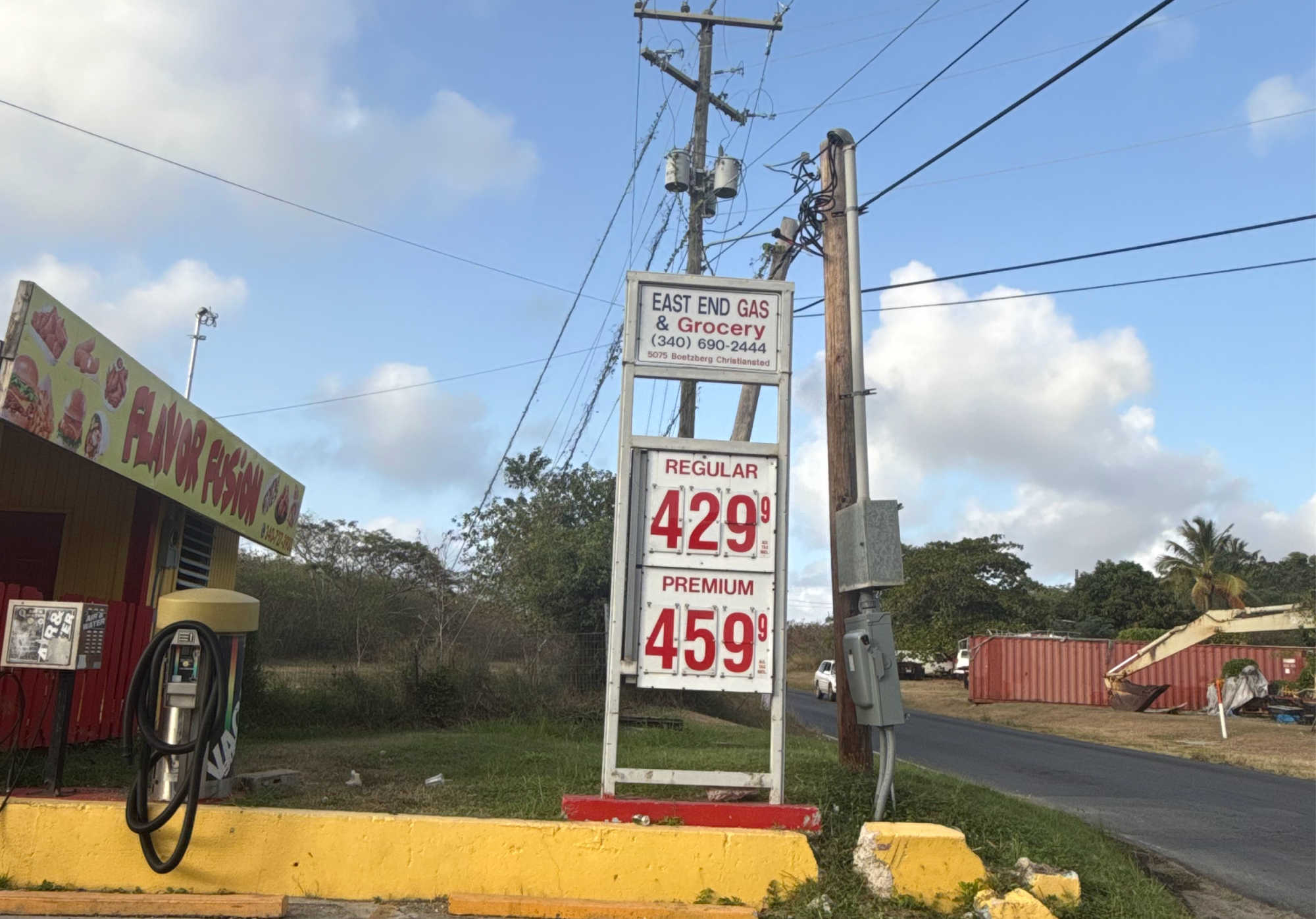
Prices have already started to retreat in the Virgin Islands, but mainland-level relief may take longer to reach local motorists. Unlike many mainland markets, where pump prices can respond more quickly to changes in crude oil and wholesale gasoline, the territory’s prices are shaped by imported fuel, shipping costs, inventory already purchased by stations, and the smaller scale of the local market. That means a decline in the national average does not automatically translate into an immediate drop at the pump on St. Croix, St. Thomas or St. John, where recent DLCA surveys have shown regular gasoline remaining well above mainland averages. Still, if crude prices continue to ease and shipping through the Strait of Hormuz normalizes, the pressure could eventually move through the supply chain and provide some relief to Virgin Islands consumers.
The decline at the pump is tied to improving expectations in the oil market after the United States and Iran moved forward with an interim agreement that would allow commercial shipping to resume through the strait and permit Iranian oil exports under U.S. waivers. Oil prices fell again Friday, with Brent crude and U.S. West Texas Intermediate both retreating to levels last seen near the start of the conflict.

The agreement is expected to be central to talks beginning in Switzerland on Friday. A formal Geneva ceremony had previously been described by U.S. officials, though major outlets reported that the memorandum itself had already been signed by U.S. President Donald Trump and Iranian President Masoud Pezeshkian. The Friday process is expected to open the next stage: a 60-day negotiation period toward a comprehensive final deal.
The 14-point memorandum calls for the immediate termination of military operations by the United States, Iran and their allies on all fronts, including Lebanon. It also commits both countries to respect each other’s sovereignty and territorial integrity, while barring interference in each other’s internal affairs.
Energy markets are focused most closely on the provisions involving the Strait of Hormuz and Iranian crude. Under the framework, the U.S. would begin removing its naval blockade and other impediments against Iran, with the blockade to be fully lifted within 30 days. Iran, meanwhile, would use its best efforts to provide safe, toll-free passage for commercial vessels through the strait for 60 days, with full traffic restoration expected within 30 days after technical, military and de-mining obstacles are addressed.
The agreement also calls for the U.S. Treasury Department to issue waivers for Iranian crude oil, petroleum products and derivatives, including related banking, insurance and transportation services. That provision could allow Iranian oil to return more openly to the global market even before a final settlement is reached.
The deal further commits the United States and regional partners to develop a reconstruction and economic-development plan for Iran worth at least $300 billion, with the mechanism to be finalized during the 60-day negotiation period. It also lays out a path for the scheduled termination of U.S., U.N. and other sanctions as part of a final agreement.
The nuclear question remains unresolved, but the framework places it at the center of the next stage. Iran reaffirms that it will not procure or develop nuclear weapons, while both sides agree to negotiate the disposition of enriched material. The minimum method outlined in the document is down-blending under International Atomic Energy Agency supervision. Broader questions involving enrichment and Iran’s future nuclear needs are left for the final agreement.
Pending that final deal, the agreement says Iran will maintain the status quo of its nuclear program, while the United States will not impose new sanctions or deploy additional forces in the region. The framework also calls for an executive mechanism to monitor implementation and says any final agreement would be endorsed by a binding U.N. Security Council resolution.
For drivers, the immediate effect is being felt through crude prices, which heavily influence gasoline costs. Still, the national average falling below $4 does not mean prices are low everywhere. AAA’s state-level data showed several states, including California, Washington, Oregon, Nevada and New York, still above the national average, while states such as Texas, Florida, Georgia and South Carolina were lower.
Analysts have also cautioned that the relief may not be immediate or uniform. Even if Hormuz traffic resumes, shipping routes, inventories and refinery supply chains will take time to normalize. The International Monetary Fund’s managing director said oil prices are likely to ease rather than collapse, noting that countries may also move to replenish reserves drawn down during the disruption.
That means motorists may see continued improvement if crude prices keep falling, but the market remains exposed to delays in implementation, security risks in the strait, disagreement over Iran’s nuclear program and the possibility that the 60-day talks fail to produce a final agreement.

For now, the sub-$4 national average marks a measurable turning point after months of elevated fuel costs. Whether it becomes sustained relief will depend on whether the U.S.-Iran framework holds, whether shipping through the Strait of Hormuz returns at scale, and whether oil markets believe the Geneva process can produce a durable settlement.