

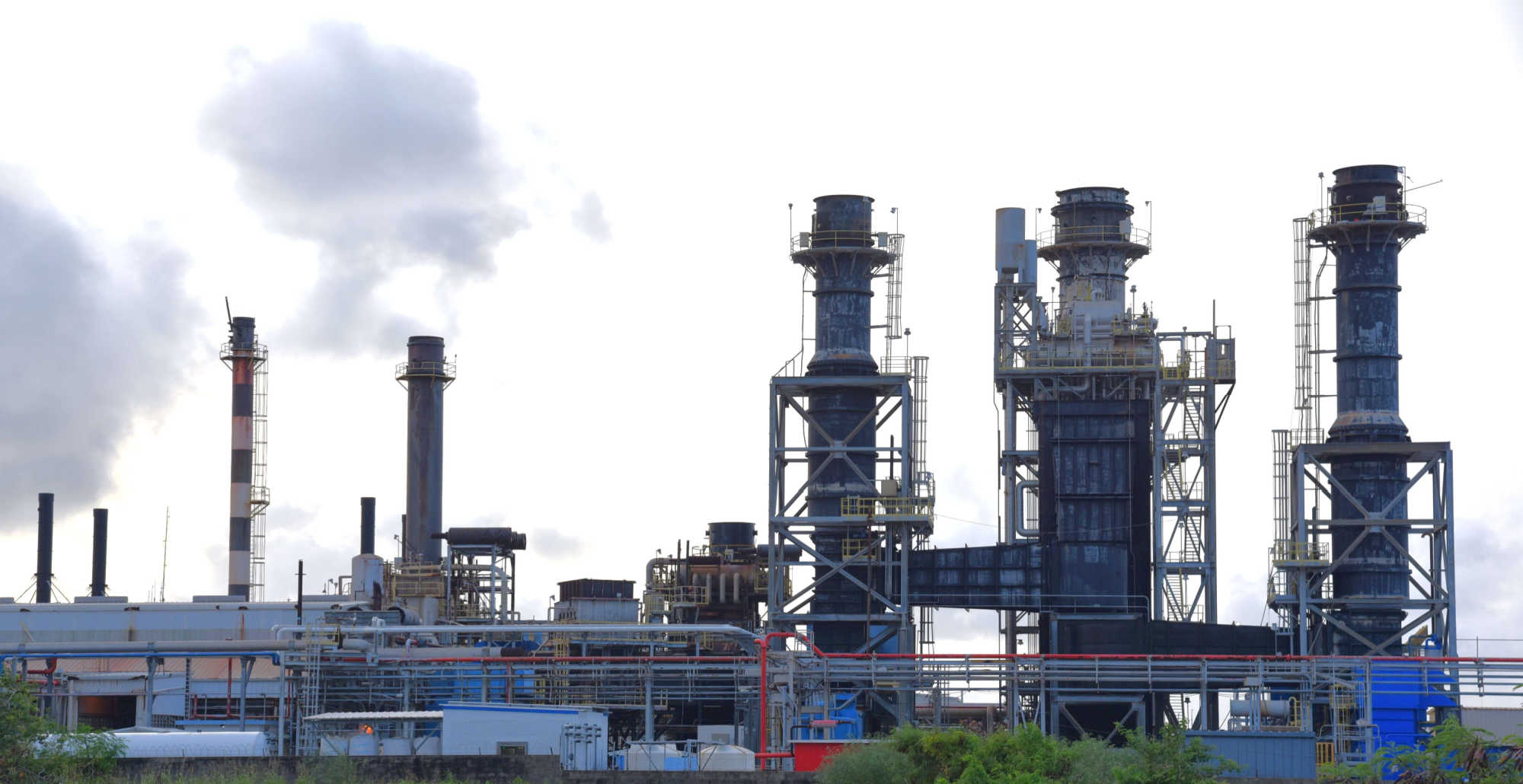
Governor Albert Bryan Jr. is warning Virgin Islanders that the enormous construction cycle now taking shape across the territory could bring jobs, business opportunities and investment while simultaneously making life more expensive, with his administration also confronting pressure at the V.I. Water and Power Authority after federal money previously used to help suppress electricity costs has run out.

During Monday’s Government House briefing, Mr. Bryan returned to his recent meeting with federal emergency management officials in Washington, where the territory presented the scale and pace of its hurricane recovery program. The governor said he pointed out that inflation in the Virgin Islands was currently running between eight and nine percent and that FEMA officials were “kind of amazed at how much inflation is being created by the recovery.”
As of August 31, the Office of Disaster Recovery reported $24.55 billion in obligated recovery funding and $4.89 billion expended. Government House separately said the territory expects 19 major projects to be under active construction during 2026, increasing to 42 in 2027 and 46 simultaneously in 2028. Through Rebuild USVI alone, 12 contracts covering 39 projects are supported by approximately $13.7 billion in obligated funding. Federal and territorial officials have already identified inflation, market conditions, contractor availability, workforce housing and limited construction capacity among the challenges facing that buildout.
That recovery spending is colliding with another strong sector of the Virgin Islands economy, Mr. Bryan said. “Our tourism product is raging as well at the same time,” he said, arguing that visitor demand is generating additional inflationary pressure while billions of recovery dollars flow into a relatively small island economy.

Bureau of Economic Research figures underscore the scale of tourism activity. Through August, the territory had recorded approximately 2.24 million visitor arrivals in 2026, including 744,449 air arrivals and nearly 1.494 million cruise passengers, according to the bureau’s current data.
“I am very concerned with the inflation,” Mr. Bryan said, pointing specifically to fuel and grocery costs confronting households.
The territory has struggled with elevated inflation for several years. The Bureau of Economic Research measured Virgin Islands inflation at 7.1 percent in 2024, down from 8.4 percent in 2023 but still substantially above the national rate that year. Food prices increased 8.8 percent during 2024, while education and communication costs rose 16.8 percent, recreation increased 10 percent and housing climbed 6 percent, according to BER’s annual review.
Fuel costs remain another concern. An August Department of Licensing and Consumer Affairs survey highlighted by the Consortium found that wholesale gasoline and diesel prices had declined substantially over a 30-day period while retail prices remained comparatively stubborn, with regular gasoline on St. Croix averaging more than $4.30 per gallon.
But perhaps the most consequential warning from the governor involved electricity.
“Nobody’s discussing it, but we’re trying not to have a rate increase,” Mr. Bryan said, arguing that electricity prices have been held in check even as costs facing WAPA have risen. “We’re out of federal money to kind of subsidize that bill.”
The administration has previously spent heavily to shield ratepayers from higher energy costs. In 2024, Government House said nearly $100 million was spent on a fuel-subsidization program between March 2022 and June 2023. The territory’s American Rescue Plan recovery documentation identifies $92 million in federal funds budgeted for fuel costs to prevent further economic pressure on households. In his 2026 State of the Territory Address, Mr. Bryan again said approximately $100 million in ARPA money had been used to prevent electricity rates from increasing.
The Public Services Commission has continued holding WAPA’s electric Levelized Energy Adjustment Clause at approximately 22.22 cents per kilowatt-hour, voting this month to maintain that component through the end of 2026 while requiring further technical review of WAPA’s fuel calculations. The LEAC has remained at roughly that level since March 2022.
“We’re looking for some solutions,” Mr. Bryan said Monday. “All I can tell you is, it’s a dark tunnel, no pun intended.”
The governor said the contradiction facing the territory is that the same recovery program expected to create considerable economic activity could make necessities increasingly difficult to afford, particularly for residents with the fewest financial resources.
“The people who are going to feel the brunt of this the most are the poor people…they have the least resources,” he said.
Mr. Bryan urged residents to begin positioning themselves now for an economy he expects will increasingly reward construction skills, professional credentials, entrepreneurship and ownership.
“You gotta buy now. You gotta invest now. You gotta upskill,” the governor said. “You gotta figure out how you’re gonna ride this tsunami of inflation that’s coming.”
“I know it’s scary, but I want to scare you because its real,” he declared.
When asked how residents already struggling financially are expected to respond to higher prices, Mr. Bryan pointed to education and workforce-development programs available in the territory. The University of the Virgin Islands operates the government-funded Virgin Islands Higher Education Scholarship Program, commonly known as the Free Tuition Program, for qualifying Virgin Islands residents, while the Department of Labor offers workforce-development, occupational-training and career-readiness programs.
Mr. Bryan argued that simply adding more working hours is unlikely to provide the long-term answer. Looking for a second job “is just going to make you more tired,” he said, instead encouraging residents to obtain the education and skills needed to increase their earning potential.
“You got to be able to get promoted, move into management, start your own business,” he said.
The governor also pointed to changes in federal assistance programs enacted under Public Law 119-21, the 2025 federal reconciliation law that was commonly known during its passage through Congress as the One Big Beautiful Bill Act. Contrary to the original draft framing, the law was enacted on July 4, 2025, not earlier this year.
“The cuts that they’re making, they’re not coming back,” Mr. Bryan said, warning residents to begin planning for changes to federal benefits.
The Congressional Budget Office projects that the law will reduce federal spending on Medicaid and the Supplemental Nutrition Assistance Program over the coming decade. CBO estimates the SNAP changes will reduce federal spending by $187 billion over the 2025-2034 period relative to its previous baseline, while Medicaid changes account for most of the law’s projected reductions in mandatory health spending. CBO has also concluded that resources available to households toward the bottom of the income distribution will decline as a result of the law, while resources increase for households in the middle and upper portions of the distribution.
Some major provisions are approaching an important implementation date. The Centers for Medicare & Medicaid Services says new community-engagement requirements for certain Medicaid recipients must generally be implemented by January 1, 2027, although other Medicaid and SNAP provisions have different effective dates.
For Mr. Bryan, the years ahead therefore present two economic realities at once: an unprecedented recovery program expected to generate construction, employment and business activity, and a rising-cost environment that could place increasing pressure on household budgets.

“It’s going to be a great, productive five years, ten years,” he predicted of the recovery program. “But it’s going to be rough too, in terms of your pocket.”