




Four employees of the Virgin Islands Housing Finance Authority have been let go as the agency restructures its operations amid an unresolved federal funding suspension that continues to prevent approximately 100 families from receiving housing assistance and has stalled several nonprofit and infrastructure projects across the territory.

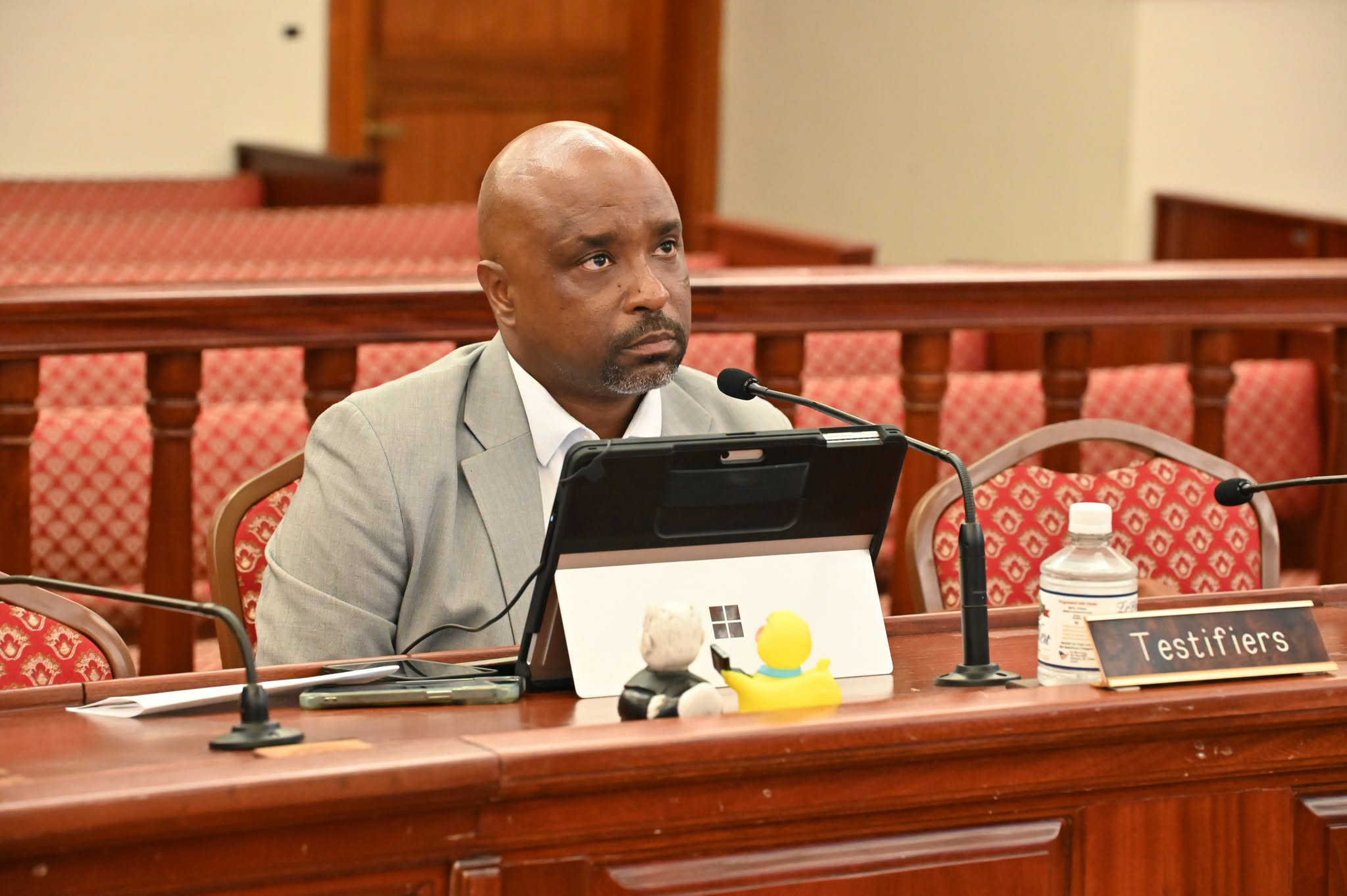
VIHFA Executive Director Derek Gabriel confirmed the dismissals during testimony Tuesday before the Senate Committee on Housing, Transportation, and Telecommunications, where lawmakers questioned his management decisions, the uncertainty facing remaining employees and the authority's efforts to persuade the U.S. Department of Housing and Urban Development to lift its suspension.
The federal action, imposed July 20, bars VIHFA from participating in new federal procurement and nonprocurement transactions while an investigation proceeds. HUD cited financial mismanagement, inadequate fraud controls, false certifications, improper payments and the criminal conviction of the authority's former chief operating officer.
As previously reported by The Consortium, the suspension followed years of concerns over the management of approximately $1.9 billion in federal disaster recovery funding.

Although previously obligated funding remains available under qualifying existing agreements, VIHFA cannot enter new federally funded contracts, subrecipient agreements or amendments that create additional obligations, except for permitted no-cost extensions.
Mr. Gabriel, who assumed leadership of the authority in August, told lawmakers he has undertaken an "organizational realignment" intended to strengthen executive accountability, oversight and compliance while controlling administrative costs.
The restructuring has resulted in four employees being "let go," he confirmed during questioning by Senator Marvin Blyden. The positions affected were not identified during the hearing.
Mr. Gabriel explained that even before HUD imposed the suspension, the authority had been advised to review "not only the pace at which we were going through the management costs, but also the way our organizational structure was aligned, because there were certain redundancies."
He maintained that the changes are necessary to preserve the resources needed to administer federal grants over their remaining duration.
"If we were to continue going on today as is, we would not have the resources available to administer the grant for the full life of the grant," Mr. Gabriel said.
The dismissals prompted concern among lawmakers about the effect on staff morale and whether additional employees could lose their jobs.
Senator Avery Lewis questioned the executive director about the uncertainty facing employees and urged him to involve the Legislature before the authority reaches a point where further layoffs become necessary.
According to Mr. Gabriel, it is "the level of uncertainty that really gets the employees." He said he is committed to sharing as much information as possible with staff, although certain details cannot be publicly disclosed.
Senator Kurt Vialet was particularly critical of the effect the restructuring could have on employees already anxious about the authority's financial future.
"Your employees are scared," Mr. Vialet told the executive director, warning that workers are worried about whether they will retain their positions.
Mr. Vialet also cautioned against dismissing existing employees only to bring in new personnel to fill the same positions. "There are rumors out there as to who's trying to get placed into position, and they're looking at Housing Finance Authority as a placement spot, and now isn't a time for that," he warned.
"You're in crisis, and now is the time to empower your employees to make sure that they clearly understand the responsibility and the impact that they have on the Virgin Islands," Mr. Vialet added.
Mr. Gabriel defended the restructuring as an effort to address longstanding organizational and financial problems rather than simply reduce staffing.
Meanwhile, the consequences of the federal suspension continue to extend far beyond the authority's workforce.
The approximately $195 million EnVIsion Tomorrow program is among the initiatives significantly affected, with roughly 100 eligible families unable to move forward with housing assistance, according to testimony at the hearing Tuesday.
The program supports the rehabilitation and reconstruction of homes damaged by Hurricanes Irma and Maria. Its continued disruption leaves families who have already endured years of recovery delays waiting for assistance toward permanent housing.
Other affected initiatives include the Virgin Islands Resource Conservation and Development Council Classroom Retrofitting Project and the Family Resource Center Safe House Renovation.
Some of those projects have completed environmental reviews, procurement procedures or evaluations but cannot begin because issuing an award or notice to proceed would create a new federal funding obligation prohibited under the suspension.
The restrictions also affect nonprofit organizations, contractors and infrastructure agencies that rely on federal funding administered through VIHFA, including projects requiring disaster recovery matching funds.
Not every project has stopped.
Mr. Gabriel explained that previously executed agreements "may continue with certain limitations." Among those identified are the D. Hamilton Jackson rehabilitation project, Sister Emma Cottage and Royale Systems, a $2.25 million CDBG-MIT-funded initiative supporting critical communications infrastructure.
The Legislature's account of the hearing identified approximately $47.22 million in funding for the D. Hamilton Jackson rehabilitation project, which was roughly 70 percent complete when the suspension took effect. Sister Emma Cottage is supported by approximately $9.23 million.
However, projects that require new agreements or funding commitments remain restricted while the suspension continues.
Senator Novelle Francis expressed hope that the authority could persuade HUD to allow at least some additional projects to advance, particularly those involving nonprofit organizations and essential community services.
"The best I could tell you is I really am doing my best to make the best argument for all of our social services and our infrastructure projects and housing," Mr. Gabriel replied.
As the appeal proceeds, the authority is also implementing changes intended to address the weaknesses that contributed to HUD's action.
Among the measures outlined by Mr. Gabriel are strengthened executive oversight, the hiring of a director of procurement, centralized contract drafting and expanded risk-management functions.
The authority is also developing a comprehensive Fraud, Waste, and Abuse Policy, which is expected to be presented to the VIHFA board for consideration in December.
Additional changes include stronger monitoring of organizations receiving funds through VIHFA, with risk-based reviews, standardized reports, corrective-action procedures and escalation protocols intended to address compliance deficiencies.
Mr. Gabriel said these efforts are designed to "improve the Authority's institutional safeguards and demonstrate our capacity to administer federal resources responsibly."
He also emphasized the need to improve coordination among departments and eliminate organizational divisions that could weaken accountability.
The executive director acknowledged that the continued suspension affects more than the authority's finances. It has consequences for homeowners awaiting repairs, renters who need affordable housing, nonprofit service providers and contractors whose projects cannot advance.
He told lawmakers VIHFA would continue working toward resolution of the federal administrative matter while maintaining communication with the Legislature.

For now, there is no announced timeline for HUD to lift the suspension, leaving the fate of new federal commitments and several stalled recovery projects uncertain.