



On Thursday, the Governing Board of the V.I. Water and Power Authority met to consider a recommendation that J Benton Construction be awarded the contract to move WAPA’s electrical infrastructure along the Queen Mary Highway underground, the first of three phases of work along that transportation artery.

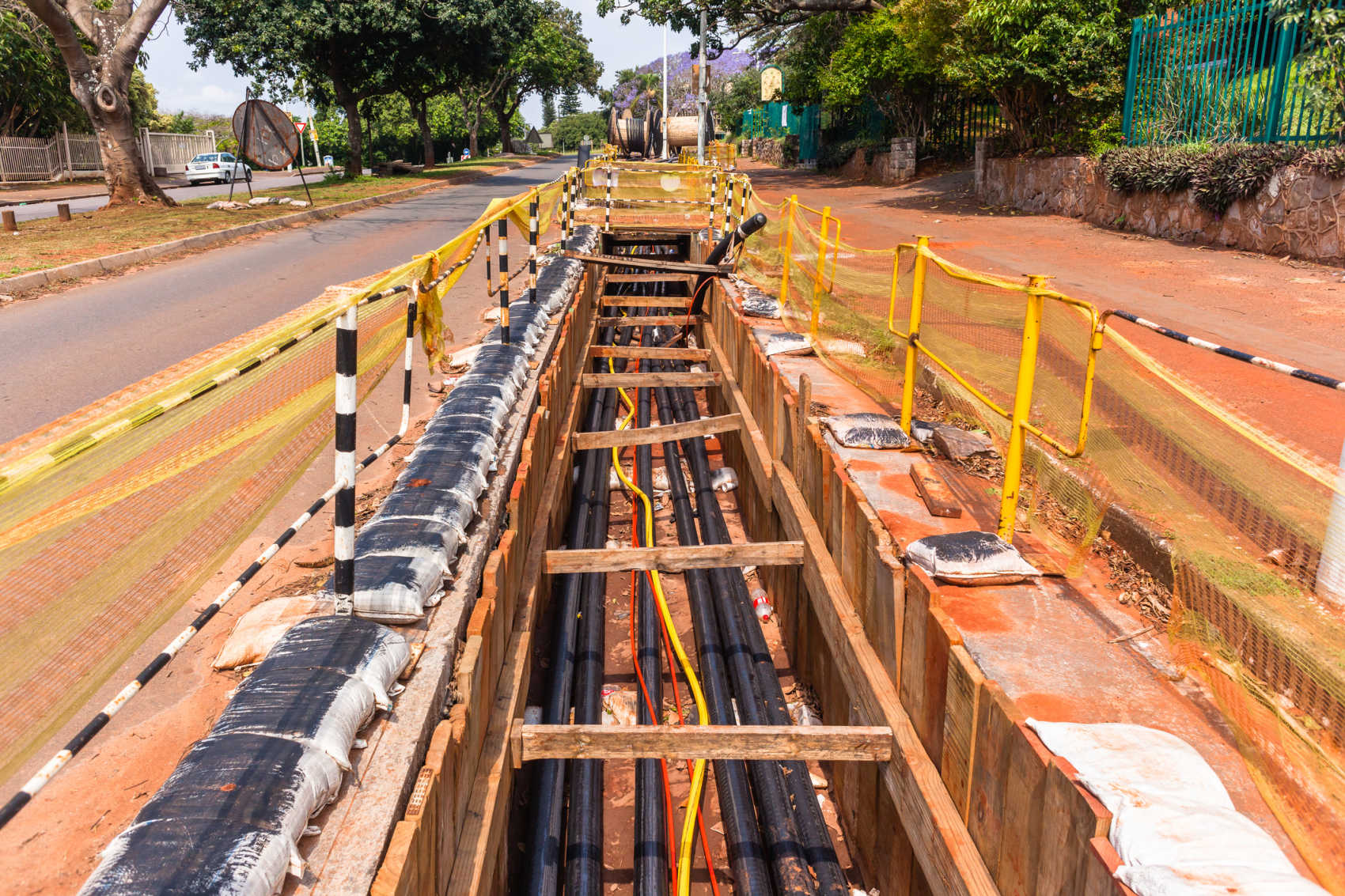
Matthias Clark, a WAPA mechanical engineer presenting to the board, noted that the undergrounding work would be performed between the Industrial Road and the Eddie Ortiz Drive intersections. “The scope includes certain things like site surveying, excavation, installation of conduits and cables, other electrical equipment, final acceptance and testing and resurfacing of the asphalt,” he explained.
WAPA has long touted its preference to move electrical infrastructure below the earth's surface, citing protection from “natural disasters, vehicle collisions, vegetation interference” as Mr. Clark put it. “The public is protected from downed lines, electrocutions, fires and other hazards overall,” he continued. Major institutions in the vicinity, including the Herbert Grigg Home for the Aged, St. Croix Educational Complex, RT Park, and the Superior Court, would benefit from a reduction in electrical supply disruptions due to increased durability and reduced maintenance requirements, Mr. Clark said. The downside of the undergrounding projects include more difficulty in locating faults, and increased expenses, among other things.
The Federal Emergency Management Agency would fund the project, with the required 5 percent local match coming from U.S. Housing and Urban Development’s Community Development Block Grants provided to the local government. “A 52-week project period is well within the range of a feasible timeline to successfully install and energize this underground feeder,” Mr. Clark said.

The mechanical engineer advised that four companies responded to WAPA’s RFP. Although VI Paving’s proposal was the least costly, WAPA staff recommended that the board select the second lowest bid – $10,899.325.94 from J Benton Construction, LLC. According to Mr. Clark, “cost was only 15 points out of 100.” Experience, method of approach, project schedule, and “various other things” also have to be considered, he explained, noting that VI Paving ended up only one point behind J Benton in the final analysis.
Concerns were raised about the company’s ability to adhere to the overall timeline, given the significant number of other projects that J Benton must manage at the same time. “It’s up to us to hold them accountable to the schedule that they provide,” Mr. Clark responded. “The timeline that they did propose – approximately one year – is achievable,” he assured. Previous undergrounding projects have been completed within 58 weeks, he said, and although this one under discussion is larger in scope, “we have incorporated some lessons learned, which should alleviate a lot of those time extensions and stuff like that.”
A third-party entity will be responsible for project management in this instance, Mr. Clark disclosed.

The motion to approve the contract award was unanimously passed.