

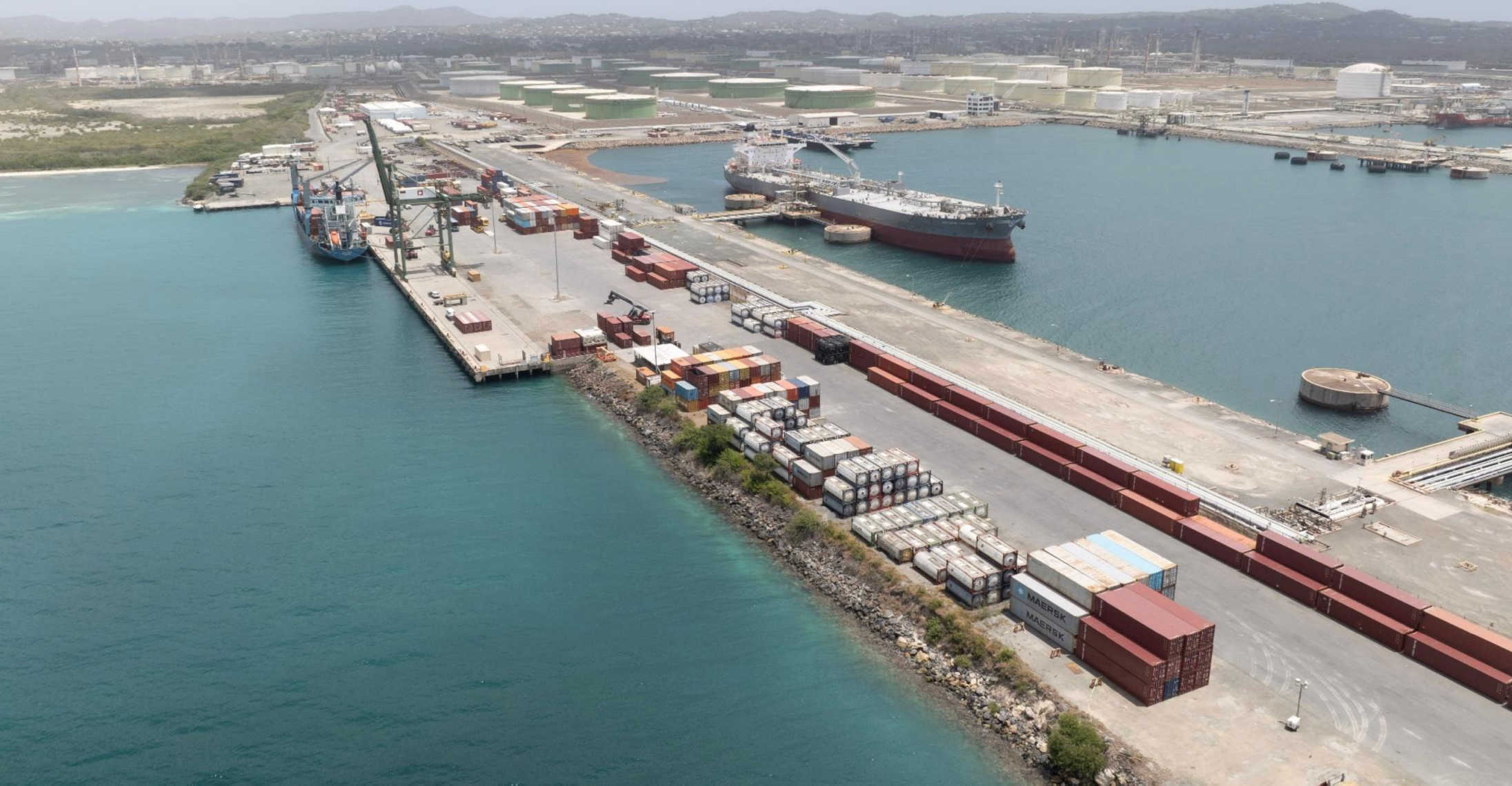
ST. CROIX — The V.I. Port Authority hopes to begin major construction on the modernization of the Wilfred “Bomba” Allick Marine Terminal by summer 2027, with plans to rebuild more than half a million square feet of cargo-yard pavement, rehabilitate aging marine infrastructure and upgrade electrical, drainage and lighting systems while keeping the port operational throughout construction.

VIPA officials outlined the schedule and scope during a public information meeting Friday, Aug. 14. The authority is working through pre-award requirements with the U.S. Maritime Administration and intends to have its federal grant agreement signed by the end of 2026. Construction solicitation is expected by the second quarter of 2027, with officials hoping work can begin during the summer, depending on receiving bids and successfully awarding a contract.
The project will be procured separately and is not among the projects included in VIPA's previously procured infrastructure bundle.
The modernization is supported through an 80% federal and 20% local funding split under the U.S. Maritime Administration's Port Infrastructure Development Program. Tropical Shipping, the terminal's primary tenant, is providing the required local matching funds.

Port Has Gone Decades Without Major Upgrade
The Wilfred “Bomba” Allick Marine Terminal was built in 1984 and expanded in 1986. VIPA officials said no major structural upgrades have occurred since then, leaving pavement, marine structures and utilities in need of rehabilitation.
“This facility is 40 years old with no major improvements that have been done since its construction in 1984,” said VIPA Engineering Project Manager Tafari Nelson. “It’s crucial that this port stays operational at all times,” he noted.
Nelson described the terminal as St. Croix's primary cargo port, handling more than 90% of the goods and materials coming into the territory.
The facility is situated east of the airport and west of the refinery complex, with the planned work concentrated around the operational cargo and waterfront areas.
Existing conditions presented during the meeting showed deteriorated pavement, aging bollards and fenders, damaged waterfront concrete, deterioration beneath the working deck and marine piles requiring repair.
563,000 Square Feet of Pavement to Be Constructed
One of the largest components of the project will be reconstruction of approximately 563,000 square feet of pavement throughout the cargo yard.
Some areas will use concrete to better withstand heavy traffic and repeated passes from cargo-handling equipment, while asphalt will be used elsewhere.
The project also includes new drainage infrastructure designed to capture and treat stormwater before it enters the harbor. Slot drains will be installed along the face of the wharf, with new storm-drain piping and treatment systems beneath the deck.
The cargo yard will also receive an improved washdown area and fueling area designed to capture and treat spills.
Electrical work will include more than 8,300 feet of conduit, new high-mast LED lighting and emergency standby generation to allow the facility to maintain power during outages.
The lighting will use a spectrum intended to reduce impacts on wildlife and sea turtles while improving visibility for cargo operations during early morning and nighttime hours.
Major Marine Repairs Planned
The waterfront component includes repairs to the wharf and roll-on/roll-off ramps, pile caps and fascia, along with localized concrete repairs.
Approximately 1,200 linear feet of marine piles will receive jackets or encapsulation, while sacrificial anodes will be installed as a corrosion-control measure intended to protect reinforcing steel and extend the structure's lifespan.
Aging fenders and mooring bollards will also be replaced.
The new bollards are intended to safely secure vessels at the terminal, while the replacement fenders will address existing damage and deterioration.
Construction to Be Phased Around Cargo Operations
Because the port must continue receiving vessels and moving cargo, the work will not occur across the entire facility simultaneously.
VIPA and its marine consultant are developing the construction schedule with Tropical Shipping so individual areas can be taken out of service while neighboring sections continue operating.
“We are working with Tropical and VIPA for a phasing plan that maintains every action and keeps everything in commission while we’re doing the work,” outlined Moffat & Nichol marine consultant Craig Contee.
Wharf sections will be completed in phases, as will the roll-on/roll-off ramps, allowing one portion to remain available while work proceeds on another.
Cargo-yard and backland improvements will similarly be staged to preserve access to the waterfront and prevent construction from shutting down the terminal.
Contee described the sequencing as a careful balancing act aimed at completing extensive repairs without disrupting vessel berthing or cargo movement.
130 Marine Piles Inspected; 17 Corals to Be Relocated
VIPA also outlined environmental safeguards planned for construction.
Director of Engineering Preston Byer said consultants conducted underwater inspections of each of approximately 130 marine piles scheduled for repair, checking for corals, seagrass, sponges, algae and other marine life.
“Obviously this is a disturbed location already,” said Preston Byer, VIPA’s Director of Engineering.
The terminal and surrounding marine area were previously altered when the facility was developed in the 1980s, and VIPA said the current project is primarily focused on retaining and rehabilitating existing infrastructure rather than expanding the terminal's footprint.
The project will not increase the amount of impervious surface at the site, while new stormwater systems are intended to improve the quality of water discharged from the facility without increasing the number of outfalls.
VIPA's environmental review determined that, with planned mitigation measures, the project would not have a significant impact on the immediately adjacent marine environment.
Among those measures will be erosion and sediment controls during construction, water-quality monitoring during shoreline, in-water and overwater work, and monitoring for marine mammals and endangered species while underwater repairs are performed.
The underwater inspections identified 17 corals that will be relocated.
“there are 17 corals that will be relocated to an agreed upon mitigation site on the island of St. Croix that we’ve coordinated with some of the local environmental agencies,” Byer said.
VIPA said it has coordinated primarily with the Department of Planning and Natural Resources on the relocation and has worked through the permitting and environmental review process with the Coastal Zone Management Commission, U.S. Army Corps of Engineers, National Marine Fisheries Service, State Historic Preservation Office and U.S. Fish and Wildlife Service.
Officials also noted the presence of seagrass and turtles near the facility, another reason environmental monitoring will continue while marine work is underway.
Grant Agreement Targeted for End of 2026
With environmental and other pre-award requirements still being completed, VIPA expects to finalize the Maritime Administration grant agreement by the end of this year.
The authority plans to advertise the construction work by the second quarter of 2027 at the latest.

When asked again about the expected construction schedule near the end of Friday's meeting, VIPA reiterated that the actual start will depend on contractors bidding the project and the authority successfully executing a construction contract. “Our hope is that the project will start sometime next summer."