




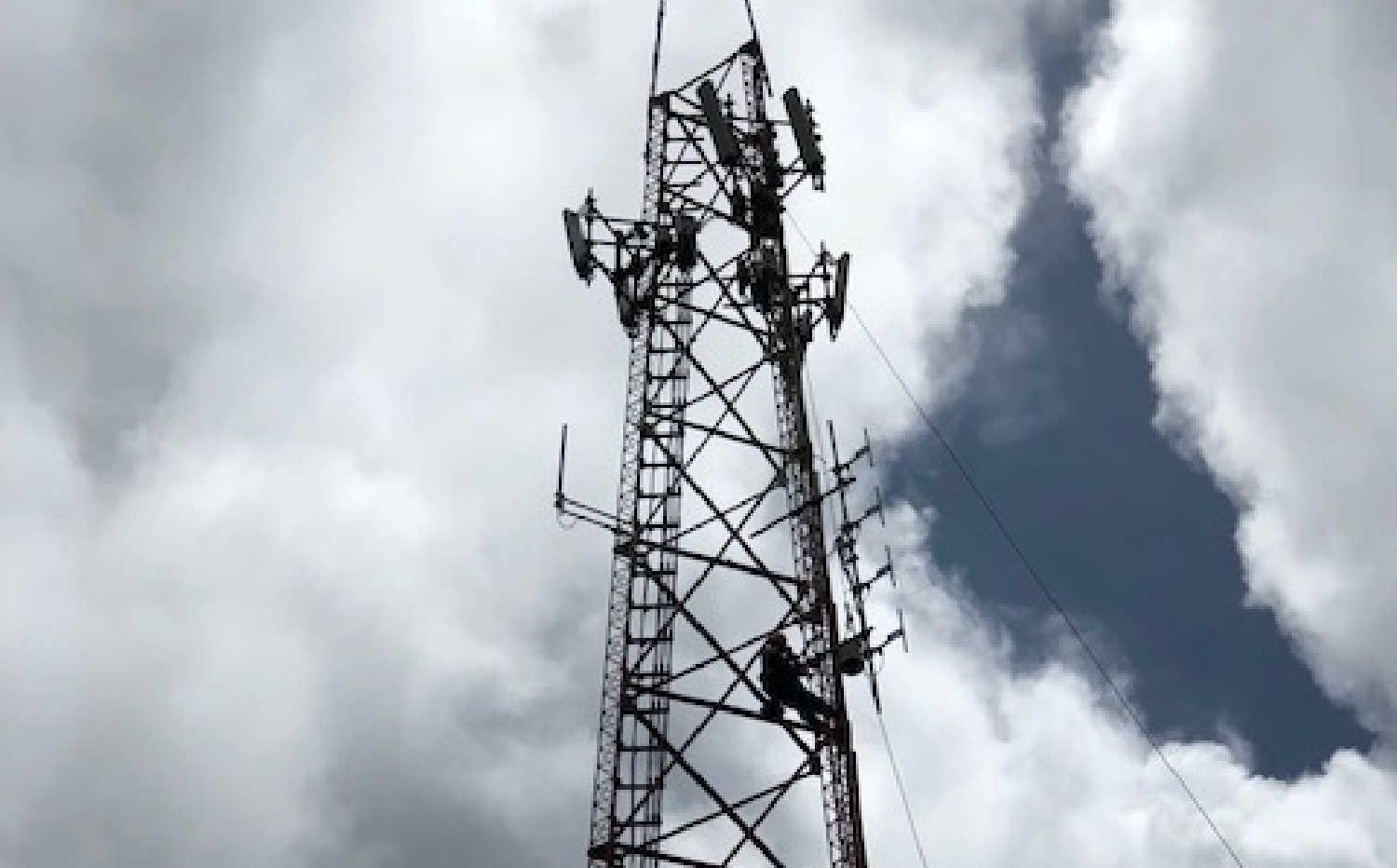
The V.I. Territorial Emergency Management Agency along with the National Oceanographic and Atmospheric Administration announced Thursday the completion of the installation of a NOAA All-Hazards Radio Transmitter on St. Thomas. It is operational and currently in its testing phase on the west end of the island, awaiting a station ID.
According to the release, the newly constructed transmitter will broadcast 24 hours a day, 7 days a week on a 162.45-megahertz frequency. Coverage will include most of the U.S. Virgin Islands and eastern Puerto Rico, including Culebra and Vieques. Reception quality will be dependent on an individual’s radio receiver and their location to the transmitter. For example, a NOAA All-Hazards/weather Radio which has a built-in station setting of 162.45 MHz can receive the signal in Christiansted, St. Croix, but the same Weather radio located on the South Shore of St. Croix may not, due to the distance and hill interference from the St. Thomas transmitter.
The new transmitter replaces one of two previous transmitters that were located on St. Croix and Culebra Puerto Rico respectfully. The first was destroyed by hurricane Maria in 2017, the latter retired from service. The project was begun in 2017. Construction on a new transmitter for St Croix is slated to be completed in 2022, according to the release.
As a public service to the community, the NOAA All-Hazards/Weather radio transmitter provides important bulletins that include but are not limited to civil emergencies and natural disasters such as earthquakes or tsunamis. The transmitters serve as the first and official notice of severe weather, local storms, flooding and adverse marine conditions.

"The NOAA All-Hazards transmitter provides an additional resource to receive important alerts which are specific to the U.S. Virgin Islands and Puerto Rico region," said VITEMA Director Daryl Jaschen. "The broadcasts are in both Spanish and English which is very important for our community. It provides very timely weather alerts from the National Weather Service in Puerto Rico for any Tropical Storm or Hurricane Watches or Warnings.”
While a radio designed for the NOAA frequency is needed and most home or car radios are not equipped, individuals can purchase a small Weather/All-Hazards radio for a cost of between $20-$50 dollars depending on the additional radio features. In addition to receiving a 24-hour weather report, the radio can be set such that when an alert is issued by NOAA, the device will sound an alarm and broadcast information about hazard. When there is no severe weather or emergency, radios can be switched to a silent, stand-by mode.

The NOAA All-Hazards / Weather Radio alert system is separate from the VITEMA Alert VI system and while both rely on information from the National Weather Service in Puerto Rico, the NOAA transmitter operates independently from VITEMA.