




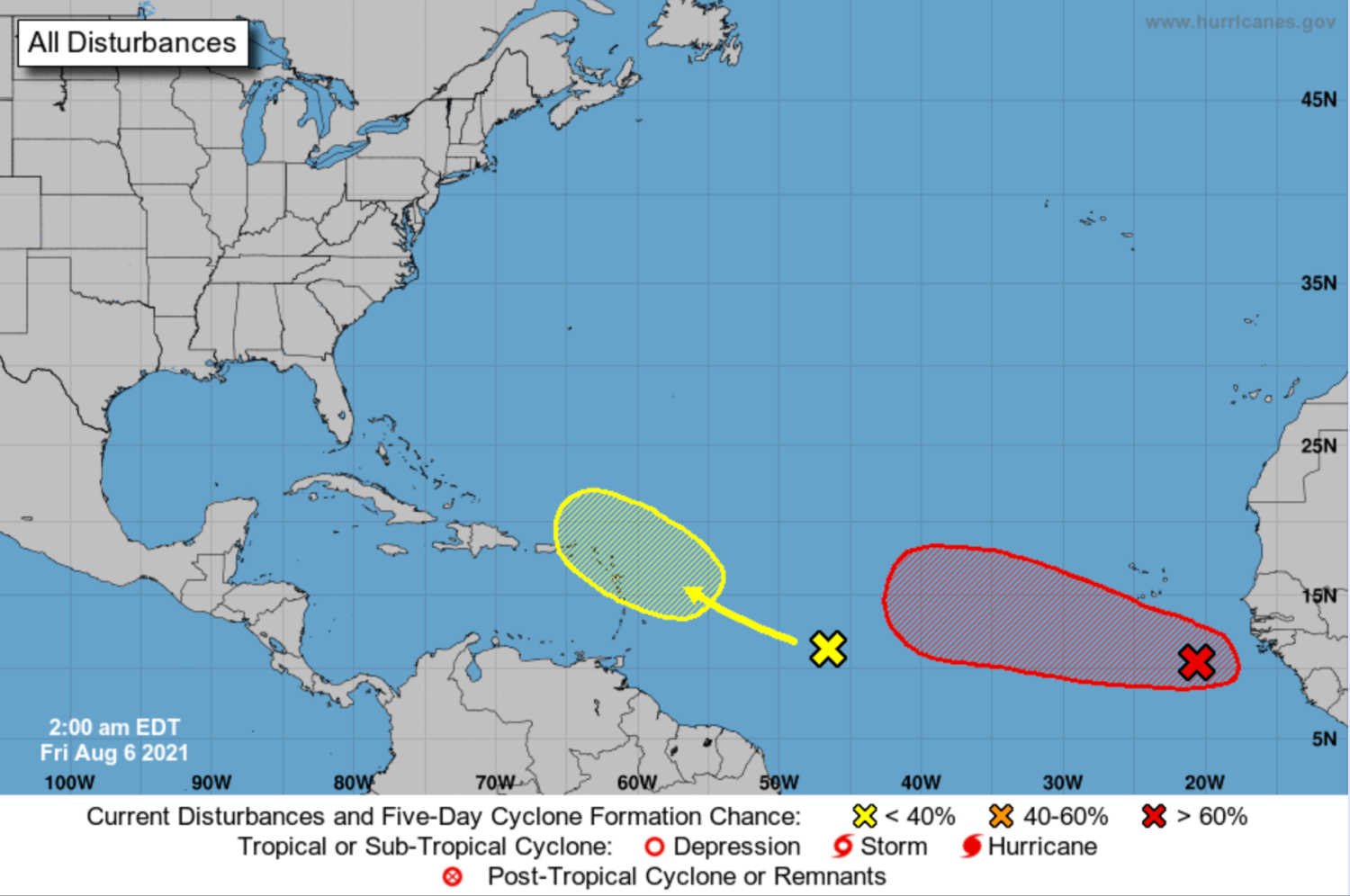
As the 2021 Hurricane Season enters its prime months of mid-August through October, weather systems are beginning to develop in the Atlantic, and a new system that the National Hurricane Center has given a 70 percent chance of becoming a tropical depression is the latest with its sights set on the Caribbean region, according to its projected path.

N.H.C. said in a 2:00 a.m. Friday forecast that the system — a large area of disorganized showers and thunderstorms located a few hundred miles south-southeast of the Cabo Verde Islands — is associated with a tropical wave interacting with a broader surface trough.
"Environmental conditions appear somewhat conducive for gradual development, and a tropical depression is likely to form this weekend or early next week while the system moves generally west-northwestward across the eastern tropical Atlantic," NHC said.
Formation chance through the next 48 hours is medium at 40 percent, and the chances of development grow to 70 percent through the next five days, according to NHC.

The National Oceanic and Atmospheric Administration, or NOAA, said Wednesday that atmospheric and oceanic conditions remain conducive for an above-average hurricane season this year, according to the annual mid-season update issued by NOAA’s Climate Prediction Center, a division of the National Weather Service.
“After a record-setting start, the 2021 Atlantic hurricane season does not show any signs of relenting as it enters the peak months ahead,” said Rick Spinrad, Ph.D., NOAA administrator. “NOAA will continue to provide the science and services that are foundational to keeping communities prepared for any threatening storm."
NOAA scientists predict that the likelihood of an above-normal 2021 Atlantic hurricane season is 65 percent. There is a 25 percent chance of a near-normal season and a 10 percent chance of a below-normal season.

“A mix of competing oceanic and atmospheric conditions generally favor above-average activity for the remainder of the Atlantic hurricane season, including the potential return of La Nina in the months ahead,” said Matthew Rosencrans, lead seasonal hurricane forecaster at NOAA’s Climate Prediction Center.