

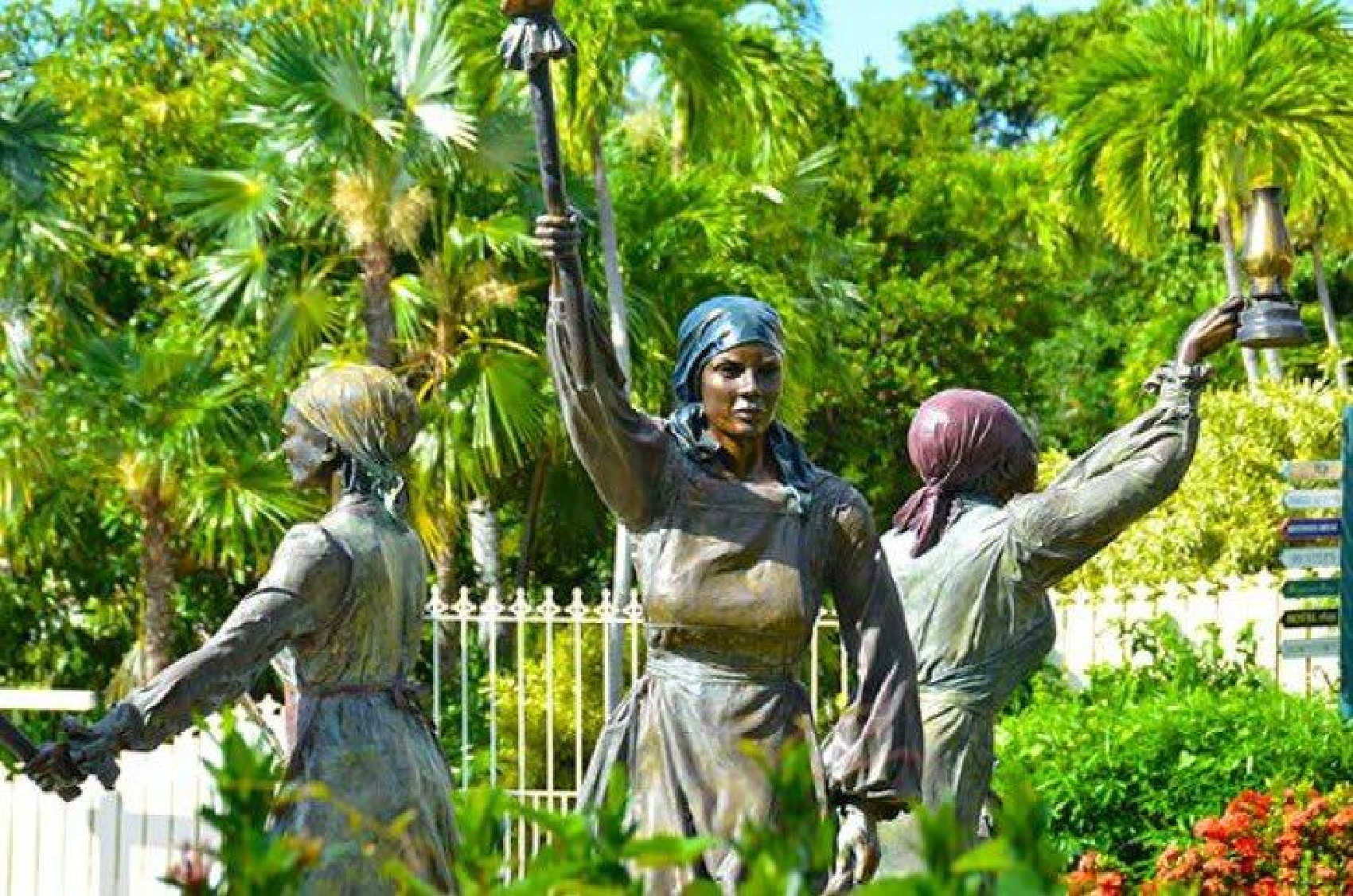
ST. CROIX — Today marks 148 years since laborers on St. Croix confronted a restrictive post-emancipation labor system in an uprising that became one of the defining events in Virgin Islands history: the October 1, 1878 Fireburn.

As the territory observes Contract Day, Gov. Albert Bryan Jr. said the conditions that drove workers to act nearly a century and a half ago still carry meaning for Virgin Islanders today. “What those workers fought for in 1878 still matters today because people want the same basic things: fair pay, opportunity and the ability to build a good life for their families,” the governor said.
Bryan pointed to the territory’s minimum wage increase this year from $10.50 to $12 an hour, with further increases scheduled to reach $15 in 2028, as one modern example of efforts to improve conditions for workers. He also cited expanded access to higher education and homeownership among initiatives intended to provide greater economic opportunity.
“Contract Day remains relevant because the fight for fair pay, opportunity and a better quality of life did not end in 1878,” Bryan said. “We have made progress, but there is still more to do.”
The history being commemorated today, however, reaches back to the years immediately following emancipation, when freedom from slavery did not immediately provide St. Croix’s plantation workers with the freedom to negotiate the terms of their employment.
Slavery in the Danish West Indies formally ended on July 3, 1848. The following year, colonial authorities instituted the Provisional Act to Regulate the Relations Between the Proprietors of Landed Estates and the Rural Population of Free Labourers.
The law required plantation labor agreements to run for one year, from October 1 to October 1. That annual renewal date became known as Contract Day.
The restrictions went considerably further. Under the original 1849 law, workers generally could not leave their employment before the annual contract expired except under limited circumstances. Notice to leave an estate could be given only during a specified period in August before another year-long agreement began in October.
The law also stated that employment agreements entered into by heads of families were to include their children between the ages of 5 and 15 and other dependent relatives living with them.
It prescribed a tightly controlled wage structure as well. Under the original schedule, plantation laborers were divided into classes, with first-class workers receiving 15 cents for a working day, second-class workers 10 cents and third-class workers five cents, alongside provisions involving housing, small plots of land and, in some arrangements, food allowances.
Wages and other conditions evolved in the decades that followed, but the annual contract system continued to restrict workers’ ability to freely move between employers.
The result was that 30 years after emancipation, many Black Crucians remained economically dependent on the same plantation system in which they and their families had labored under slavery.
By 1878, discontent had intensified.
That year, the Danish government had established the Central Factory on St. Croix to mechanically process sugar cane, creating new employment opportunities and offering higher wages to plantation workers once their existing annual labor agreements expired.
As October 1 arrived, large numbers of laborers gathered in Frederiksted for Contract Day.
Tensions escalated following an encounter involving police, with historical accounts describing an incident that workers viewed as police brutality. The confrontation helped ignite unrest that rapidly developed into a much broader uprising.
Workers surrounded Fort Frederik, where colonial officials and police sought refuge. The unrest spread through Frederiksted and then across the countryside.
Buildings burned. Plantation properties and cane fields were set ablaze. More than 50 plantations were ultimately affected, while a significant portion of Frederiksted was destroyed.
It was that widespread burning that gave the uprising the name by which generations of Virgin Islanders would come to know it: Fireburn.
Among those who emerged as enduring symbols of the uprising were Mary Thomas, remembered as Queen Mary; Axeline “Agnes” Salomon, known as Queen Agnes; Mathilda McBean, remembered as Queen Mathilda; and Susanna “Bottom Belly” Abrahamson.
Their names have since become inseparable from the history of Fireburn, representing the women and men who challenged the post-emancipation labor system and demanded better treatment for St. Croix’s working population.
The response from Danish colonial authorities was severe. Participants were arrested and punished, and the treatment of those involved in the uprising has remained an important part of the territory’s historical reckoning with the period.
The consequences of Fireburn extended well beyond the destruction of October 1878. The uprising helped bring an end to the restrictive contract-labor system that had governed plantation workers since shortly after emancipation.
Fort Frederik, around which the events of both 1848 and 1878 unfolded, remains one of the territory’s most important historic sites. The fort is nationally significant in part because of its connection to two events that fundamentally altered the plantation system on St. Croix: the 1848 emancipation uprising and the 1878 Fireburn.
The distinction between those events is important. Emancipation ended legal slavery in 1848. Fireburn came three decades later, when workers confronted the labor system that emerged in slavery’s aftermath and continued to restrict their economic freedom.
The legacy remains particularly visible in Frederiksted. Much of the town that stands today was rebuilt following the destruction of 1878, making Fireburn not only part of St. Croix’s labor history but also part of Frederiksted’s physical history.
Virgin Islands lawmakers have also formally recognized the significance of the uprising, including Mary Thomas, Axeline Salomon, Mathilda McBean, Susanna Abrahamson and the other estate laborers who participated in the struggle for improved working conditions.
Contract Day continues to be observed as a reminder of that history.
For Bryan, the connection between that struggle and the present rests in the continuing pursuit of economic security for working Virgin Islanders.
“What those workers fought for in 1878 still matters today,” he said.
But the significance of October 1 predates any modern administration or policy by nearly a century and a half.
Contract Day exists because October 1 was once the date on which plantation workers were bound to another year of labor. On October 1, 1878, workers gathering for that annual turning point instead set in motion an uprising that transformed the labor system and left a permanent imprint on St. Croix.

Today, 148 years later, Fireburn remains one of the territory’s defining stories of post-emancipation resistance, and the women remembered as its queens remain among the most recognizable figures in Virgin Islands history.