




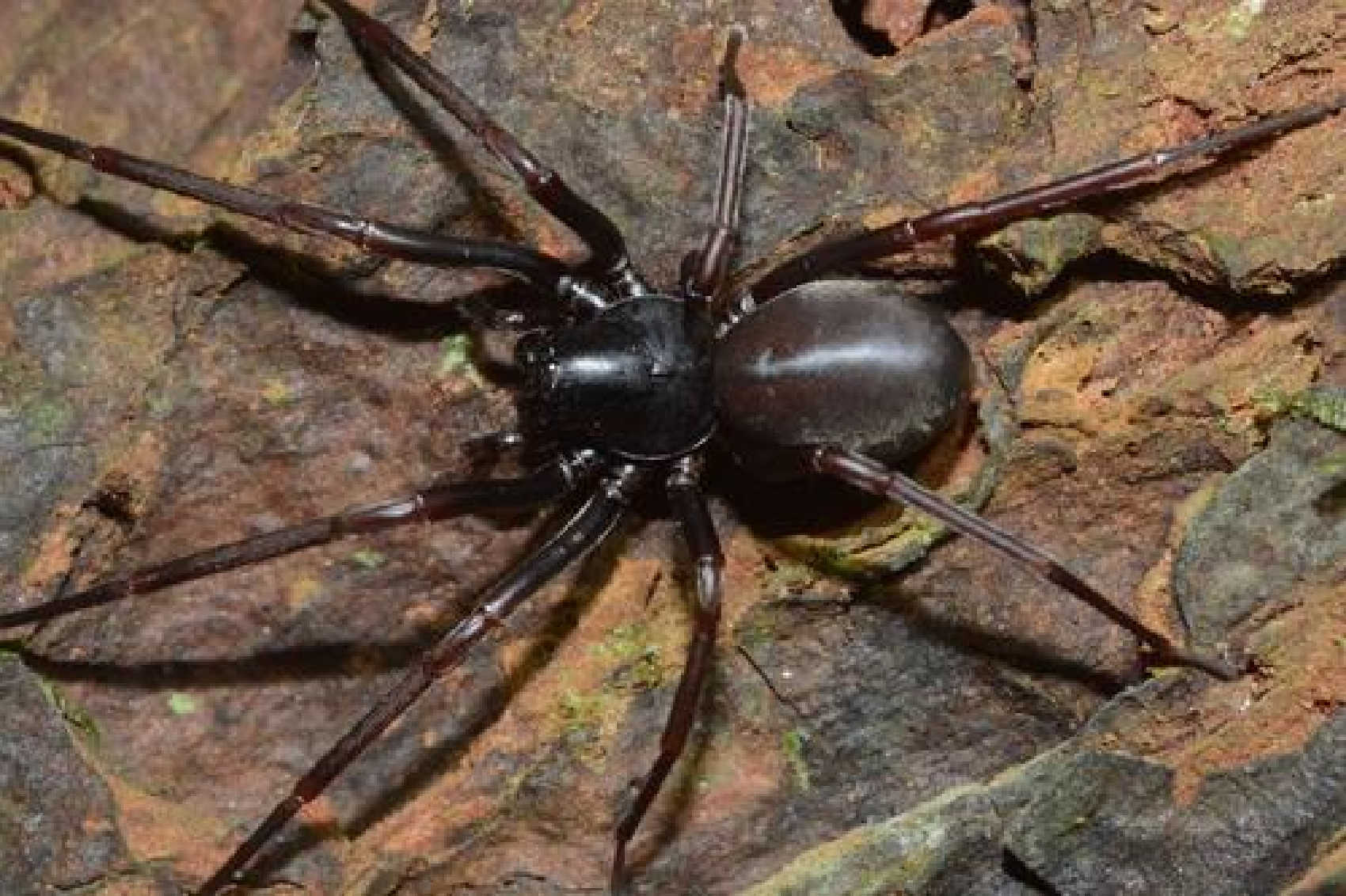
Photographs taken by residents and nature observers on St. John and St. Thomas have helped document a spider type not previously recorded in the region's scientific literature, contributing to a federal research study that identified 13 previously unrecorded spider types across the U.S. Virgin Islands and Puerto Rico.

The findings were highlighted Friday, October 9, by the U.S. Department of Agriculture's Forest Service, which examined how photographs submitted by ordinary citizens can help scientists identify spiders that have gone undocumented in the Caribbean.
The research, conducted by USDA entomologist Javier E. Mercado, identified spiders resembling members of the genus Ummidia from photographs taken on St. John in 2022 and St. Thomas in 2023. The sightings represent the Virgin Islands component of a broader study that documented 13 spider types previously unrecorded in the scientific literature for the region.
The original study was published in the Caribbean Journal of Science in 2025. The Forest Service's October announcement draws renewed attention to those findings and their potential use in biodiversity research and the study of mosquito populations.

St. Thomas and St. John Photographs Help Identify Spider
According to the research, the first Virgin Islands observation was documented on St. John in 2022, followed by a second observation on St. Thomas in 2023.
The St. Thomas photograph, submitted to the citizen science platform iNaturalist by Scott Hardage, shows a spider with physical characteristics resembling Ummidia, a genus of spiders found elsewhere in the Caribbean.
Mercado examined the photographs and identified characteristics consistent with members of the family Halonoproctidae, including distinctive features of the spiders' legs and body structure.
However, he cautioned that examination of physical specimens would be necessary to confirm whether the spiders belong to Ummidia or potentially another, undescribed genus within the same family.
The study did not identify additional Virgin Islands sightings among its other newly documented spider types. Most of the remaining observations came from Puerto Rico, where citizen photographers had recorded spiders over a period spanning approximately two decades.
The 13 findings do not represent 13 newly discovered species previously unknown to science. Rather, they involve spiders not previously documented in the scientific literature for Puerto Rico and the Virgin Islands. Six were tentatively identified to species, six to genus, and one to family.
Mercado also identified three spider families not previously included in the regional scientific records: Halonoproctidae, Cithaeronidae and Symphytognathidae.
Citizen Scientists Contribute to Caribbean Biodiversity Research
To conduct the study, Mercado reviewed photographs submitted through iNaturalist and two Puerto Rico-based online nature observation groups, along with his own records and photographs contributed by other observers.
The images allowed him to compare spiders photographed throughout the region with species already described in scientific publications.
His analysis found that citizen observations helped identify 13 previously unrecorded spider types over approximately 20 years, compared with eight documented by professional arachnologists during the same period.
The findings build on earlier scientific work in the region, including research by arachnologist Alexander Petrunkevitch, who collected spiders on St. Thomas and St. Croix in 1925 before conducting additional research in Puerto Rico.
Mercado found that photographs submitted by members of the public could help overcome limitations associated with the relatively small number of researchers specializing in Caribbean spiders.
The study also acknowledged that photographic identification has limitations. Certain distinguishing characteristics can only be examined under a microscope, and no physical specimens were collected for the new research.
Scientists Examine Spiders' Role in Controlling Mosquitoes
The USDA Forest Service highlighted the research's potential relevance to understanding mosquito populations and diseases such as dengue.
Spiders are natural predators of insects, including mosquitoes. Orb-weaving spiders, which capture insects in their webs, are among the groups researchers are studying for their role in controlling insect populations.
The agency said better information about Caribbean spider populations could help scientists understand how changes in biodiversity affect mosquitoes and other insects that transmit disease.
Mercado's research, however, did not establish that the newly documented spiders reduced dengue transmission or measured their effectiveness in controlling mosquito populations.
The study instead focused on identifying previously unrecorded spiders and demonstrating how citizen photographs can supplement traditional scientific surveys.

The Forest Service said the findings could help researchers detect changes in spider populations more quickly and at lower cost, while providing additional records of Caribbean biodiversity.