




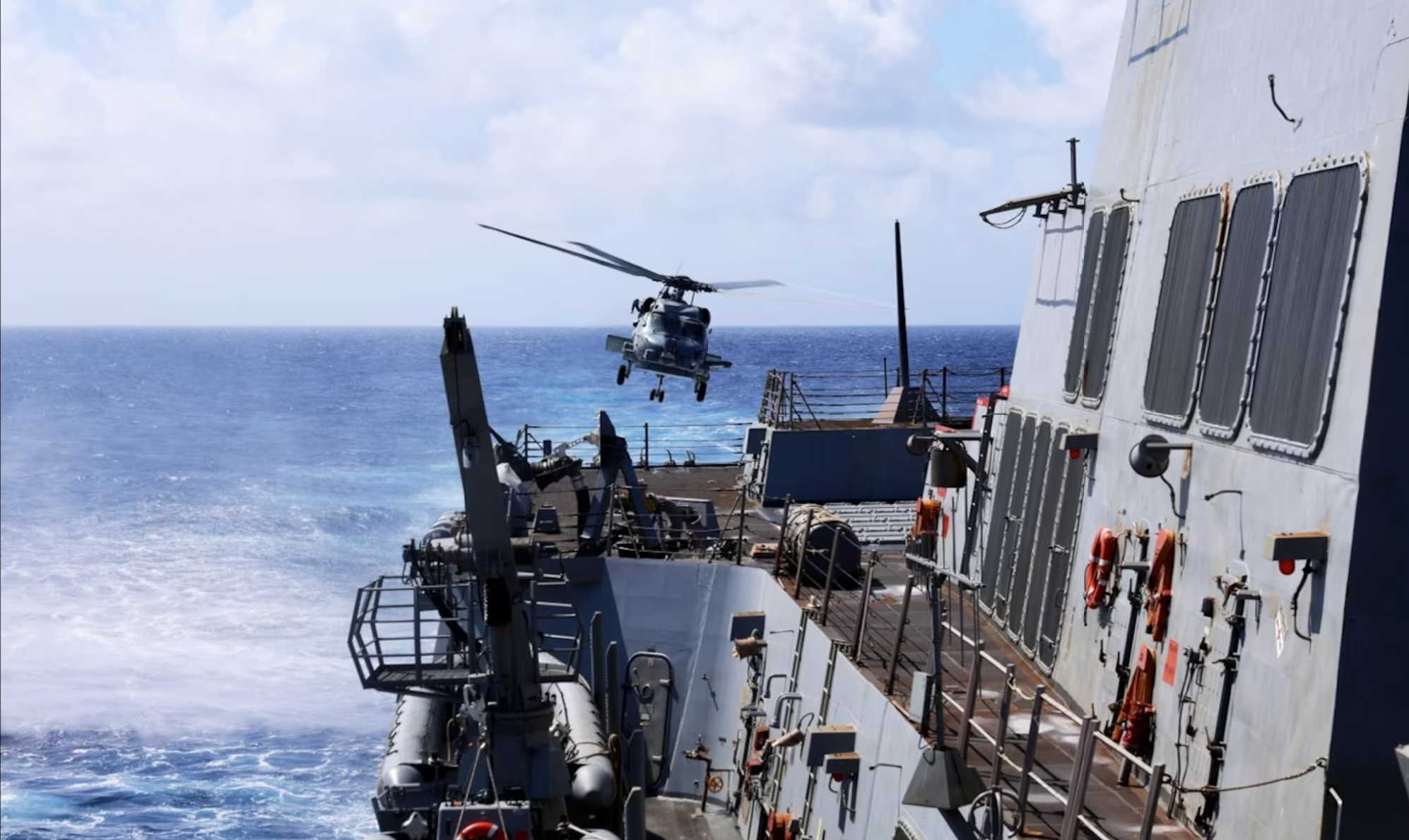
President Donald Trump has directed the Department of War to launch Operation Southern Spear, a military initiative aimed at combating narco-terrorism and drug trafficking in the Western Hemisphere, according to an announcement by Secretary Pete Hegseth.

The operation, unveiled on Thursday, is led by Joint Task Force Southern Spear in coordination with U.S. Southern Command (SOUTHCOM), focusing on defending U.S. borders from illicit drugs that Hegseth described as "killing our people." Hegseth emphasized that the Western Hemisphere is "America's neighborhood" and must be protected, signaling a robust response to threats from cartels and associated networks.
Details of the operation include deploying advanced assets such as a robotic fleet to target Latin American drug cartels, particularly in the Caribbean region, with potential implications for countries like Venezuela under Nicolás Maduro's regime. U.S. officials have briefed Trump on military options, including carrier groups positioned in the area, to interdict drug-running vessels and dismantle terrorist-linked operations. This escalation builds on prior efforts but marks a significant intensification under the new administration, with Hegseth framing it as essential for homeland security.
While specific operational timelines and troop numbers for Southern Spear remain undisclosed, related actions include the deployment of up to 3,000 additional troops and armored vehicles like Stryker combat units to the southern U.S. border, as ordered by Hegseth in separate but complementary border security measures. These reinforcements aim to achieve "100% operational control" of the border, potentially overlapping with the operation's anti-drug objectives.

International reactions have been mixed, with concerns raised about potential violations of international law in maritime interdictions, prompting allies like the United Kingdom to suspend intelligence sharing on suspected drug boats. However, U.S. officials, including Secretary of State Marco Rubio, assert that American intelligence capabilities are sufficient to conduct missions independently, drawing on decades of established assets.
The initiative aligns with Trump's campaign promises to crack down on drug flows from Latin America, though critics argue it risks escalating tensions in the region without clear diplomatic backing. No end date has been specified, and further details are expected as the operation unfolds.

The Department of War has deployed substantial assets to key strategic locations, including Puerto Rico, where approximately 5,000 troops are stationed alongside F-35 fighter jets, MQ-9 Reaper drones, AC-130J Ghostrider gunships, and special operations helicopters at the reopened José Aponte de la Torre Airport in Ceiba, prompting the FAA to impose a no-fly zone for security reasons. On St. Croix in the U.S. Virgin Islands, a local airport hosts three Air Force refueling aircraft and a new radar system overlooking the sea, enhancing surveillance capabilities, along with some troops stationed at the PHRT Village, better known locally as the “Man Camp”. Near Trinidad and Tobago, elite Army units conduct helicopter patrols over coastal waters, while Navy surveillance planes monitor areas just miles from Venezuela's shores.