


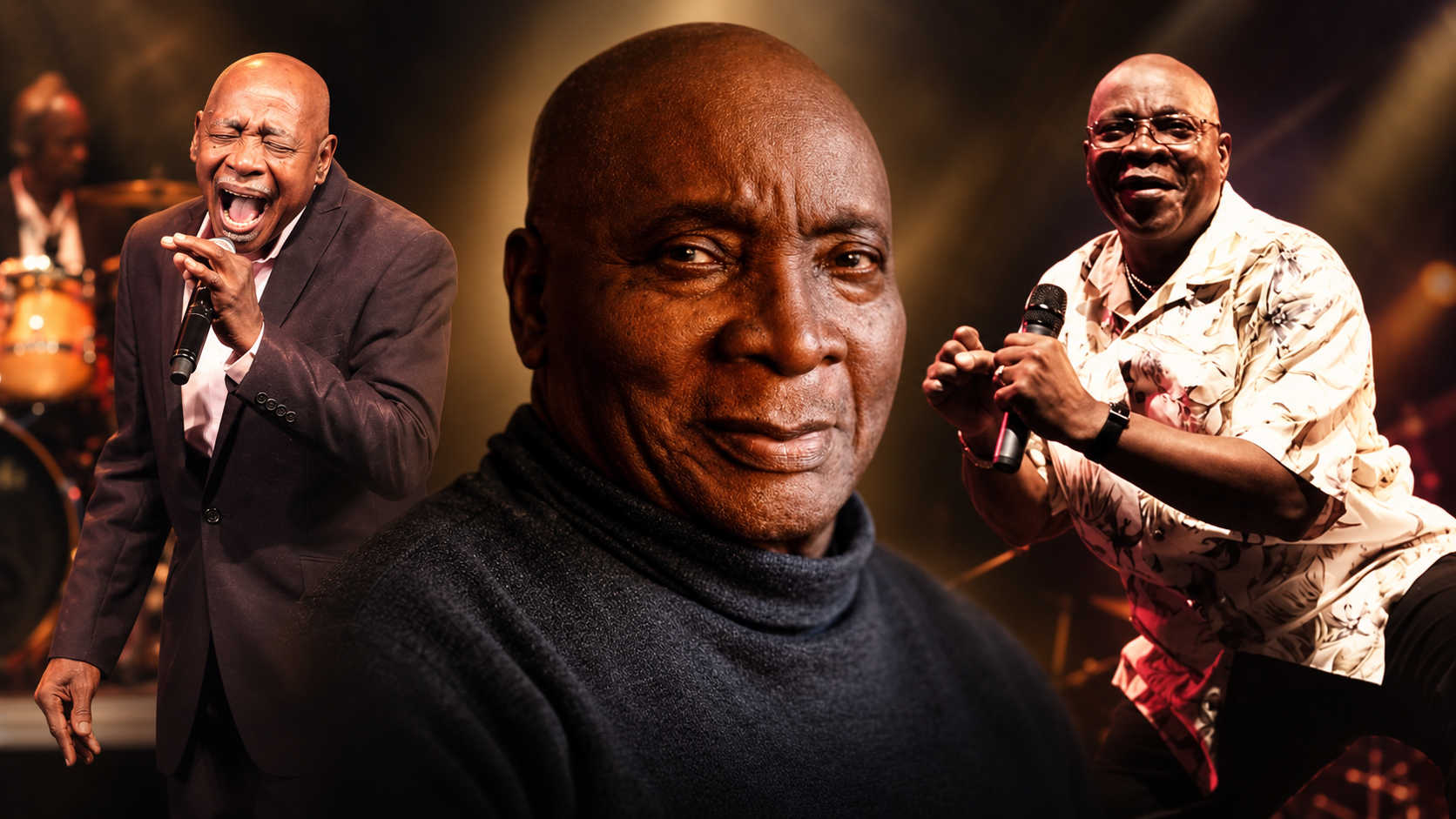
Slinger Francisco, the Grenada-born, Trinidad-raised performer known around the world as the Mighty Sparrow and for generations across the Caribbean as the “Calypso King of the World,” died Sunday in New York at age 91, bringing to a close one of the longest and most influential careers in Caribbean music. His family said Francisco died peacefully surrounded by loved ones following a brief illness; no more specific cause of death has been disclosed.

Gov. Albert Bryan Jr. joined the outpouring of tributes Sunday, saying the Virgin Islands was mourning alongside the wider Caribbean. Government House described Sparrow as a storyteller and cultural giant whose wit, musicianship and social commentary helped carry a distinctly Caribbean art form to audiences around the world over a career spanning more than seven decades.
“Today, I join the people of the Virgin Islands and the entire Caribbean in mourning Slinger Francisco, our beloved Mighty Sparrow, the Calypso King of the World and the greatest calypsonian of all time,” Bryan said. The governor said Sparrow gave voice to the region’s “struggles, joys, humor, and pride,” while using storytelling to challenge injustice, scrutinize those in authority and demonstrate the power of Caribbean culture.
Bryan also emphasized the connection between Sparrow’s legacy and the Virgin Islands, where calypso has for generations been a central element of Carnival and cultural expression. “Here in the Virgin Islands, where calypso holds a special place in our hearts, we share deeply in this loss,” the governor said, adding that Sparrow’s legacy would continue through calypsonians who use the stage to deliver meaningful messages and through younger generations discovering his work.

That Virgin Islands connection extended deep into Sparrow’s career. Biographical material preserved by The University of the West Indies records that, after emerging as a newly crowned star in Trinidad, Francisco traveled to St. Thomas, where he established a calypso tent and won both the local Calypso and Road March competitions. The account places the Virgin Islands among the Caribbean communities that embraced Sparrow during the formative years in which he was becoming the region’s dominant young calypsonian.
Francisco was born July 9, 1935, in Grand Roy, Grenada, and moved to Trinidad and Tobago as a young child. According to a UWI biographical tribute drawn from the citation prepared for his 2001 Order of the Caribbean Community honor, his earliest public performances came through the St. Patrick’s Roman Catholic Church choir and school concerts at Newtown Boys’ Roman Catholic School. By 1954 he was earning money as an itinerant performer at restaurants and nightclubs, accompanying himself on guitar, before entering the competitive calypso-tent world that would make him famous.
His breakthrough came in 1956 with “Jean and Dinah,” also known as “Yankees Gone.” At only 20 years old, Sparrow captured both Trinidad’s Calypso King crown and the Carnival Road March title with a song examining the social consequences of the departure of American servicemen from Trinidad. Smithsonian Folkways’ archival notes describe the composition as immediately popular and document a live recording from the night Sparrow won his first crown, while UWI identifies the victory as the moment he emerged nationally as both Calypso King and Road March champion.
The song also established a template Sparrow would repeatedly return to: Caribbean life examined through humor, satire, sexuality, politics, economics and sharply observed human behavior. Smithsonian Folkways describes his early recordings as social commentary delivered with literary flair and exuberance, arguing that Sparrow’s work demonstrated that calypso in the hands of its leading practitioners was considerably more than party music.
Success did not keep Sparrow from challenging the structure of the industry in which he worked. In 1957, he and Lord Superior led a boycott of the Savannah Calypso King competition amid complaints that calypsonians were being inadequately compensated compared with other Carnival winners. Sparrow answered the dispute musically with “Carnival Boycott,” beginning a pattern in which the performer used the same art form that made him famous to press arguments about the treatment and professional standing of Caribbean cultural workers.
Across the decades, his catalogue expanded to encompass songs including “Federation,” “Ten to One Is Murder,” “Dan Is the Man,” “Obeah Wedding,” “Mr. Walker,” “Drunk and Disorderly,” “Education a Must,” “Congo Man,” “No Money No Love,” “Both of Them” and scores of others. His subjects could shift rapidly from politics and education to romance, sex, cricket, race, international events and everyday Caribbean social life, creating a musical record that chronicled much of the region’s transition from colonial rule through independence and into the modern era. UWI’s examination of his work notes his treatment of the West Indian Federation, Caribbean politics, education, migration and identity, as well as his willingness to direct satire toward entrenched power and privilege.
His competitive record was equally remarkable. UWI’s published account records repeated Calypso Monarch and Road March victories stretching from his 1956 breakthrough through his final Monarch triumph in 1992 and his final Road March win in 1984, along with two victories in the Calypso King of Kings competition, in 1985 and 1988. His success on stage was accompanied by a vast recording career: CARICOM said Sunday that Sparrow penned more than 500 calypsos and produced upwards of 70 albums, while taking his performances throughout the Caribbean, Europe and the United States.
Sparrow’s international reach was substantial enough that recordings from his early career remain preserved in the Smithsonian Folkways collection, including releases such as King Sparrow’s Calypso Carnival, In High Fidelity and the archival compilation First Flight: Early Calypsos from the Emory Cook Collection. UWI noted that his touring eventually extended through the United States, Canada, Europe, Africa, Japan and the wider Caribbean, while his compositions attracted listeners and performers outside the region as well.
Recognition followed. The University of the West Indies awarded Francisco an honorary Doctor of Letters in 1987, CARICOM admitted him to the Order of the Caribbean Community in 2001, and Trinidad and Tobago conferred its highest national honor, the Order of the Republic of Trinidad and Tobago, in 2014. In 2015, he was appointed an Officer of the Order of the British Empire, with UWI noting that the British honor recognized his services to culture.
Tributes spread rapidly across the region after news of his death. CARICOM described Francisco as one of the Caribbean’s most accomplished calypsonians and credited his music with interpreting the region’s social and political experience while carrying Caribbean culture internationally. In Trinidad and Tobago, Prime Minister Kamla Persad-Bissessar said his music, wit and contribution to the arts had carried the country’s stories around the world, while Barbados Prime Minister Mia Mottley said Sparrow had been woven into Caribbean civilization for 70 years and urged younger generations to listen to his recordings as a record of the region’s history.
The Government of Trinidad and Tobago’s Ministry of Culture and Community Development also mourned Francisco, highlighting the 1956 double victory that launched his career and the decades of work that followed on Caribbean politics, society, history, relationships and culture. The ministry said his career carried the voice and stories of Trinidad and Tobago and the wider Caribbean to audiences around the world.
His family remembered a figure whose private life extended well beyond the public image of the legendary performer, describing him as a husband, father, grandfather, great-grandfather, life partner and friend. The family also disclosed that Francisco had been baptized into the Seventh-day Adventist faith before his death and said plans were being made for a public celebration of his life.

For Bryan, Sparrow’s importance ultimately rested in the way his music gave the Caribbean an unmistakable voice of its own. “On behalf of the people of the U.S. Virgin Islands, I extend heartfelt condolences to his family, loved ones, and the people of Trinidad and Tobago and Grenada,” the governor said. He closed his tribute: “Rest in peace, King Sparrow. Thank you for giving the Caribbean a voice the world could never ignore.