




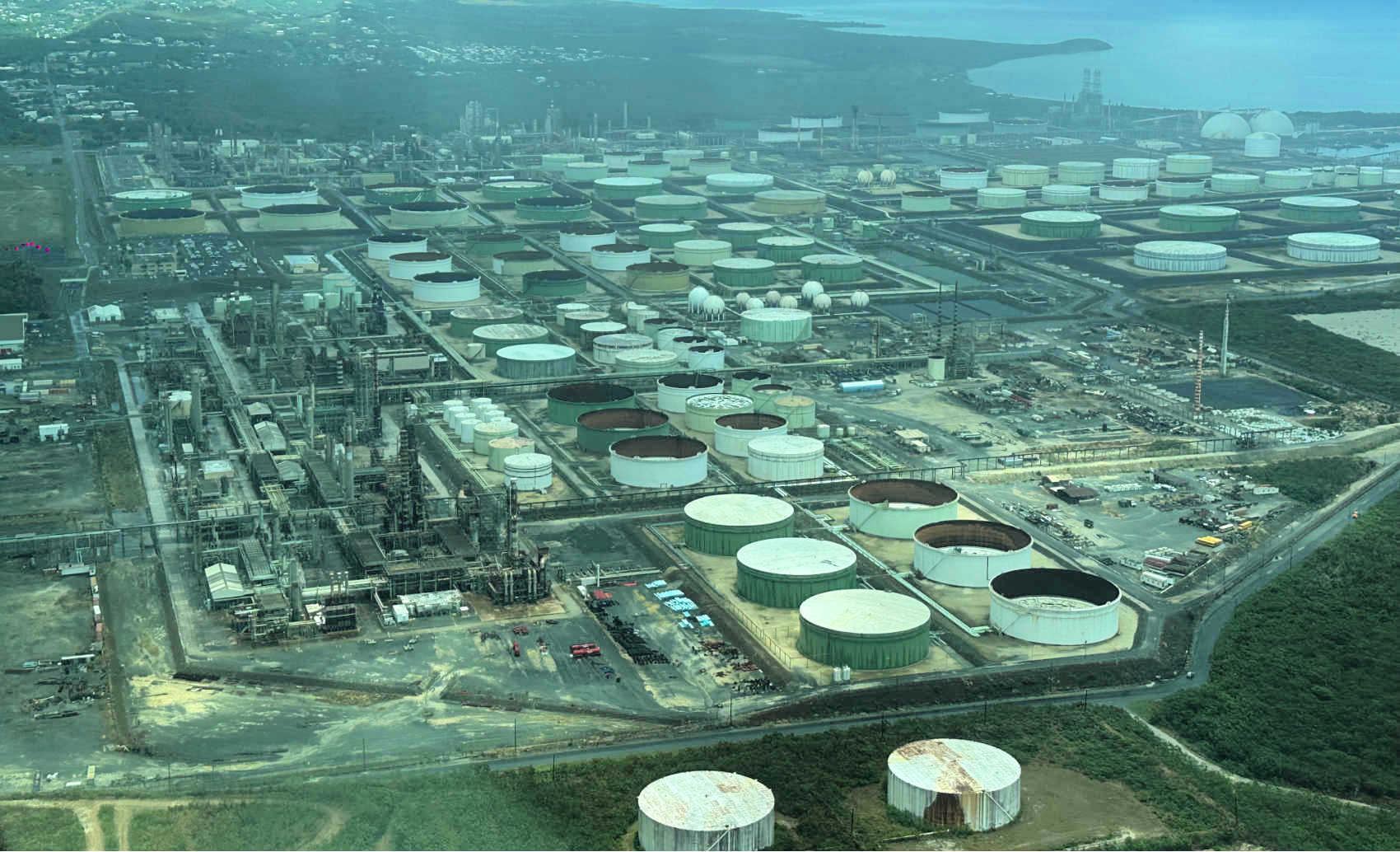
Port Hamilton Refining and Transportation wants the court to rule that the refinery does not need to install expensive emissions control technology in order to move forward with restarting operations.

That is the request contained in a motion filed on Friday in district court. The accompanying memorandum of law in support of the motion argues that Port Hamilton is under no obligation to comply with the terms of a consent decree that the Environmental Protection Agency wishes to enforce.
The issue stems from the flaring events in the first half of 2021 that ultimately shut down St. Croix’s refinery and drove its previous owners into bankruptcy. According to Port Hamilton, the EPA believes these incidents “triggered an obligation under the modified consent decree for Limetree Bay to install a flare gas recovery system within two years.” That never happened, and now the EPA says that because Port Hamilton was obligated to join the consent decree under the terms of the bankruptcy order, the company now “cannot resume operations at the refinery until it first installs such a system.”
Port Hamilton’s lawyers argue that the EPA position is “unmoored from and at odds with” the consent decree, since the modification that added the obligation to install the recovery system did not take effect until December 2021, months after the flaring incidents had taken place. As such, that obligation could not have been triggered by those events.

It is imperative that the court provide clarity on the issue, Port Hamilton says, since the massive expense involved in purchasing, installing and operating a flare gas recovery system may well be beyond the company’s means, preventing them from ever restarting the refinery. If operations proceed without the recovery system in place and without the court explicitly allowing such a move, it could open Port Hamilton up to EPA enforcement proceedings.
The consent decree at issue was entered into to resolve then-owner HOVENSA’s violations of the Clean Air Act. After HOVENSA’s bankruptcy in 2015, the new owners of the refinery, Limetree Bay, assumed the obligations and responsibilities outlined in the consent agreement. In 2020, the parties agreed on a first modification to the agreement, and submitted it to the court for approval in April 2021. A press statement issued by the EPA at the time was careful to note that the original 2011 agreement would remain in effect until the court approved the modification.
By that time, the series of emission events had already begun, with the first one occurring in February 2021. On December 21 of that year, the refinery was sold at bankruptcy auction to Port Hamilton. On December 30, the court moved to place the modification into effect.
In September 2023, Port Hamilton replaced Limetree Bay as a party to the consent decree without necessarily deciding upon the company’s liability at that juncture. Now that the EPA is attempting to enforce a provision of that agreement, Port Hamilton says the court needs to step in to make its position clear.
The company’s argument is simple: events that preceded the effective date of the first modification of the consent order cannot be used to trigger the obligations under that modification. “Numerous courts have held that a consent decree does not have the force of law until it is approved by a court,” Port Hamilton’s lawyers contended. This tenet was also explicitly stated in the text of the first modification itself, the memorandum points out, arguing that the meaning of the words were plain as stated.

The ultimate fate of the refinery, Port Hamilton makes clear, hinges on the court making it clear that they do not have to install a flare gas recovery system.