




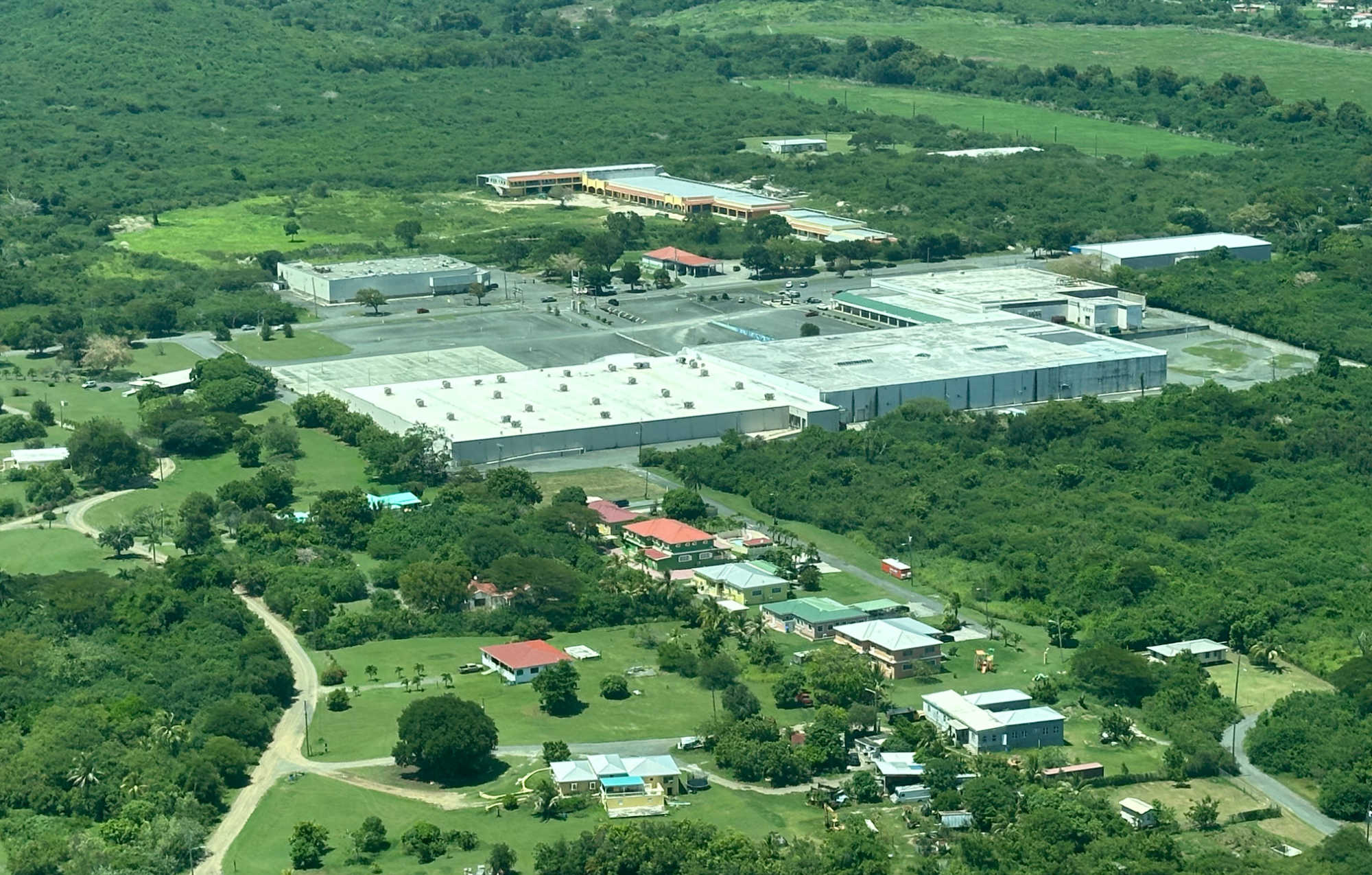
ST. CROIX — A shareholder dispute accusing directors and officers of Sunshine Shopping Center, which operates the Mall of St. Croix, of embezzling company funds, mismanaging corporate operations and assets, and causing losses through negligent operations is at the center of a federal insurance case that has now ended in another victory for Travelers Excess and Surplus Lines Company at the appellate level.

The underlying allegations were brought in September 2023 by Sunshine shareholders Mustafa Yusuf, Hamad Yusuf and Shihadeh Qattum. According to federal court records describing their V.I. Superior Court lawsuit, the shareholders sought an accounting of corporate funds and alleged that Sunshine suffered damages because of embezzlement by company directors and officers as well as negligent operation of the business. They also sought to have certain properties transferred to Sunshine, alleging that those properties had been purchased with misappropriated corporate funds.
Those allegations have not been decided on their merits in the federal insurance litigation. The case before the federal courts instead concerned whether Travelers was required to provide insurance coverage to Sunshine and former directors and officers Yahya Yusuf, Hatim Yusuf and Safi Yusuf as they defended against the shareholders' claims.
On September 21, the U.S. Court of Appeals for the Third Circuit upheld a District Court of the Virgin Islands ruling in Travelers' favor, concluding that a provision in Sunshine's directors and officers liability policy unambiguously excluded coverage for the shareholder lawsuit. The appellate decision is nonprecedential, meaning it resolves the dispute before the court but does not establish binding precedent for future Third Circuit cases.

The dispute over insurance began after Travelers sold Sunshine a directors and officers liability policy covering the period from June 13, 2023 through June 13, 2024. Sunshine contended that the policy provided protection against claims alleging wrongful acts by its directors and officers, including qualifying shareholder derivative claims.
But the policy also contained what Travelers called an Ownership Percentage Exclusion. Under that provision, Travelers would not be liable for losses stemming from a claim brought or maintained by, on behalf of, or with the participation of anyone who owned or had owned more than 5 percent of Sunshine.
That became critical because each of the three shareholders bringing the underlying lawsuit owned more than 5 percent of Sunshine. Court records in the coverage litigation placed their individual holdings at roughly 15 percent each. Travelers therefore denied coverage, maintaining that the shareholder lawsuit fell squarely within the exclusion.
The stakes went beyond whether Travelers would ultimately have to pay a judgment. Sunshine and the individual directors and officers also wanted the insurer to finance their defense against allegations that company money had been embezzled, corporate operations and assets had been mismanaged, and Sunshine had suffered losses as a consequence. With Travelers refusing coverage, Sunshine said it was forced to finance the defense of the Superior Court litigation itself while separately suing its insurer in federal court.
Sunshine's argument against Travelers centered on an unusual feature of the company's ownership structure: every Sunshine shareholder owned more than 5 percent of the company when the policy was issued. Sunshine maintained that Travelers' interpretation of the exclusion therefore effectively wiped out the very shareholder derivative coverage that the policy appeared to contemplate. According to Sunshine, applying the exclusion literally would make that portion of the insurance protection essentially meaningless.
Travelers disagreed. It maintained that the policy had to be enforced according to its written terms and that the 5 percent exclusion plainly applied to the shareholder lawsuit. The insurer also argued that the policy continued to provide coverage for numerous other management-liability risks, meaning the insurance contract as a whole was not rendered meaningless simply because this particular lawsuit was excluded.
The District Court sided with Travelers, and Sunshine appealed.
The Third Circuit reached the same conclusion. In an opinion written by Circuit Judge Tamika Montgomery-Reeves, the panel said the ownership exclusion made no distinction between direct shareholder lawsuits and derivative claims brought on behalf of the corporation. Instead, it applied broadly to any covered claim involving a person or entity that owned more than 5 percent of Sunshine.
Because all three shareholders behind the underlying lawsuit exceeded that threshold, the panel found that their case fell within the exclusion. The court rejected Sunshine's argument that the provision should be interpreted as applying only to direct shareholder claims rather than derivative actions.
The appeals court also rejected Sunshine's contention that Travelers' interpretation made the promised insurance coverage illusory. Although the existing Sunshine shareholders each held more than 5 percent, the judges said the policy could still cover a claim brought by a shareholder who owned less than 5 percent and had never crossed that threshold. It also covered what the court described as a host of other potential claims.
For that reason, the panel concluded that enforcing the exclusion did not make Travelers' contractual obligations entirely optional or reduce the overall policy to meaningless protection.
The Third Circuit therefore affirmed the District Court's grant of summary judgment to Travelers, leaving Sunshine and the individual insureds without Travelers coverage for the shareholder litigation. Judges Luis Felipe Restrepo, Montgomery-Reeves and Theodore McKee comprised the panel. The matter was submitted September 9 and decided September 21.
The appellate ruling resolves the dispute over Travelers' obligation under the policy; it does not determine whether the shareholders' accusations of embezzlement, mismanagement, negligent operations or misuse of corporate funds are true. Those claims originate in the separate shareholder action in V.I. Superior Court.