




Virgin Islands Public Finance officials want a fresh assessment of the bond market following last week’s Federal Reserve rate increase, with one PFA official warning that future hotel projects unable to generate enough cash to service debt at prevailing yields may simply be unable to issue bonds.

The issue surfaced Wednesday during consecutive meetings of several Public Finance Authority subsidiary corporations, when PFA Secretary Keith O’Neale questioned how changing market conditions could affect hotel financing. He suggested asking Causey Public Finance, one of the government’s financial advisors, to examine the implications for hotel securities.
“Based on the discussion that we had on the bonds and the yield and the appetite of the market, I don’t know if it would be beneficial to have Causey do an analysis of the hotel securities to see how that would affect it,” Mr. O’Neale said.
A bond is essentially a loan from investors to an issuer, with the issuer promising interest payments and repayment of principal over time. The yield reflects the return investors demand for taking on that debt. When market yields rise, new bonds generally must offer investors higher returns, increasing borrowing costs. For PFA-backed hotel financing, that can mean larger debt-service payments and a higher revenue threshold for projects to remain financially viable.

He suggested that the broader PFA board receive a dedicated market briefing at an upcoming meeting. “Maybe at the next PFA meeting we should have Causey come in and address what’s going on in the market because a lot of things have happened recently with inflations…the 10-year Treasury bill does not have the same demand as it had at the beginning of the year,” Mr. O’Neale said. “I think it would be a good idea for us to have a clear understanding of what the bond market is doing, and what the demand for government securities are.”
Nathan Simmonds, the PFA’s director of finance administration, agreed that such a presentation could be arranged. He said the authority’s financial advisors or current underwriter could brief board members on “what investors are looking for, and where yields are likely going with the recent increase by the Federal Open Market Committee.”
The discussion comes after the Federal Reserve on September 16 raised its target range for the federal funds rate by 25 basis points, to 3.75 percent to 4 percent. The Fed said inflation remained elevated and described the increase as supporting a return toward its 2 percent inflation goal.
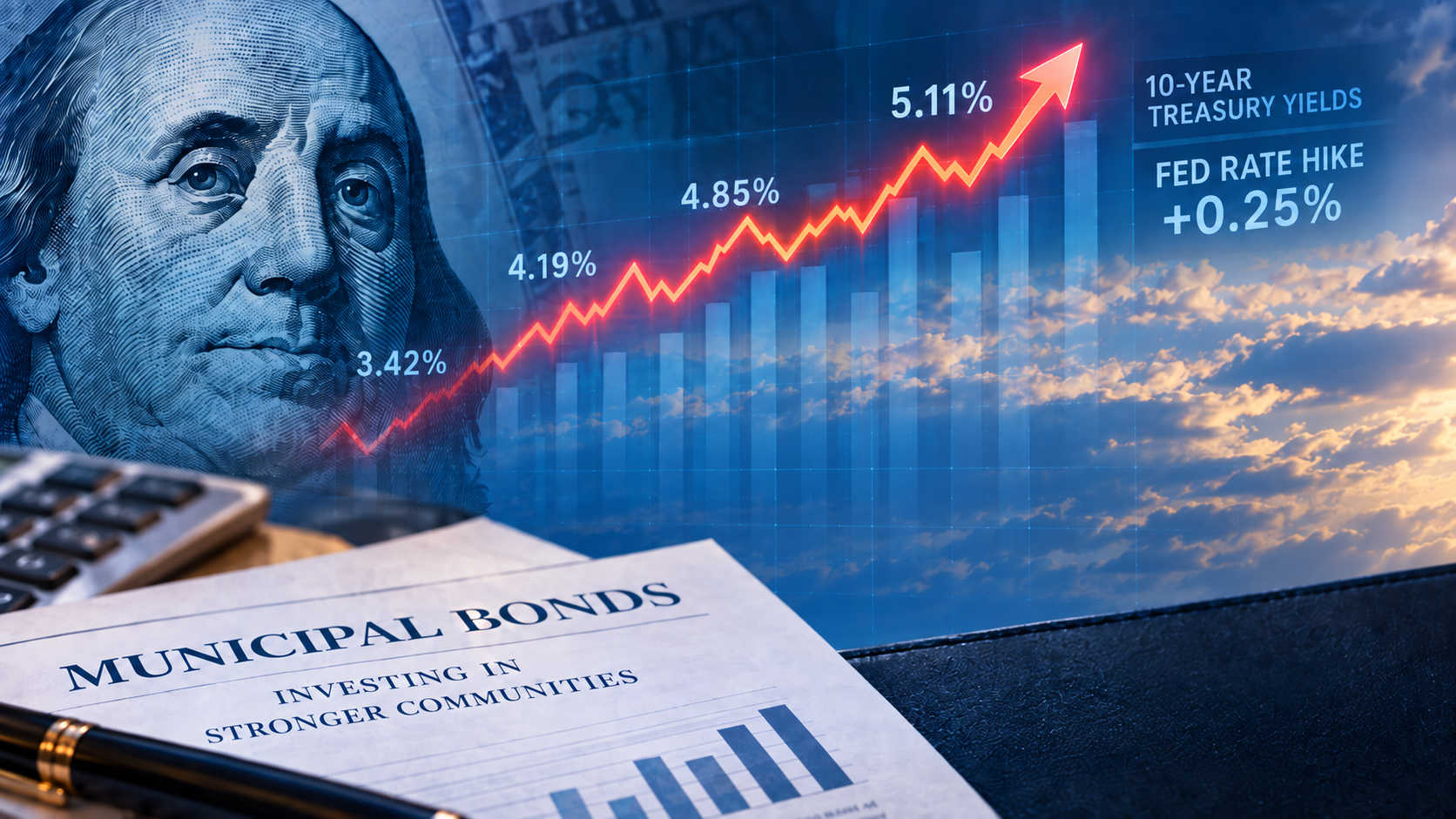
Market conditions have changed substantially since the beginning of the year. The U.S. Treasury’s 10-year yield stood at 4.19 percent on January 2, but had climbed to 5.11 percent by September 23. The two-year yield moved from 3.47 percent to 4.85 percent over the same period. Those figures do not by themselves establish weaker investor demand, but they demonstrate the considerably higher yield environment now confronting borrowers.
That matters because when investors demand higher yields, issuers generally face higher borrowing costs. For projects financed through revenue bonds, the underlying development must generate enough cash flow to cover the resulting debt payments.
Mr. O’Neale asked how officials intended to “deal with” the higher yields that future offerings could require. Mr. Simmonds said the market ultimately would determine which prospective projects remained financially viable.
“If they’re not able to generate sufficient cash flow to service the debt based on the yields that will be required at that time, then they won’t be able to issue bonds,” he said.
Hotel Financing Particularly Exposed
The discussion has direct implications for the Virgin Islands Hotel Development Financing Corporation, a PFA-controlled entity used to finance qualifying hotel projects.
Last year, the corporation held a public hearing involving a proposed plan of financing of up to $500 million in revenue notes, bonds or other obligations connected to the Frenchman’s Reef hotel complex on St. Thomas. The proposed financing was structured as special limited obligations rather than general debt of the Government of the Virgin Islands.
The territory has also previously used hotel-related revenue bonds to finance development and reconstruction. Government financial statements show that PFA issued $64.9 million in Hotel Occupancy Revenue Bonds and $18.3 million in taxable Economic Recovery Fee Revenue Bonds in 2024 for reimbursement of costs associated with the Frenchman’s Reef redevelopment. Those bonds carried yields of 5.75 percent and 9 percent, respectively, according to the government’s audited financial statements.
The PFA’s mission includes raising capital for public projects and creating financing programs that support the government and economic development, making movements in the municipal and Treasury markets particularly consequential for the authority.
The requested presentation would give board members a current assessment of investor appetite, borrowing costs and where yields may be headed before future financing decisions are made.

For hotel developers seeking access to tax-advantaged financing through PFA-related entities, Mr. Simmonds’ assessment was straightforward: irrespective of the project’s merits, the numbers must still work at the rates investors demand.