




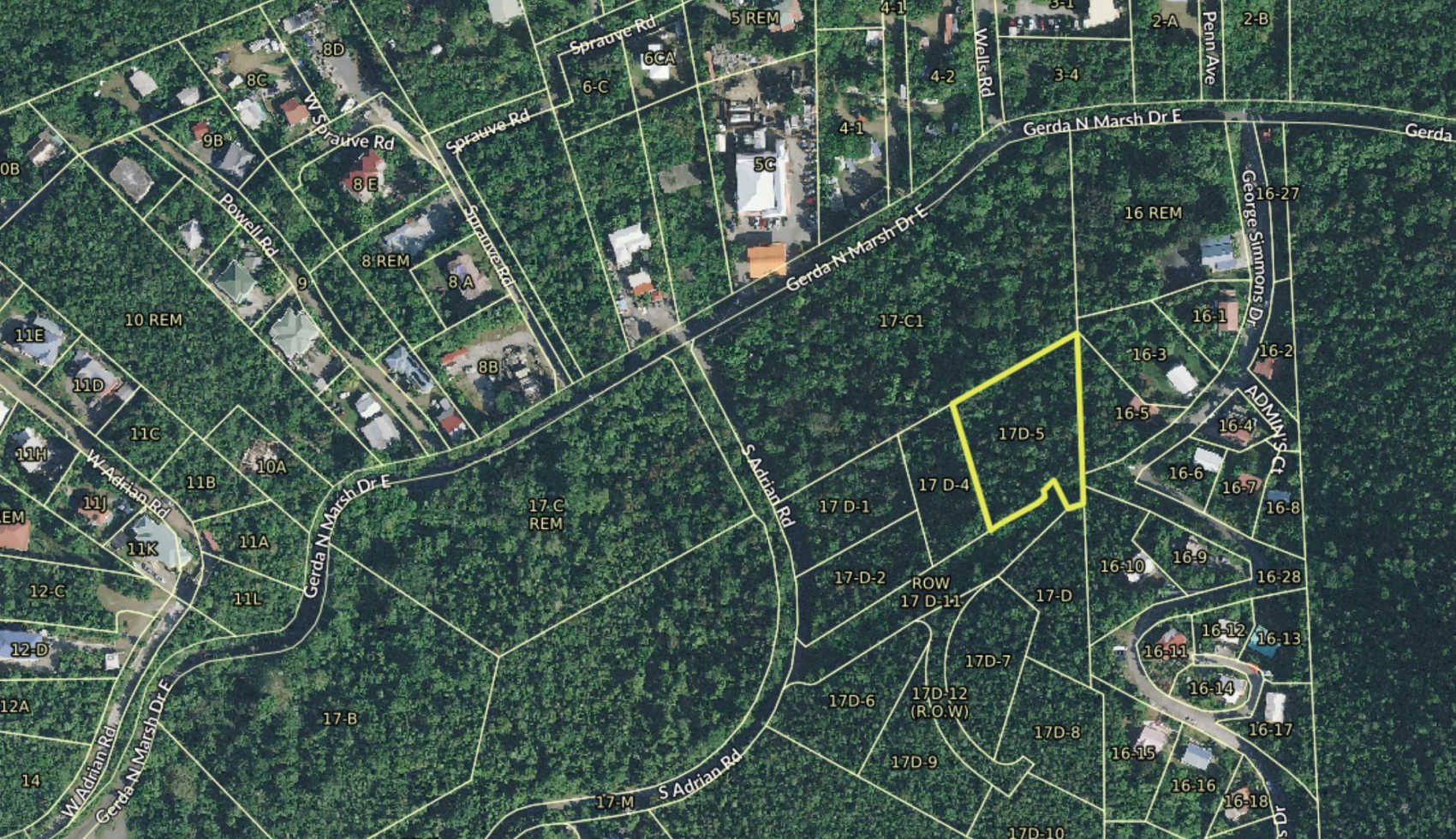
The V.I. Department of Planning and Natural Resources has recommended denial of a St. John rezoning request that would allow a commercial trucking operation to house vehicles and equipment in a residential area, though lawmakers appear willing to explore whether restrictions or other conditions could offer a compromise.

Bill 36-0307 seeks to rezone Parcel No. 17-D-5 Estate Adrian, No. 18, Cruz Bay Quarter, St. John, consisting of 0.83 acres, from R-1, Residential-Low Density, to B-3, Business Scattered. The proposed rezoning would allow the establishment of a commercial trucking operation, including equipment storage facilities for water delivery and construction.
During Friday’s Committee of the Whole meeting, Planning Technician Keshoi Samuel said a public meeting on the request produced “strong and unified public opposition to the proposed rezoning.”
Residents raised concerns about whether the trucking operation would be compatible with the surrounding residential neighborhood. Other concerns included noise, traffic, fumes, and “safety impacts associated with heavy vehicle activity.” Nearby property owners also expressed concern about potential effects on quality of life and property values.

Mr. Samuel said the proposal is “inconsistent” with the overall Comprehensive Land and Water Use Plan, along with the special provisions for St. John. As a result, he said, DPNR “recommends denial of application.”
Attorney Jennifer Jones, who represents property owner Maxentius Griffith, acknowledged the opposition but said the issue also reflects a broader challenge involving the “availability of locations for businesses that provide essential services to the residents and businesses of St. John.”
Ms. Jones said the property owner is willing to adopt measures to “minimize impacts on neighboring communities.” Those measures include an enclosed garage structure, perimeter fencing, off-street parking and limited operating hours.
Several lawmakers said they were conflicted by the proposal.
“I know land in St. John is very scarce, and when you own it, we got to figure out how to actually utilize it,” Senator Alma Francis Heyliger said. She noted that if the rezoning is denied, purchasing another parcel of land could be prohibitive.
“It's a very funny situation to be in, because St. John needs those services,” Senator Dwayne DeGraff said. He added that it “becomes a ticklish situation when you're throwing [in] the Land and Water Use Plan.” Mr. DeGraff emphasized the need for services on St. John, including water delivery and construction.
Senator Carla Joseph said she was concerned about the impact on the community’s appearance.
“I have an issue with that,” she stated.
Senator Joseph said the property should “remain residential unless you get the full approval from those individuals who live there.”
Ms. Jones suggested that restrictive covenants could be attached to the property.
“You can create an environmental covenant that can be enforced, and that would attach to the land,” she said.
Senator Milton Potter described the suggestion as reasonable. Senator Marvin Blyden also suggested placing “restrictions from our end to make sure if some things happen, we shut them down.”
Senator Kurt Vialet asked whether DPNR would be open to a use variance based on Ms. Jones’s recommendations. Territorial Planner Leia La Place Matthew did not indicate support for that approach.
“We would still be in opposition due to the Comprehensive Plan and protecting the residential areas in St. John,” she said.

No votes are taken during meetings of the Committee of the Whole. Some lawmakers said they plan to visit the St. John site before making a decision during the next legislative session.