


Last updated at 12:37 p.m. on Tues. Oct. 7, 2025

Government House announced Tuesday that Governor Albert Bryan Jr. has initiated a coordinated territorial response to the Trump administration’s Executive Order 14324, which suspended the duty-free exemption for low-value imports and exports valued at $800 or less, or more than $100. The governor met last week with senior officials from the U.S. Department of the Interior to press for a territorial exemption and said he would formally request relief in writing to both the Secretary of the Interior and the President of the United States.
According to the administration, Bryan is leading an effort among the governors of the U.S. territories to present a unified position, with each co-signing the formal request for exemption. “Families, students, seniors and small businesses in the Virgin Islands rely on small packages the way most communities rely on a corner store,” the governor said. “They carry essentials, tools, and hope in a box. A targeted exemption recognizes that the same rule can weigh differently on an island. We can meet national enforcement goals without making everyday life harder for people who already pay more for distance.”
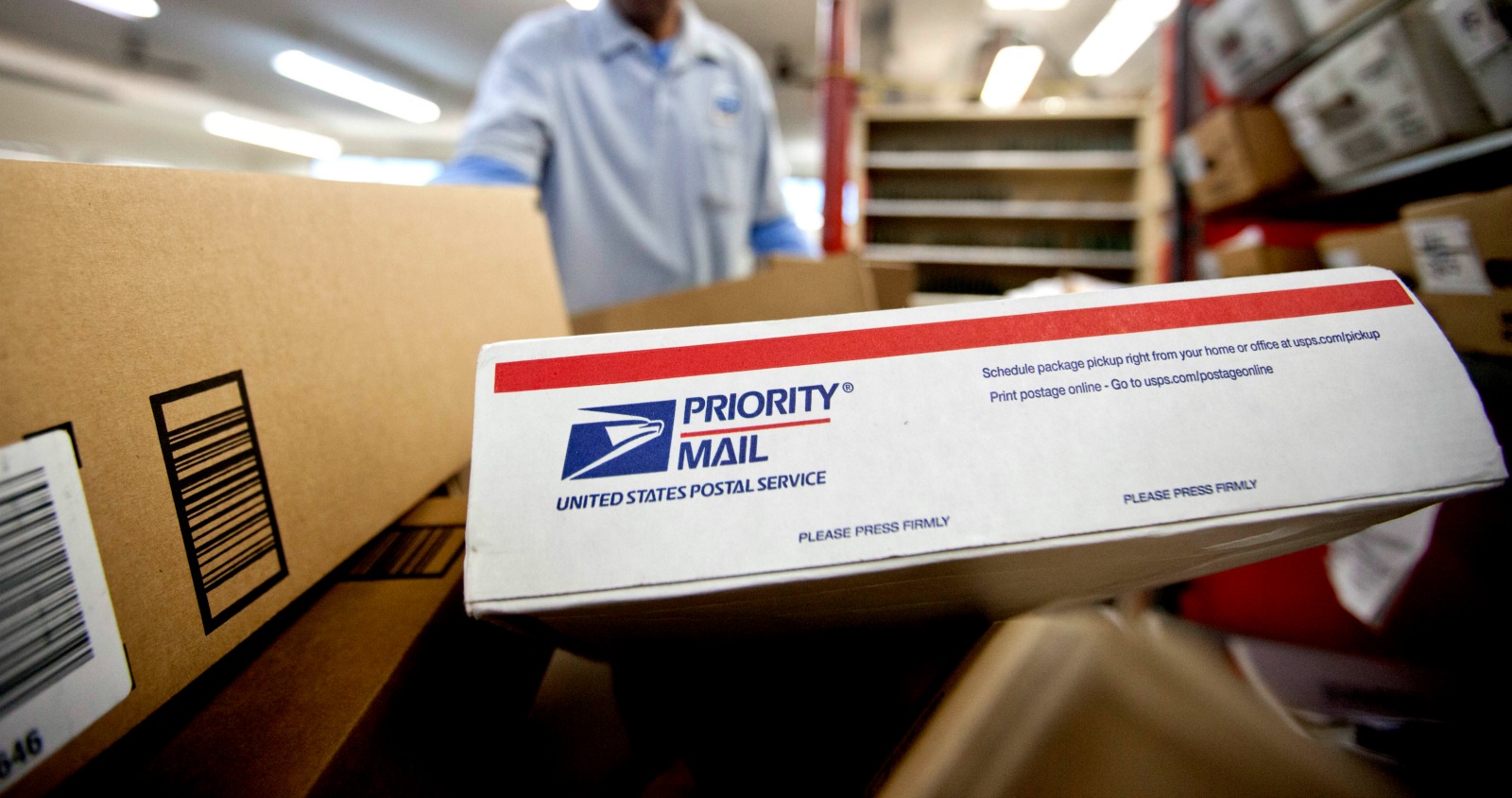
The new customs policy, which took effect August 29, requires residents of the Virgin Islands and other territories outside the U.S. Customs Zone to prepay duties on most packages before the U.S. Postal Service (USPS) will accept them. The change eliminates the longstanding de minimis exemption, which allowed duty-free shipments under $800.

Under the new system, senders must use the Zonos Prepay app to calculate and pay duties before mailing their packages. The app generates a Declaration ID and QR code that must be presented at the post office. USPS cannot accept packages without them. Exceptions are limited to documents, non-monetary goods, gifts worth $100 or less, items over $800, and returns.
Bryan said his request focuses on securing a practical solution for residents, while acknowledging broader questions that have arisen about the Virgin Islands’ placement outside the U.S. Customs Zone.
He stressed that determining the territory’s customs status is not within his authority as governor but instead rests with Congress, which established the framework in the Tariff Act of 1930. That law gives federal agencies — including the U.S. Department of the Treasury, Department of Homeland Security, and U.S. Customs and Border Protection — responsibility for enforcing customs regulations.
“The customs status of the Virgin Islands is determined by Congress through federal law and administered by federal agencies,” Bryan said. He noted that the unique framework allows the Virgin Islands to manage costs for residents, support local businesses dependent on imported parts and materials, and coordinate enforcement with federal partners.
“This is a practical fix with human stakes,” he said. “It keeps the shelves stocked, the classrooms supplied and the wheels of our local economy turning.”
The governor confirmed he will transmit the formal exemption request this week and continue working directly with Interior officials and members of Congress. “We’re leading this coalition so that our proposal reflects the realities of island life and delivers relief without undercutting national policy,” Bryan said.
Concerns over the shipping changes surfaced weeks earlier, when Delegate to Congress Stacey Plaskett warned that the order’s elimination of duty-free treatment was forcing Virgin Islanders to prepay customs duties on packages that previously qualified for exemption.
Plaskett explained that the Virgin Islands — along with Guam, American Samoa, and the Northern Mariana Islands — operates outside the U.S. Customs Zone, while Puerto Rico is the only U.S. territory within it. “All of the U.S. territories, Guam, American Samoa, the Northern Mariana Islands, and the U.S. Virgin Islands, except for Puerto Rico, are experiencing the same problems following Executive Order 14324,” she said.
Plaskett added that the change has affected not only residents but her own household. “I and my family are experiencing these same shipping challenges alongside my constituents as packages are being sent,” she said.
She also noted that the order’s impact has reignited debate over whether the Virgin Islands should remain outside the Customs Zone — a designation made when the territory became part of the United States more than a century ago. “The time has come for the Virgin Islands to evaluate whether remaining outside the Customs Zone still provides the same benefit it did more than a century ago,” Plaskett said.
Calling the new requirements an “unfair burden,” the delegate vowed to seek a waiver for the U.S. territories, similar to one she previously secured to block punitive port fees that would have raised shipping costs. “I will apply that same determination to find a waiver for the U.S. territories from this customs duty requirement,” she said.
White House Defends Policy as National Security Measure
The White House has defended Executive Order 14324 as part of a broader national security strategy, citing concerns about illicit trade, drug trafficking, and the use of small shipments to evade customs enforcement.
In the July 30 executive order, President Donald Trump said the suspension of the de minimis exemption was necessary to “deal with the unusual and extraordinary threats to the national security, foreign policy, and economy of the United States.”
The order stated that traffickers had been exploiting low-value shipments to conceal illegal goods and avoid detection. “Many shippers go to great lengths to evade law enforcement and hide illicit substances in imports that go through international commerce,” it said, referencing false invoices, fraudulent postage, deceptive packaging, and re-shippers used to disguise the origin of contraband.

According to the administration, the global elimination of the exemption was “necessary and appropriate to ensure that the tariffs imposed are effective in addressing the emergency” and to close loopholes used by traffickers.