



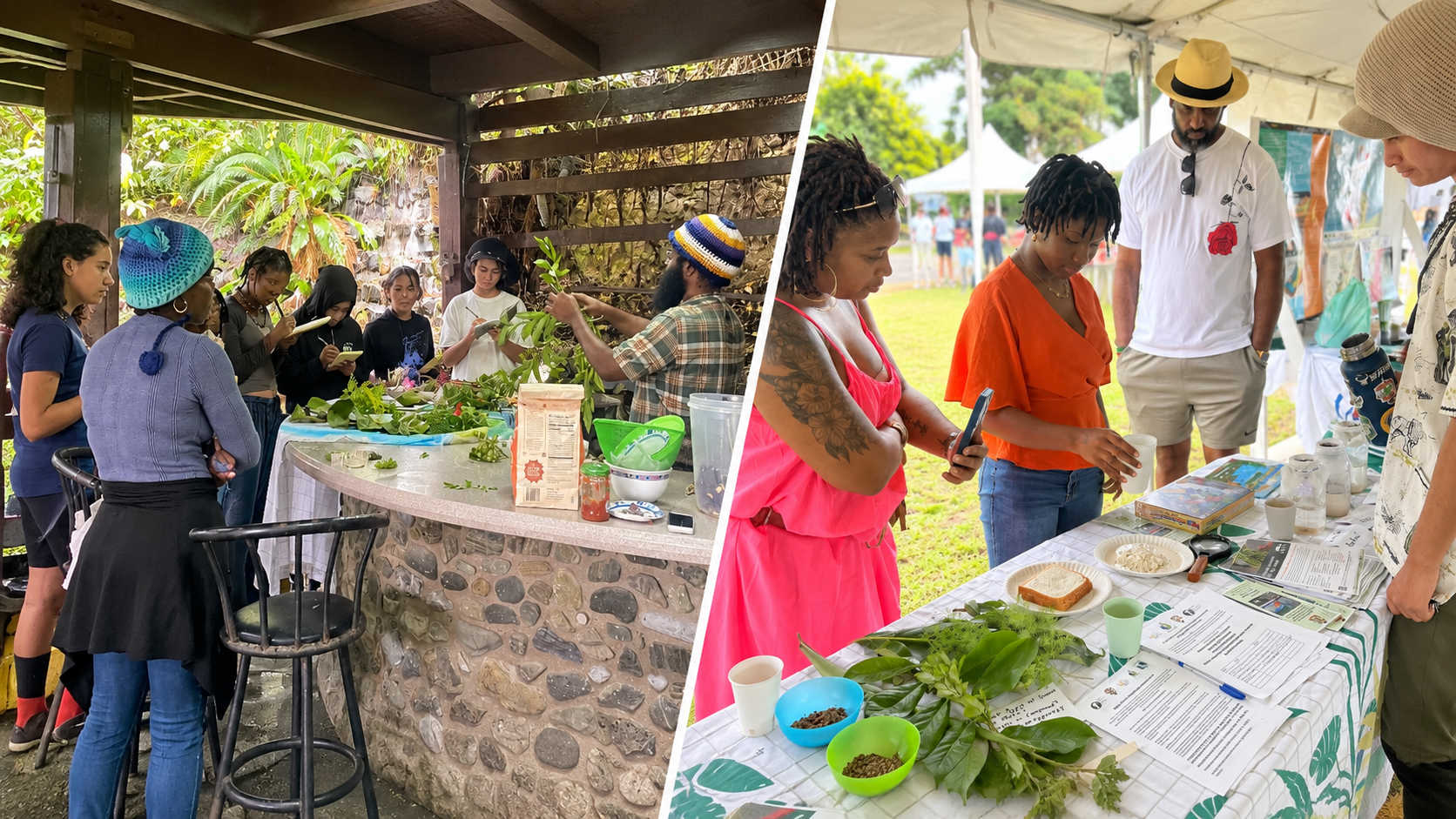
Students at four schools on St. Croix and St. Thomas are getting hands-on experience with gardening, specialty crops, nutrition and agricultural careers through a Virgin Islands Women in Agriculture Association initiative that culminates this week with three days of Agriculture Literacy activities.

The program uses agriculture to teach science, technology, engineering, art and mathematics — or STEAM — while developing broader skills such as patience, responsibility, leadership and entrepreneurship. VIWIAA says students may use mathematics to measure garden beds, science to understand soil and writing to document what they observe, connecting classroom subjects with the process of growing food.
The initiative is supported through the U.S. Department of Agriculture's Specialty Crop Block Grant Program through the V.I. Department of Agriculture. Federal records show that USDA awarded the department $59,149.86 for the project, formally titled “Building Youth Capacity for Sustainable Food Security Through S.T.E.A.M. Integration,” as part of its fiscal year 2023 Specialty Crop Block Grant awards. USDA's project description says VIWIAA would increase children's and adults' knowledge of specialty crop production, consumption and nutritional value through agriculture literacy activities, interdisciplinary lesson plans and a nutrition, coloring and recipe book.
Under the federal program, state and territorial agriculture departments receive Specialty Crop Block Grant funding and may support locally led projects aimed at strengthening specialty crops. USDA defines specialty crops to include fruits, vegetables, tree nuts, dried fruits, horticultural crops and nursery crops.VIWIAA Founder and Executive Director Diana Collingwood launched the organization in 2021 with a vision of building a sustainable agricultural community in which women and young people help shape the future of the industry. The organization's current mission emphasizes agricultural literacy, technical skills and community engagement, particularly among women, youth, veterans and historically underserved communities.

The school initiative began with a six-member team from St. Croix and St. Thomas attending the National Agriculture in the Classroom Conference from June 22 through 25. The conference was held at the Rhode Island Convention Center in Providence, Rhode Island, where educators participated in workshops focused on integrating agriculture into traditional classroom subjects. The conference's official site confirms the June 22-25 dates and Providence location.
Following the conference, VIWIAA contracted Virgin Islands educators to develop agriculture-based curricula and lesson plans for students from kindergarten through eighth grade. The materials center on four specialty crops — cucumbers, celery, beets and tamarind — and are designed using the curriculum framework established by the V.I. Department of Education's Division of Curriculum and Instruction, Sustainability and Agricultural Education, with support from Director Cydney Meadows. VIWIAA says the resulting materials are available to teachers throughout the territory.
Four schools are collaborating directly with VIWIAA: Church of God Holiness Academy and Ay Ay Academy Home School on St. Croix, and Yvonne E. Milliner-Bowsky Elementary School and the Seventh-day Adventist School on St. Thomas. Depending on the needs of each campus, participating schools are receiving curriculum materials, custom mini-greenhouses, raised-box gardens, farming equipment and other supplies purchased with grant funds.
Students will learn how to grow and prepare cucumbers, celery, beets and tamarind while studying their nutritional benefits. The initiative is also intended to expand understanding among children and adults of how specialty crops are produced, consumed and incorporated into healthier diets. A child-friendly STEAM coloring and activity book designed by a local artist includes the four featured crops, information about production methods and nutrition, and healthy recipes. VIWIAA says students can also use the book as an outreach tool to share what they have learned with adults in their communities.
“This work happens because of VIWIAA’s commitment to advance agricultural literacy, technical skill attainment, and community engagement. We must expose our youth to the wide range of lucrative STEAM careers within the agriculture industry. We want to empower a new generation to take what we grow locally and understand the process from farm to table, to community health and well-being,” said Collingwood.
“From the educators creating lesson plans to the staff preparing the gardens and making materials, children will also learn to eat and prepare nutritious meals and take responsibility for their own health,” program coordinator Joshua-Porter said.
VIWIAA also credited school administrators and project leaders for helping integrate the initiative into their respective campuses, including Principal Marcel and project lead Lindon Clarke at Church of God Holiness Academy; the principal and project lead Philirine Smith at Yvonne E. Milliner-Bowsky Elementary School; Principal James and project lead Carlos Robles at the Seventh-day Adventist School on St. Thomas; and Principal Benjamin and Yvette Johnson at Ay Ay Academy Home School.
The project enters its culminating phase September 28 through 30, with Agriculture Literacy events scheduled on St. Thomas and St. Croix. Joshua-Porter will be joined by farmer and horticulturist Jeannette Fabio, DJ Carmen Ponce and youth leader Naomi Douglas for interactive sessions at the four participating schools. Students will explore plants, food, farming and agriculture-related careers through activities designed to make the lessons more engaging and memorable.
VIWIAA said it hopes the learning will continue beyond the formal end of the project, with gardens and classroom lessons helping children develop a longer-term interest in agriculture and encouraging discussions about food and farming within their families and communities.