




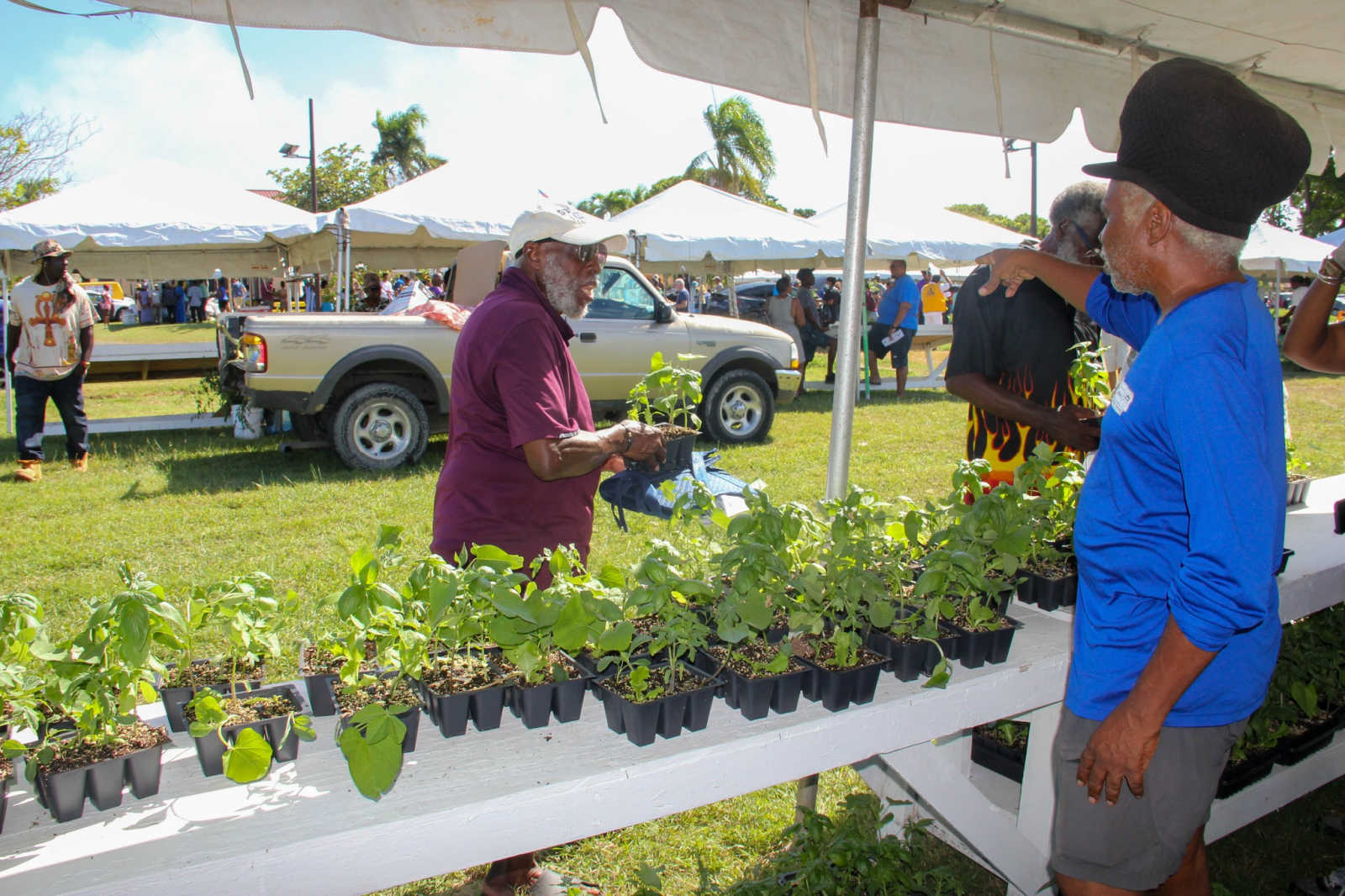
The 2025 Workforce Development Summit placed agriculture front and center of the discussion, with the very first panel of the session, moderated by Governor Albert Bryan Jr. himself, focusing on the importance of integrating technology in agriculture.

Agriculture in the Virgin Islands has been challenged by water deficits, obstacles in securing insurance, and waning interest from the youth, among other things. Agriculture Commissioner Louis Petersen, RTPark's Eric Sonnier, Summer Brown of the Good Food Coalition and District Conservationist Rudy O'Reilly explored the possible uses of technology in solving some of these sectoral challenges.
Potential interventions include utilizing fertilizer drones, soil moisture sensors, and desalination to lessen groundwater challenges. Then came the standout question posed by Governor Bryan: if varied agrotechnologies were successfully implemented in the territory and became commonplace among farmers, “what percentage of the food do you think we could supply for the Virgin Islands?” he asked.
“We really don't know,” admitted Mr. Petersen. Nonetheless, he argued that the uncertainty should not discourage action. “That should not be the approach,” he warned. “I believe that we [should] target 10% to begin with, and we achieve it. We target a second 10% and we continue,” the agriculture commissioner suggested.

Only then, after a series of continued capacity expansions, will the Virgin Islands truly know what its full production potential is. “Because we feel we cannot do all for ourselves at one time, we do nothing at all,” Petersen reiterated, cautioning against stagnation and inertia in the industry.
The Virgin Islands imports virtually all of its food, and franchise restaurants and fast food chains are popular. As the panel brainstormed strategies to increase local production and reduce reliance on imports, Governor Bryan wondered whether “we need to adjust our diets to a more tropical diet?”
That adjustment would depend heavily on marketing, said Ms. Brown, noting that rates of diet-related illnesses like obesity are on the increase among the population. Most individuals are no longer following a “high fruit diet,” she lamented. Changing tastes have played a part in fueling the high food import bill, while the concept of eating what one grows has failed to take root, she observed.
The governor also highlighted the existence of more complex challenges. “We live in a system designed to support the industrial farm,” he observed, pointing out the closure of Islands Dairies due to a “failure of our ability to be able to test, regulate and milk.” The USDA-approved school lunch program, too, has “special provisions that disallow us introducing local fruits and produce,” he said. Egg production is also no easy feat. According to Governor Bryan, there are challenges with “producing eggs and making sure those eggs are farmed safe.”
“Those are the concerns around our being able to make an industry,” he bemoaned. “We've had situations where we have people who could do the job, but they don't have the certifications so we disqualify those people automatically.”
Several of the panelists argued that the Virgin Islands does possess the resources to ramp up production and cut down on imports, but Governor Bryan wasn’t so sure. “When you say we have resources, we get people who can maybe grow food, but do we have the technology to do industrial farming?... Those are the things that are delimiting to us.” It’s a challenge that he says is not unique to the territory.
“The potential is here,” insisted Commissioner Petersen. He offered the caveat that “all the things we're here speaking about sound good…but we have to find a way to develop them and put them into practice.” He is hopeful that the School of Agriculture at the University of the Virgin Islands will help in “preparing our young people to fit those needs.”
“It's really about focus,” Mr. Sonnier, the RT Park executive director, advised. “You can get to 10 things but do the first one first. Focus on something and be really good at that thing, and then take the next step to the second thing.” His sentiments supported the agriculture commissioner's recommendation for a staged approach recommendation. “We can't fix the abattoir situation, the egg situation, the chicken situation, all at the same time. As a group, as a territory, we got to pick one,” he stated. Governor Bryan believes aquaponics may be a good place to start.

The development of agriculture in the Virgin Islands has long been a priority for several stakeholders, who have been trying to push the industry forward amidst the multitude of challenges that persist. In August, the Food and Farm Council pleaded for the release of critical funds to enable them to achieve their mandate. During budget hearings, the Department of Agriculture was lambasted for the slow pace of federal grant spending. The St. Thomas/St. John district remains without a functional abattoir, and lawmakers have made impassioned calls for stricter regulation of farm lands.