



ST. CROIX — Sen. Marise James held legislation Monday that would require the V.I. Department of Agriculture to establish and manage a 30-acre orchard on St. Croix after agriculture stakeholders raised significant concerns about the department’s ability to fund, staff and sustain the project and requested multiple changes to the proposal.

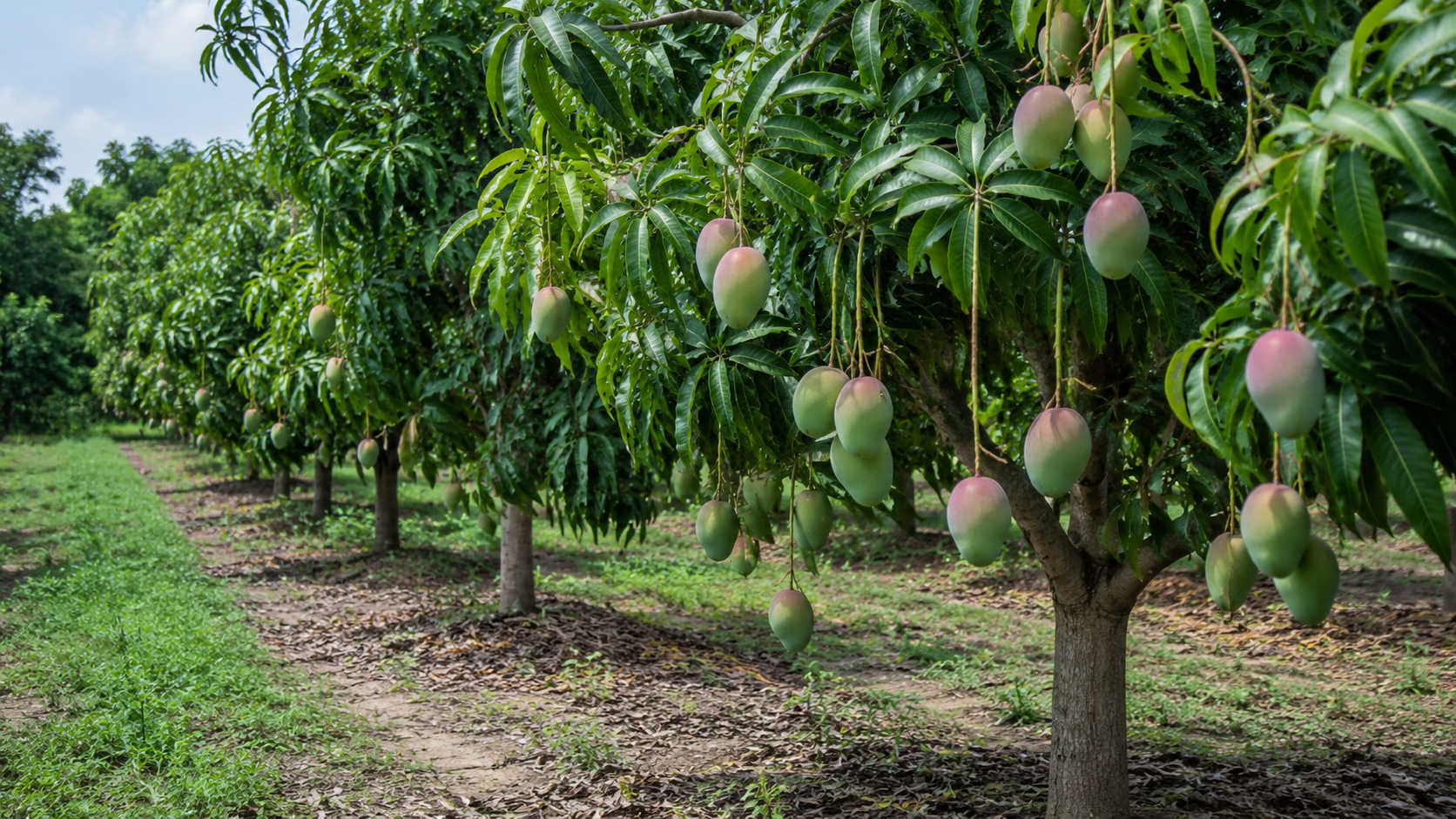
Bill 36-0087 would amend Title 7 of the Virgin Islands Code by adding a new chapter and would expand a requirement contained in the 2021 Virgin Islands Agricultural Plan, increasing a proposed 10-acre orchard to 30 acres.
James, the bill’s sponsor, ultimately moved to hold the measure in the Committee on Economic Development and Agriculture at the call of Chairman Sen. Hubert Frederick following an afternoon of debate over whether a government-operated orchard of that size represents the best use of agricultural resources.
Introducing the legislation, James framed the proposal around the Virgin Islands’ heavy dependence on imported food and its vulnerability to outside disruptions.

“Every storm, every disruption in global supply chains, every geopolitical conflict, and every increase in shipping costs serves as a reminder of how vulnerable we remain,” she said.
James described the proposal as being about “planting the foundation for an agricultural ecosystem that connects our farmers, our schools, our university, our tourism industry, and our future.”
Agriculture Says 30 Acres Would Require Major New Resources
One of the principal concerns raised during the hearing was how much money, staffing and other resources would be needed to establish and maintain a 30-acre orchard over the long term.
James anticipated that concern in her opening remarks, arguing that government must also consider the consequences of failing to invest in agriculture.
She lamented that “rarely do we ask what it costs us to do nothing…As we enter budget season and debate how to allocate nearly $1 billion in public resources. We must be honest about our priorities.”
James maintained that the “true cost is continuing to postpone investments we already know are necessary. The true cost is asking future generations to solve problems we had every opportunity to address ourselves.”
Agriculture Commissioner Louis Petersen, however, testified that the “successful implementation and long-term sustainability” of a 30-acre orchard would “require significant, dedicated resources.”
According to Petersen, VIDA is “not adequately resourced to assume this task.”
He said the department is already expected to “execute many other mandates for which it is poorly equipped to accomplish.”
Petersen therefore asked the bill’s sponsor to identify “an adequate funding source to support the establishment, operation, and maintenance of the orchard.”
Federal funding could assist with some costs, he said, but cautioned that “such resources may be limited and should not be relied upon for long-term sustainability.”
Petersen identified other possible revenue-generating approaches, including alley cropping, but emphasized that “funding strategies must be secured and must be finalized prior to project implementation.”
VIDA Proposes Smaller Lots and Farmer-Run Commercial Orchards
Agriculture officials also raised concern that a large government-operated orchard could eventually compete with local farmers.
VIDA proposed a different model under which the department would purchase fruit-tree saplings, propagate them and eventually sell them to farmers.
Revenue from those sales could be placed into a “revolving account to sustain the orchard development project,” Petersen explained.
Under his proposal, VIDA could operate smaller one-acre plots where “grafting material could be sourced and used by farmers or the department staff to support the program's sustainability.”
Commercial orchards, however, would primarily be operated by farmers rather than the government.
Petersen said that approach would depend on VIDA receiving additional staff.
He also called for a “strategic, data-driven approach” to determining which crops should be included.
Bill 36-0087 calls for more than 20 varieties of fruit-bearing trees to be planted in the proposed orchard. Testimony from the University of the Virgin Islands’ Dean of Agriculture recommended excluding certain citrus varieties that are susceptible to disease.
VIDA believes the crops selected should be “based upon crops of high consumer demand and, therefore, of high import status.”
Petersen also recommended working with the Bureau of Economic Research to determine “the acreage of each crop to be established, in order to incrementally target production goals.”
Sejah Farms Warns Costs Could Reach Millions
Dale Browne of Sejah Farms also questioned whether VIDA is currently positioned to operate a project of the proposed scale.
Browne said “serious concerns exist regarding the current readiness and capacity” of VIDA to “undertake and manage a project of this magnitude.”
He warned that “startup costs could easily reach hundreds of thousands of even millions of dollars.”
Browne also noted that VIDA has “not yet received the staffing resources envisioned within the Virgin Islands Agricultural Plan,” which he said has already limited the department’s ability to provide farmers with needed technical assistance and support services.
Rather than creating one large government-managed orchard, Browne proposed a “Territorial Orchard Development Initiative" that would support both the expansion of existing orchards and the establishment of new orchards on farms across the Virgin Islands.
Like Petersen, Browne argued that the government should not be placed in competition with local farmers.
Food and Farm Council Calls for Pilot Program
Sommer Sibilly-Brown, speaking on behalf of the V.I. Local Food and Farm Council, raised similar concerns about financing and long-term sustainability.
She said the council is “concerned that the legislation does not yet provide a complete and reliable framework for financing the orchard’s establishment, operation, and long-term maintenance.”
The council also asked lawmakers to consider whether “reserving 30 acres…would reduce the land available to individual farmers and farming groups.”
James later disagreed with that concern.
Like Browne, Sibilly-Brown recommended a territorywide approach rather than immediately developing a single 30-acre orchard.
She proposed beginning implementation with a “manageable pilot focused on selected crops and measurable outcomes.”
Any expansion should then occur in phases “based on an evaluation of survival rates, productivity, costs, market demand, and the program’s overall performance,” she said.
Sibilly-Brown also called for safeguards to prevent “unintended government competition with local producers.”
Bolques Questions Competition Concerns
Sen. Angel Bolques Jr. described the legislation as a “good look in the right direction” while agreeing with witnesses that there are “a few things that need to be worked out.”
Bolques was less persuaded by warnings that a government orchard could compete with existing farmers.
“We don't really have any evidence to show that this proposed orchard would actually displace any existing Virgin Islands farmers,” he stated.
Instead, Bolques argued that the orchard could help reduce the territory’s food-import burden.
“In my opinion, that's a farce. Because right now the farmers currently produce a lot of vegetables and fruits, but we're not sustaining ourselves the way that we should,” he argued.
Browne later countered that local farmers are already producing food, but some of that production is not consumed and ultimately goes to waste.
He warned that establishing a large orchard without “education in local food consumption” would mean that it will “fail too.”
Petersen acknowledged that government competition with farmers would likely not be a problem during the orchard’s early development, but said “that potential can be real” once the trees mature and begin producing fruit.

After lawmakers and witnesses spent much of the afternoon debating the appropriate role of government, the availability of land, the department’s capacity and whether a centralized 30-acre orchard or farmer-supported territorial program would better advance local agriculture, James moved to hold Bill 36-0087 in committee at the call of Frederick.