

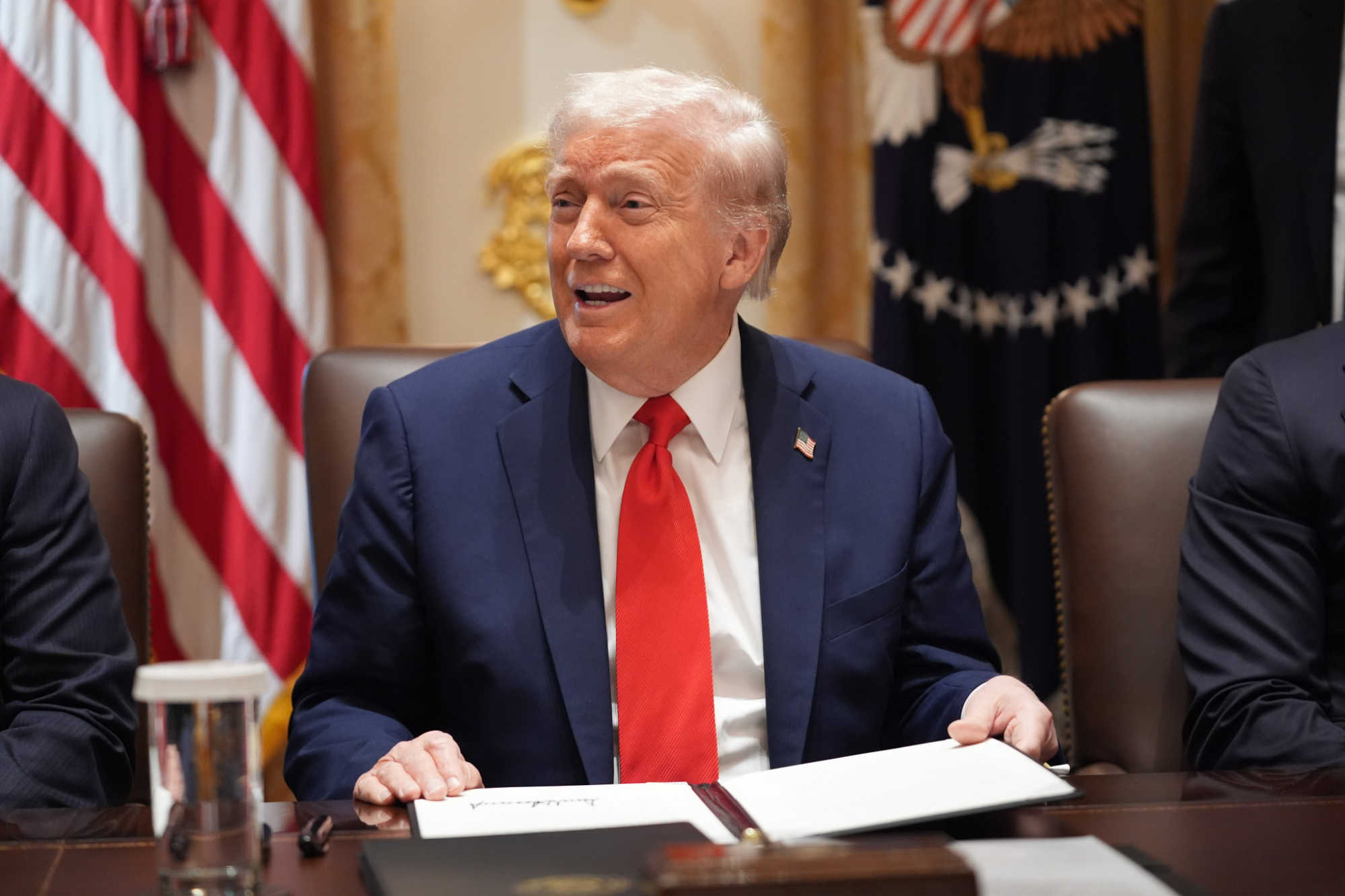
President Donald Trump on Oct. 9, 2025, signs a proclamation at the White House declaring October 13 as Columbus Day, reaffirming the federal holiday and describing Christopher Columbus as “the original American hero.”
President Donald Trump signed a proclamation on Thursday designating October 13 as Columbus Day and hailing Christopher Columbus as "the original American hero," a move that highlights his administration's emphasis on preserving traditional historical narratives.

The document, issued ahead of the holiday observed on the second Monday in October, invokes a 1934 congressional resolution establishing the commemoration and reaffirms its status as one of 11 federal holidays. During a Cabinet meeting where the signing occurred, Trump remarked, "We're back, Italians. We love the Italians," prompting spontaneous applause from attendees. The White House framed the move as a defense against efforts to “erase our history,” emphasizing a broader celebration of Indigenous Peoples alongside Columbus Day. While the holiday remains federally recognized by law, the administration has sought to reshape its observance and public meaning.
The proclamation details Columbus's 1492 voyage, crediting it with planting "a majestic cross" upon arrival in the Bahamas and initiating America's "proud birthright of faith." It accuses recent critics of launching a "vicious and merciless campaign to erase our history, slander our heroes, and attack our heritage," referencing the toppling of statues and vandalism of monuments. Trump, by virtue of authority vested in him by the Constitution and federal statutes, proclaimed the date to honor Columbus's "faith, courage, perseverance, and virtue." This year's statement notably omits any reference to Indigenous Peoples' Day, a national observance added by President Joe Biden in 2021 to recognize Native American contributions alongside the existing holiday.
Columbus Day originated as a federal holiday under President Franklin D. Roosevelt in 1934, following lobbying by Italian American groups to celebrate their heritage, and was later adjusted to a Monday observance in 1968. While it has endured nationally, more than 100 cities and several states, including Minnesota and New Mexico, have shifted to Indigenous Peoples' Day or similar designations, citing Columbus's role in colonization and the mistreatment of native populations. Trump's April 2025 Truth Social post previewed the stance, declaring he was "reinstating Columbus Day under the same rules, dates, and locations, as it has had for all of the many decades before!" and claiming Democrats had sought to "destroy Christopher Columbus, his reputation, and all of the Italians that love him so much." The holiday's dual observance has become a flashpoint in cultural debates, with federal employees still receiving the day off under its original name.
Supporters, particularly within Italian American communities, view the proclamation as a validation of their legacy. Organizations like the National Italian American Foundation welcomed the emphasis on Columbus's exploratory spirit, noting its historical significance in fostering immigration and innovation. "This is a particularly important holiday for Italian Americans who celebrate the legacy of Christopher Columbus, and the innovation and explorer zeal that he represented," said one foundation representative in a statement. The administration's broader push against what it calls "woke" policies, including restrictions on diversity, equity and inclusion (DEI) initiatives, aligns with this narrative, positioning the holiday as a bulwark against revisionist history.
Critics, including Indigenous rights advocates, argue the focus overlooks documented accounts of violence and exploitation during European contact. The National Congress of American Indians issued a measured response, reiterating calls for education on native histories without diminishing federal holiday status. "While we respect diverse cultural observances, true reconciliation requires acknowledging all chapters of our shared past," the group stated. Legal scholars note that presidential proclamations guide observance but cannot alter the holiday's statutory name, leaving room for local variations.

Trump's action continues a pattern from his first term, where he defended Columbus statues amid 2020 protests. With no congressional involvement required, the proclamation stands as an executive signal, potentially influencing educational and cultural institutions. Official White House releases and historical records from the Library of Congress provide the foundational context for the observance, ensuring its continuity amid evolving societal views.


Advertisements