


 77°F
77°F


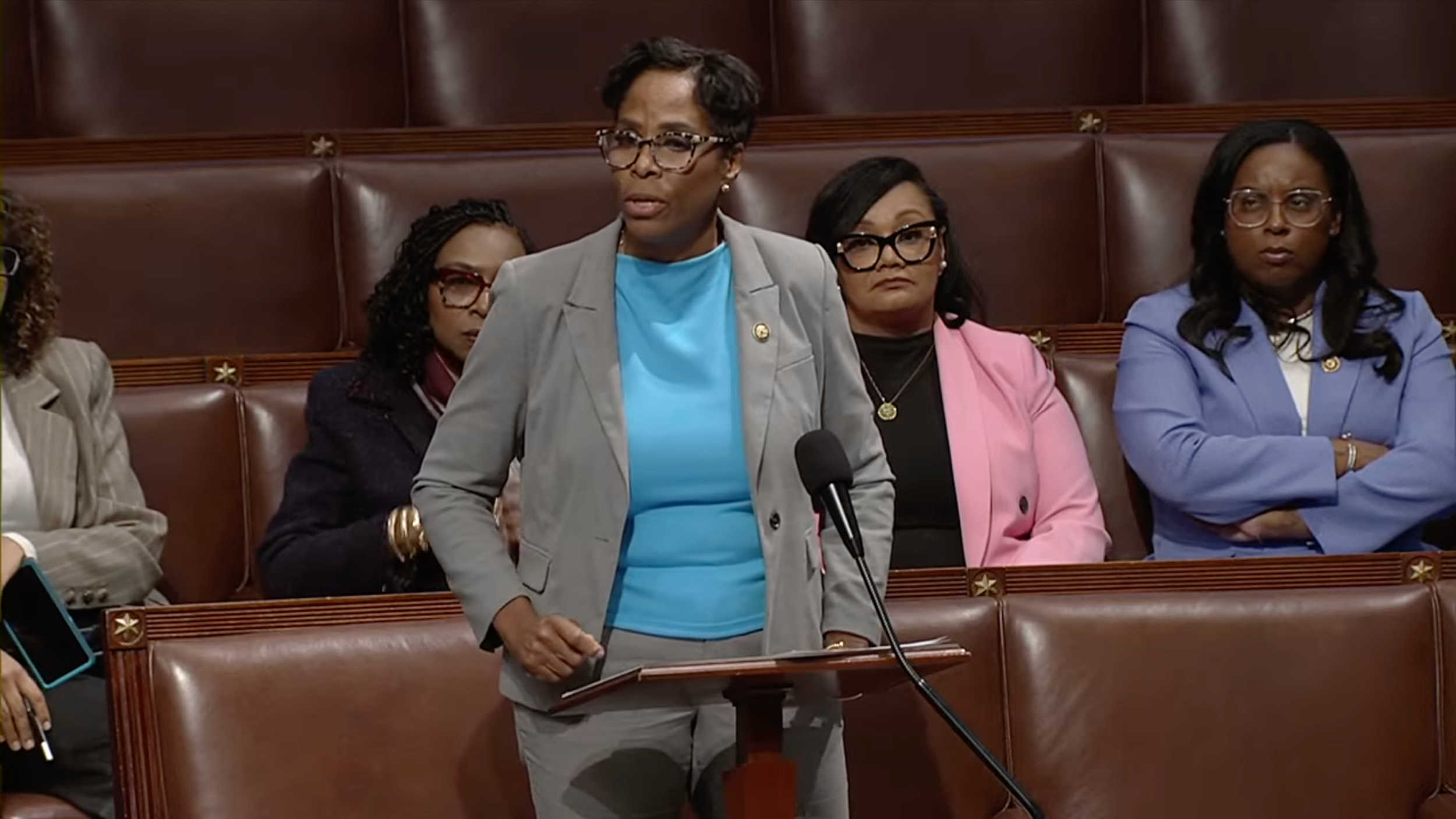
Delegate Stacey Plaskett speaks on the House floor during debate over the resolution to censure her and remove her from the Intelligence Committee. Photo Credit: V.I. CONSORTIUM.
The U.S. House of Representatives on Tuesday advanced a Republican-led resolution to censure V.I. Delegate to Congress Stacey Plaskett and remove her from the Permanent Select Committee on Intelligence, following revelations that she exchanged text messages with Jeffrey Epstein during a 2019 congressional hearing. The measure’s privileged status means the chamber must take final action within two legislative days, setting up a possible floor vote as early as tonight.

On June 30, 2008, Epstein pleaded guilty to two state felony offenses in Florida—solicitation of prostitution and solicitation of prostitution with a minor. His legal troubles resurfaced in 2019, when federal prosecutors in New York charged him with sex trafficking.
The resolution, introduced by Rep. Ralph Norman of South Carolina, cleared its first procedural test after lawmakers voted 214–213 to reject a Democratic motion that would have referred the matter to the House Ethics Committee. Republicans are arguing that the disclosures raise serious ethical and national-security concerns given Plaskett’s position on a committee that handles classified information.
The controversy stems from documents released last week by the House Oversight Committee—part of more than 20,000 pages from Epstein’s estate—showing real-time text exchanges between Epstein and Plaskett during Michael Cohen’s February 2019 testimony before the committee. Epstein, who died in custody later that year, appeared to offer suggestions on questioning related to Donald Trump’s associates, referencing “henchmen” at the Trump Organization and Cohen’s assistant Rhona Graff, whom Epstein labeled the “keeper of the secrets.”
The documents also include personal remarks from Epstein complimenting Plaskett’s appearance and questioning whether she was chewing gum during the hearing.
Full Text Exchange as Documented in the File Release
10:02 a.m. – Epstein: “Great outfit.”
10:22 a.m. – Epstein: “You look great.”
10:22 a.m. (approx.) – Plaskett: “Thanks!”
10:41 a.m. – Epstein: “Are you chewing.”
10:41 a.m. (approx.) – Plaskett: “Not any more. Chewing interior of my mouth. Bad habit from middle school.”
12:25 p.m. – Epstein: “Hes opened the door to questions re who are the other henchmen at trump org.”
12:25 p.m. (approx.) – Plaskett: “Yup. Very aware and waiting my turn.”
2:24 p.m. – Epstein: “Cohen brought up RONA – keeper of the secrets.”
2:25 p.m. – Plaskett: “RONA?? Quick I’m up next is that an acronym.”
2:25 p.m. (approx.) – Epstein: “Thats his assistant.”
2:34 p.m. – Epstein: “Good work.”
Later – Epstein: “How much longer for you.”
Later – Plaskett: “Hours.”
During debate on the resolution, Plaskett dismissed the censure attempt as “political theater,” emphasizing her work combatting sexual assault and human trafficking. She described Epstein as a constituent from the U.S. Virgin Islands—where he owned property—and said she returned his campaign contributions upon learning of his criminal conviction.
Regarding the campaign funds she once received from Epstein, Plaskett said, “When I learned of the extent of his actions, after his investigation, I gave that money to women's organizations in my community.” She continued, “They've taken a text exchange which shows no participation, no assistance, no involvement in any illegal activity, and weaponized it for political theater.”
Her office has maintained that the messages were unsolicited and akin to real-time input she frequently received from staff or the public, stating that the texts did not influence her conduct as a member of the committee.
Republicans, including members of the House Freedom Caucus, say the messages create an appearance of impropriety for a senior member of the Oversight Committee and a sitting member of the Intelligence Committee. Norman pointed to the close timing between Epstein’s texts and Plaskett’s questions during the 2019 hearing as evidence of potential coordination aimed at targeting Trump.
In a post on X, formerly Twitter, Norman said, "The House has a duty to uphold its integrity. Delegate Plaskett’s collaboration with Jeffrey Epstein crossed EVERY ethical line. Using the input of a sex offender to shape questions in an official hearing is UNACCEPTABLE and cannot go unaddressed."
Norman emphasized that Plaskett's actions during the 2019 hearing, where she exchanged texts with Epstein—a convicted felon at the time—compromised congressional proceedings.
House Freedom Caucus Chairman Rep. Andy Harris (R-Md.), a co-sponsor of the resolution, remarked during House debate: "Delegate Plaskett's willingness to receive instructions on official congressional proceedings from Epstein, a convicted felon during a congressional hearing. That does not reflect well on the House of Representatives."
Harris further criticized the interactions as unethical, given Epstein's status as a convicted sex offender since 2008.
The censure effort comes amid broader congressional activity involving Epstein’s network. On the same day, the House passed the Epstein Files Transparency Act by a 427–1 vote, requiring the Justice Department to release further Epstein-related records.
Democrats have overwhelmingly opposed the resolution. Minority Whip Katherine Clark called the censure effort a “stunt” intended to divert attention from unrelated legislative matters. They argue that the release of the texts does not establish misconduct and that the proposed punishment is disproportionate.
The vote to advance the measure fell strictly along party lines, underscoring tensions in the narrowly Republican-controlled chamber.

If approved, the censure would serve as a formal reprimand without legal penalties. However, it would remove Plaskett from the House Intelligence Committee, limiting her influence on national security matters. No immediate comment was available from the White House, which has previously called for transparency around Epstein-related documents while accusing Democrats of selective outrage.