
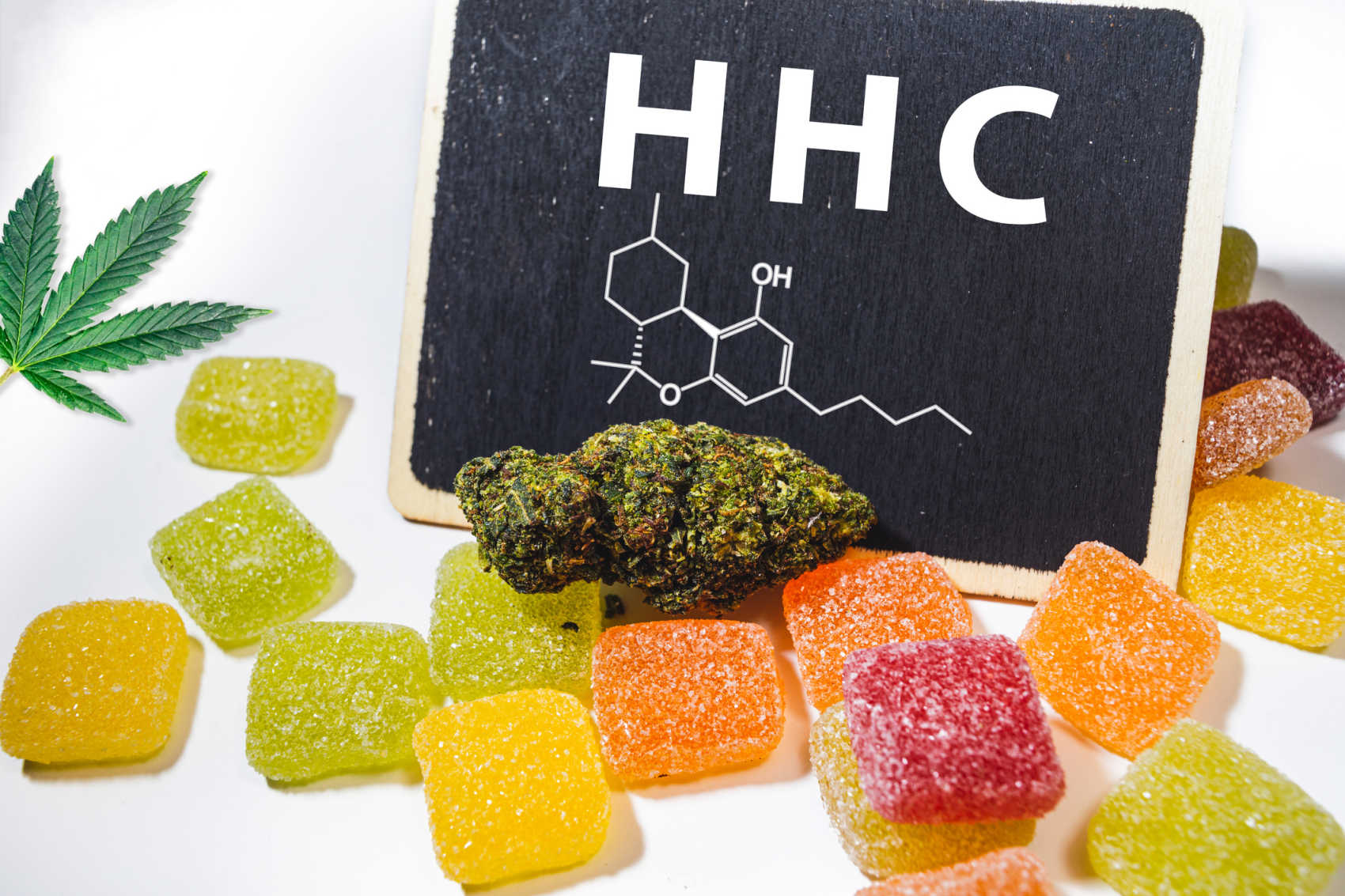
The Committee on Homeland Security, Justice, and Public Safety has taken action to prohibit the possession, sale, and manufacture of certain THC derivatives. According to the bill’s sponsor and a series of testifiers, Bill 36-0105 largely seeks to protect public health, particularly children, from unregulated products.

Sponsored by Senator Clifford Joseph Sr., Bill 36-0105 amends title 7 Virgin Islands Code, chapter 13, subchapter III by prohibiting the possession, sale, or manufacture of tetrahydrocannabinolic acid (TCHA), delta-6 THC, delta-8 THC and delta- 10 THC products in the Virgin Islands. He explained that THCAs are “psychoactive cannabinoids derived from legal hemp” and “exploits the 0.3% loophole.” The 2018 Agriculture Improvement Act (Farm Bill) legalized hemp derived cannabinoids with less than 0.3% delta THC by dry weight. However, medical sources explained that by heating THCA, it can be converted to THC and used to get high.
The only legal THC variant in the territory is delta-9 THC, commonly known as cannabis. The proposed restrictions contained in Bill 36-0105 does not affect its use, said Sen. Joseph. Rather, the measure will “reinforce the integrity of the regulated cannabis industry,” the lawmaker argued.
The Federal Drug Administration, he noted, has “not approved delta-8 THC products for safe use” and “does not consider CBD to be generally recognized as safe for use in food.” Nonetheless, there are products being offered for sale in the territory that contain these additives. According to Joseph, this is a problem because there are currently “no federal or local regulations regarding potency, purity, labeling, or age restrictions from hemp derived cannabinoids.” He remained fearful of the potential impact on young people who may get their hands on these often brightly packaged products. “We have all heard stories on the danger and we must move to protect our community,” he demanded.
Health Commissioner Justa Encarnacion agreed. “The potential for addiction, cognitive impairment, and long-term neurological harm makes proactive legislation essential,” she said. The Department of Health, through its Environmental Health Division has the “clear authority to embargo and remove products containing unapproved food additives from retail establishments,” Ms. Encarnacion stated, noting her department’s willingness to step up. DOH is already conducting sensitization activities in schools, and emphasized that public education, particularly in schools, will be key if the bill is passed.
Similar sentiments were shared by Duane Howell, executive director of the ARCH Institute. “Measures must also fund prevention programs to ensure we build community capacity and increase protective factors for our youth population,” he advised. As written, the bill directs 50% of fines collected to the Agriculture Revolving Fund and the other half to the Consumer Protection Fund. Mr. Howell suggested that funds should be redirected from the Agriculture Revolving Fund to support substance abuse prevention initiatives at the community level. He also noted that the bill fails to address e-commerce restrictions to “prevent the shipping of delta-8 and other variations to the territory.”
The leadership of V.I. Police Department, while supportive of the bill’s intent, stressed the importance of solid enforcement considerations. Assistant Commissioner Sean Santos observed that the bill makes the Industrial Hemp Commission responsible for enforcement while the agency has “no dedicated enforcement personnel and insufficient budgetary resources.” The Commission is therefore “not adequately equipped to serve as a sole enforcement body.” He recommended that enforcement capabilities be “explicitly shared across agencies that already have the capacity and statutory mandates to regulate, investigate, and protect public health.”
Horace Graham of the Department of Licensing and Consumer Affairs concurred. He recommended “seamless interagency coordination” and advised that a “documented chain of custody should be required for all seizures.”
The Legislature is also being urged to ensure that the bill does not create overlap between the Office of Cannabis Regulation and the Industrial Hemp Commission. Deputy Attorney General Patricia Lynn Pryor advised that they “include both agencies and to direct them to work in partnership in the implementation of any new laws or regulations.” Ms. Pryor was also unclear why the bill seeks to amend Title 7 Chapter 13 of the Code, which pertains to the cultivation of hemp, while the Cannabis Use Act is codified in Title 19, Chapter 34.
“There’s a certain amount of confusion between the two sections of the code,” she noted. “Having two different regulatory bodies deal with these very similar plant-based products creates concern about how this bill will be implemented.” Ms. Pryor recommended “accord” between the two agencies.
Indeed, Riise Richards, chair of the Industrial Hemp Commission, explained that “when these compounds are removed from the definition of hemp or industrial hemp, they may fall under the purview of the Office of Cannabis [Regulation] and the cannabis act.” Ms. Richards was also wary that an overarching ban on delta-8 THC would discourage retailers from applying for hemp permits. “The retailers would not be inclined to want to sell non-intoxicating hemp,” she suggested. Senator Ray Fonseca had also observed that “those are sold under the assumption that they're legal because they are derived from the hemp.”
Ms. Richards noted another “drawback” in that there could be a “possible proliferation of products coming in through the retail market that are untested and could contain delta-6, 8, and 10 THC.” Like other testifiers before her, and lawmakers as well, she feared the potential public health impact. “We cannot anticipate that our territory would be inundated with products with the delta-6,8, and 10 THC,” she warned. The territory is currently in the process of standing up a laboratory to test products for the presence and potency of these compounds. Assistant DLCA Commissioner Graham has also proposed “third-party testing” for accurate information on cannabinoid content, dosage information, health warnings, and age restrictions.
Lawmakers, provided with this bevy of perspectives, still elected to support the bill as written. Several expressed concern over the safety of children who may get their hands on products containing these compounds, which have not been regulated or approved by the FDA.
“You as a parent, if you're not aware of this, you're going to pay for that product,” noted Senator Franklin Johnson, worried that ignorance could lead to bigger issues.

While the bill makes it way through the legislative process, Health Commissioner Justa Encarnacion has advised the public to “read and scrutinize exactly what you're purchasing.”