

Kyle Fleming, director of the Virgin Islands Energy Office, says that one of his goals is to make gas stations “obsolete in their current format.”

Mr. Fleming joined Karl Knight, executive director at the Water and Power Authority and Greg Guannell, director of the Green Caribbean Center (CGTC) at the University of the Virgin Islands, during the Governor’s Workforce Development Summit on St. Croix. Their panel discussion on Tuesday focused on workforce development within the energy sector. A portion of the exchange was on the electrification of the transportation sector.
The transition to electric vehicles in the Virgin Islands has been slow but steady. In his role as VIEO director, Mr. Fleming is acutely aware that despite global trends, “the embracing of the growing industry hasn't been as realized” locally. Some potential buyers are unsure if an EV would be able to navigate the steep hills of St. Thomas and St. John, while others are concerned about the capacity of the batteries that power fully electric vehicles.
Mr. Fleming noted that EV technology has developed significantly over the years. “The average vehicle comes with 300 miles of range, well more than an excess of what you could possibly do in multiple days of driving,” noted Mr. Fleming. “Contrary to the old myths, you could climb Rapoon Hill in an electric vehicle, and you do it with much more ease than your gas guzzling vehicle,” added Mr. Knight.
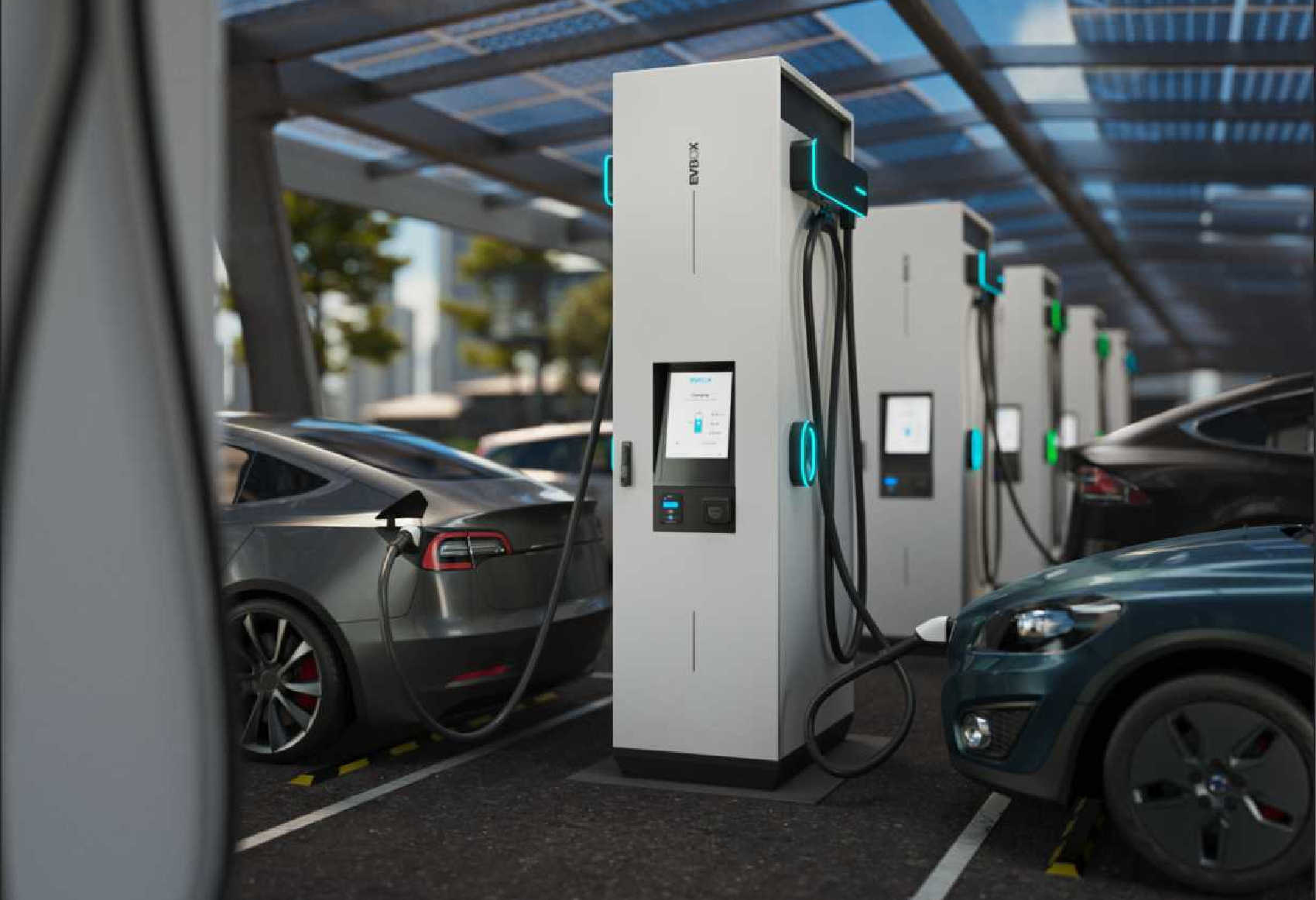
The Energy Office is currently working with the government to rewrite the electric vehicle narrative in the territory and increase adoption among the public. Apart from procuring EVs for government entities thereby increasing the numbers in the territory, the office has also rolled out financial incentives for people to purchase electric vehicles. Charging stations have been installed, and Mr. Fleming hopes that traditional gas stations will eventually transition from gasoline and diesel to supplying electricity. “I think the word of mouth is spreading that the capabilities are actually superior,” Mr. Fleming said.
The “aggressive” push for transportation electrification coincides with the government’s wider promotion of renewable energy. “Transportation activation is a perfect conduit or output for that renewable energy generation,” said Mr. Fleming at an earlier point in the conversation.
A significant challenge, though, is the need for a skilled workforce to maintain electric vehicles. Until then, motorists may not feel comfortable transitioning from gas to electric. As Mr. Fleming aptly stated, the situation is reminiscent of the chicken-and-egg problem. “It's like we need to have enough vehicles here to then warrant the serviceability needs. But regardless, we know that it's coming,” he stated.
Electric vehicle maintenance is poised to be a “growing sector of demand,” Mr. Fleming insisted. “There isn't a go-to person for any one of these resources as of yet, which leaves an open canvas for opportunity.” Mr. Fleming believes that such an opportunity is open to both a newcomer into the sector or someone who already maintains vehicles and is willing to “pivot into maybe a more focused trade, into supporting the electrification transition.” Recently, VIEO channeled grant funding to one auto dealer to establish EV service centers across the territory.
The Energy Office is currently working to upskill Virgin Islanders in that trade, he said. It has begun training individuals to service electric vehicles through the Career and Technical Education program and is “creating a pipeline through the vocational school so those students actually have a destination for once they receive their certificates.”
“I think there's a lot of needs within that space that are taking people out of the traditional internal combustion engines and now getting them more accustomed to the battery technologies,” said Mr. Fleming.

Opportunities, evidently, abound.