
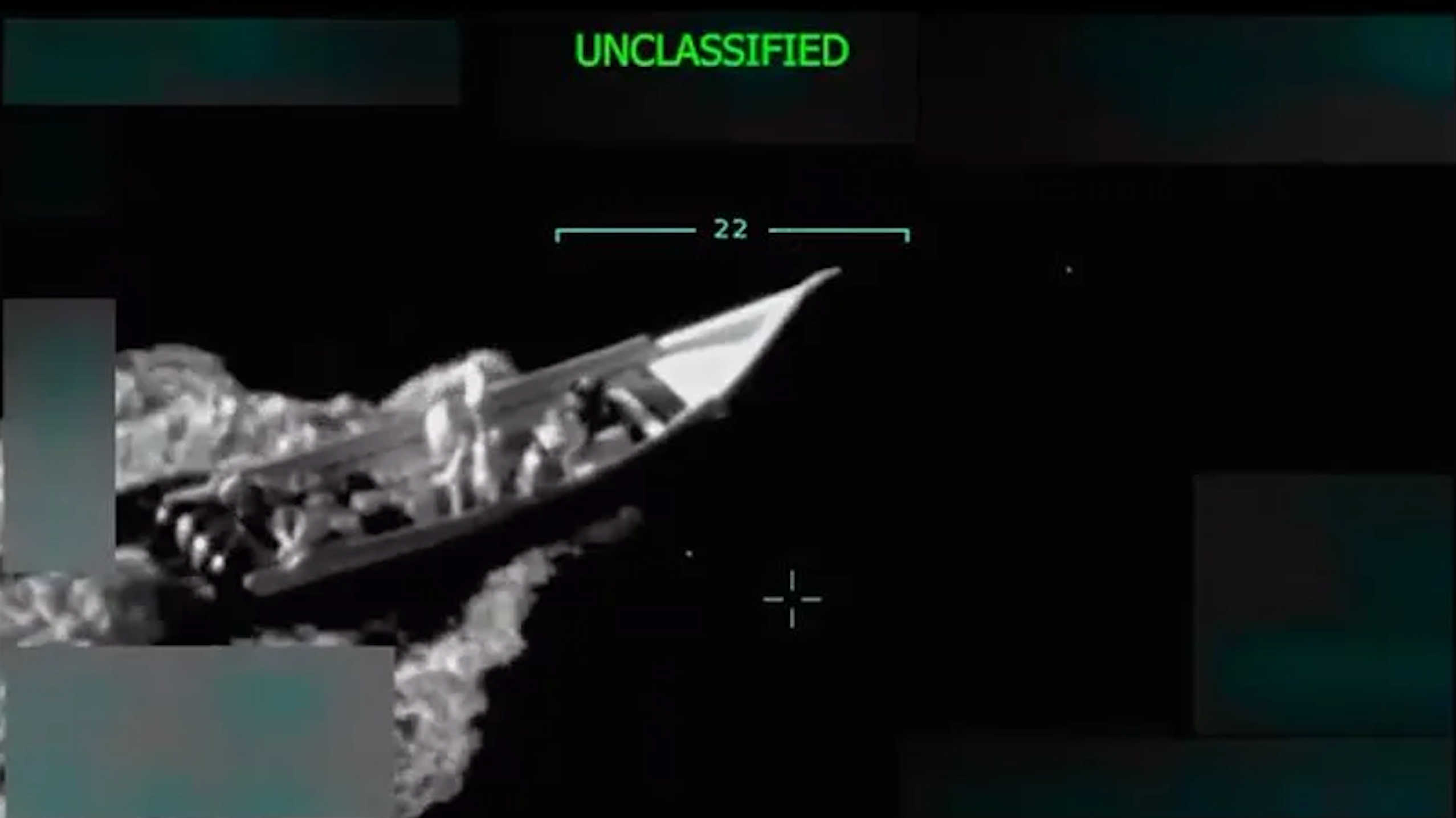
A still image from a video shared on Donald Trump’s Truth Social account on September 2 shows what he described as a Tren de Aragua vessel transporting drugs from Venezuela.
A Washington Post investigation has triggered significant controversy for Defense Secretary Pete Hegseth, raising allegations that he issued verbal instructions leading to the deaths of two survivors following a U.S. military strike on a suspected Venezuelan drug-trafficking boat. The report has prompted forceful denials from senior administration officials, questions from legal experts, and bipartisan scrutiny from Congress as the incident becomes one of the most contentious episodes of Operation Southern Spear.

According to the Post’s account, the incident occurred on September 2, during the Trump administration’s counter-narco-terrorism campaign across the Western Hemisphere. The initial U.S. strike reportedly left two individuals clinging to debris. A second strike—authorized by Adm. Frank “Mitch” Bradley, head of Special Operations Command—killed both survivors. The Washington Post reported that Bradley acted in line with what it described as a verbal directive attributed to Hegseth to “kill everybody” aboard.
Hegseth has rejected the allegations entirely, describing the reporting as “fake news” and calling the account “fabricated, inflammatory, and derogatory reporting” in public statements on X and to members of the press. He maintained that the operations were lawful under U.S. and international law, consistent with the law of armed conflict, and reviewed by military and civilian attorneys throughout the chain of command.
The Pentagon has backed Hegseth’s position, with chief spokesman Sean Parnell calling the narrative “false.” Hegseth also defended Bradley, referring to him as an “American hero” for the decisions made during the operation.
President Donald Trump addressed the issue aboard Air Force One, stating he would investigate but expressing confidence that Hegseth did not order the survivors’ deaths. Trump also said he “wouldn’t have wanted” a second strike.
White House press secretary Karoline Leavitt confirmed that Bradley authorized the follow-up strike, describing it as an action taken “in self-defense to protect Americans” and asserting that it fell within his authority to eliminate the threat posed by the vessel. The administration has justified the series of strikes by designating drug cartels as foreign terrorist organizations and asserting that the boats involved are tied to groups such as Tren de Aragua and the Cartel de los Soles.
The September incident took place amid a broader pattern of military activity. Since that month, U.S. forces have conducted more than 20 strikes resulting in over 80 deaths. A contrasting case occurred on October 6, when survivors of a similar interdiction were rescued and repatriated rather than targeted.
Legal experts have questioned the legality of the second strike. Former military lawyers Michael Schmitt and Rachel VanLandingham said the strike may constitute an extrajudicial killing or war crime under the Geneva Conventions, which protect survivors unless they pose an immediate threat.
Congressional oversight committees have launched inquiries. Senate Armed Services Committee leaders—Republican Sen. Roger Wicker and Democratic Sen. Jack Reed—have requested facts, audio recordings, and supporting evidence from the Defense Department. The House Armed Services Committee has also demanded a full accounting amid concerns that lawmakers may not have been fully informed about the scope of the operations.
Venezuelan officials and several international allies have condemned the strikes as extrajudicial executions. Narcotics experts have also raised doubts about the suspected vessels’ links to major cartels, noting that fentanyl is not sourced from Venezuela.

The Pentagon has not detailed whether any operational policies shifted between the September strike and the October 6 rescue, and no charges have been filed in connection with the events described in the report.