
President Donald Trump intensified his administration’s pressure on Venezuela on Saturday, issuing a message on X, formerly Twitter, declaring that the airspace “above and surrounding” the country should be treated as “closed in its entirety” to airlines, pilots, drug dealers, and human traffickers. The post, framed as a warning rather than a legally binding directive, comes amid ongoing U.S. efforts to isolate the government of Venezuelan President Nicolás Maduro.
White House officials said Trump’s message reflects existing policy toward Maduro’s administration, though it does not constitute a formal international airspace closure under U.S. law. The warning aligns with broader actions taken by the administration, which has accused Maduro’s government of enabling narcotics trafficking and sheltering groups designated by the U.S. as narco-terrorists.
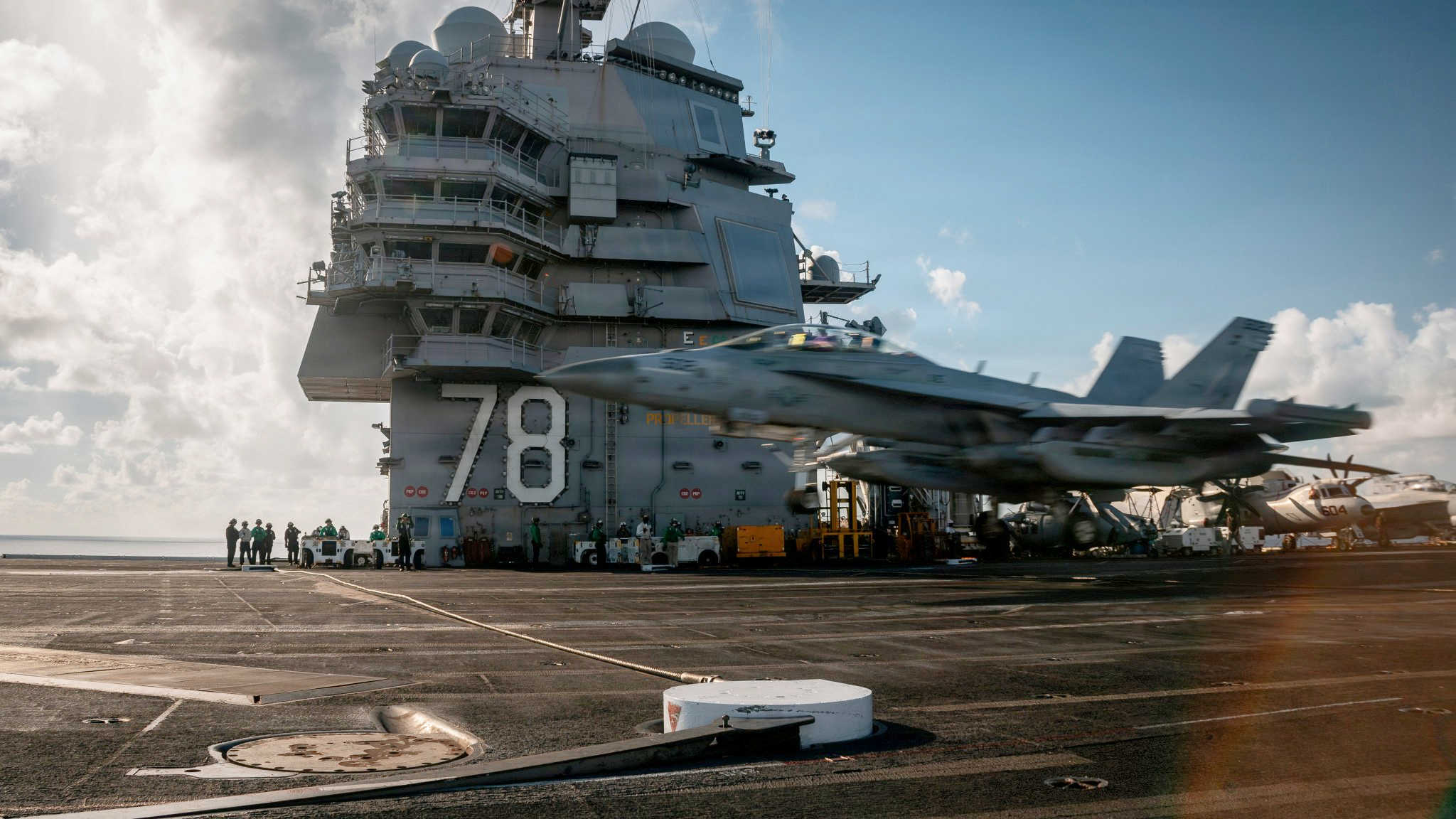
Secretary of War Pete Hegseth, speaking after the announcement, linked the message to Operation Southern Spear, a military initiative launched earlier this month aimed at countering drug trafficking and terrorism in the Western Hemisphere. He said U.S. forces deployed in the Caribbean—naval units as well as aircraft—are positioned to support the advisory. Hegseth also referenced Venezuela’s designation of the Cartel de los Soles as a Foreign Terrorist Organization and warned that the U.S. could take defensive actions in Venezuelan airspace if American personnel or interests are threatened.
Amid these developments, reports emerged that Trump directly told Maduro during a recent phone call to leave Venezuela immediately with his family, offering safe passage for the Venezuelan leader, his wife Cilia Flores, and their son in exchange for his departure. Trump confirmed the conversation but declined to elaborate on its outcome, while Maduro's government has not publicly acknowledged the ultimatum.
State Department spokesperson Matthew Miller reiterated the administration’s longstanding view that Maduro’s government is illegitimate, citing human rights abuses and connections the U.S. attributes to terrorist groups. Miller urged international partners to take the advisory seriously, noting that it builds upon a series of sanctions and diplomatic measures that have been in place since Maduro’s disputed 2018 reelection, which the U.S. and several allies did not recognize.
The friction between the two countries dates back to that 2018 election, after which the U.S. recognized opposition figure Juan Guaidó as interim president in 2019. Although tensions persisted through sanctions and diplomatic isolation, they escalated further under Trump following another contested vote in July 2024 and Maduro’s refusal to leave office. U.S. forces have since conducted interdictions of suspected drug-trafficking vessels near Venezuelan waters, and Caracas has responded by mobilizing troops and accusing the United States of aggressive behavior.
Venezuelan Foreign Minister Yván Gil condemned Trump’s statement, calling it a “colonialist threat” and arguing that the country would defend its sovereignty in international forums, including the United Nations. Maduro’s government rejected the advisory entirely and said it violates international law, specifically the Chicago Convention governing sovereign airspace.
Regional analysts noted that the advisory increases the risk of military escalation, particularly if U.S. aircraft enter Venezuelan territory or react to what they interpret as threats. Although Trump has not issued an explicit threat of war, members of his administration have not ruled out the possibility of military action should U.S. interests be endangered.
International law experts have pointed out that an airspace closure declared by one country over another is not enforceable without approval from the UN Security Council or a self-defense justification. Reactions from the region have varied, with some Latin American governments supporting stronger pressure on Maduro while others—including Brazil and Mexico—have encouraged dialogue to avoid a wider confrontation.

U.S. airlines have already adjusted routes to steer clear of possible risks near Venezuelan territory, creating disruptions in regional travel. While no immediate military actions followed Trump’s statement, the administration continues to track developments. Secretary of State Marco Rubio is set to brief Congress next week on hemispheric security.